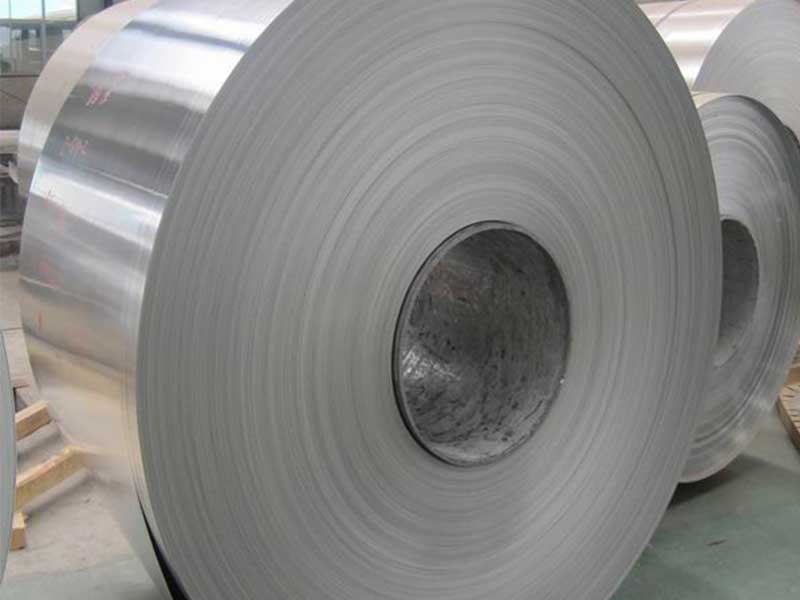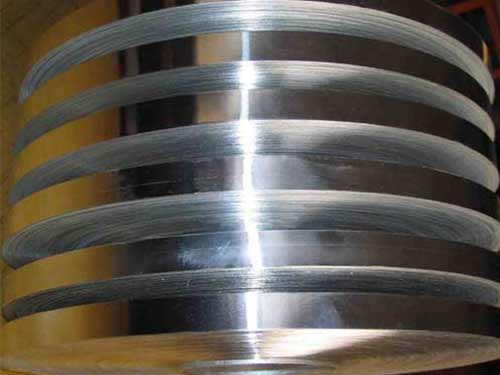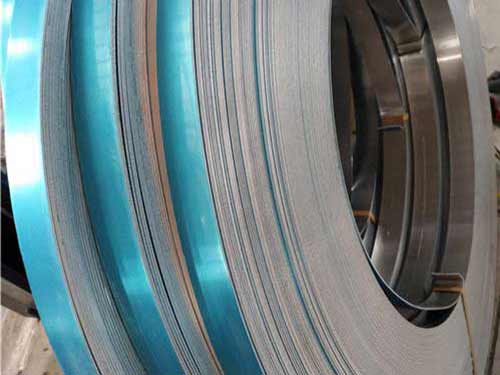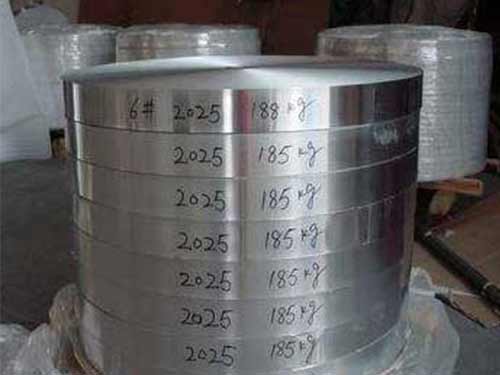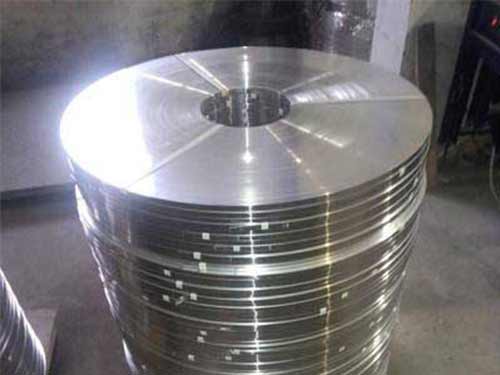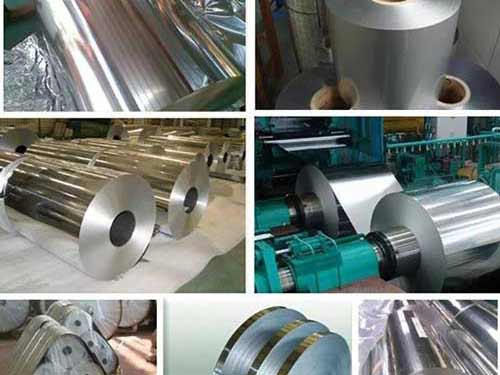

Aluminum strip is often introduced as a "material," but in a suspended ceiling it behaves more like a system component: it has to carry geometry, reflect light, resist humidity, accept coatings, and still stay straight after thousands of linear meters have been produced, shipped, cut, and installed. In projects described as "Cei Suspended Aluminum Cei" (suspended aluminum ceiling applications), the strip is the quiet hero behind clean shadow gaps, crisp linear lines, and panels that don't ripple when the HVAC turns on.
Why aluminum strip fits suspended ceiling realities
Suspended ceilings ask for an unusual combination of traits. The material must be light enough to reduce load on hangers and substructure, but stiff enough to keep long spans flat. It must accept tight bends for hooks, hems, and snap-fit profiles without cracking, and it must tolerate building conditions where humidity, condensation, and cleaning chemicals are normal.
Aluminum strip answers these needs with a low density, strong corrosion resistance through its natural oxide film, and flexible manufacturing options. Most importantly, strip processing allows consistent thickness and temper control, which is what keeps ceiling systems uniform across an entire floor or an entire airport terminal.
What "aluminum strip" means in ceiling manufacturing
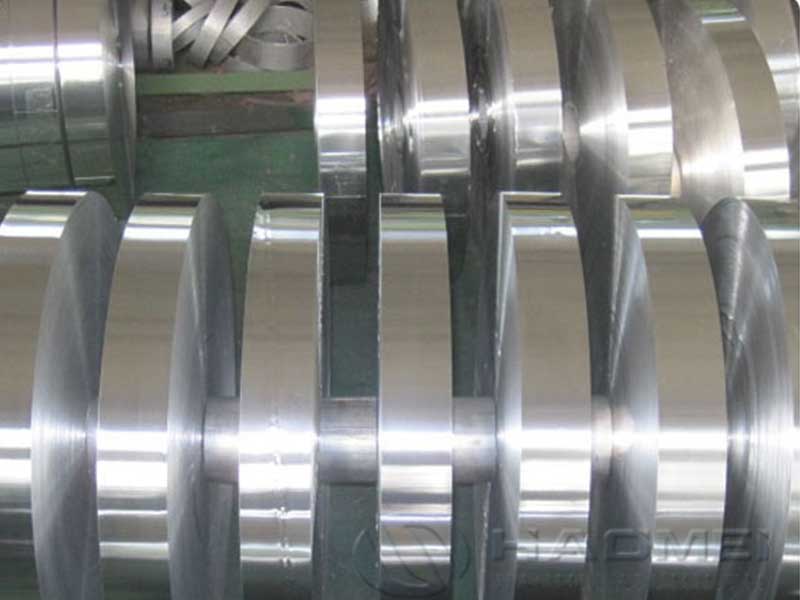
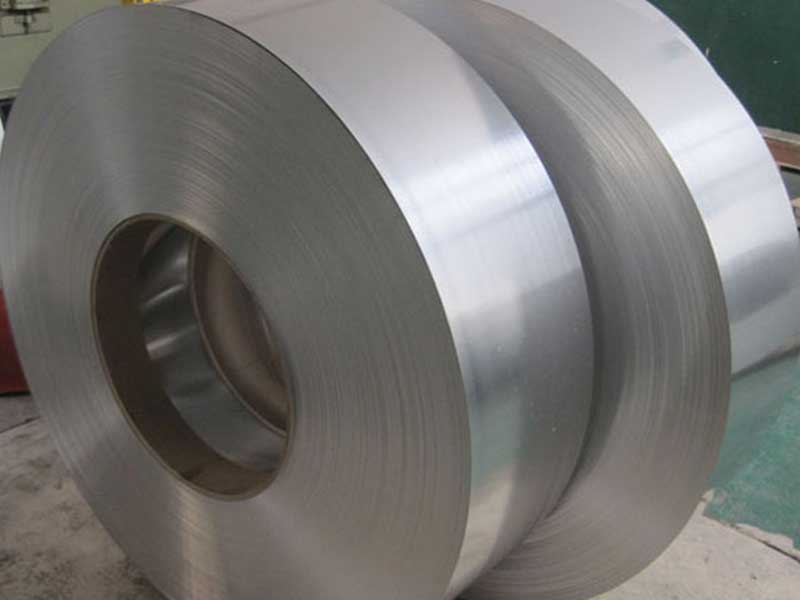
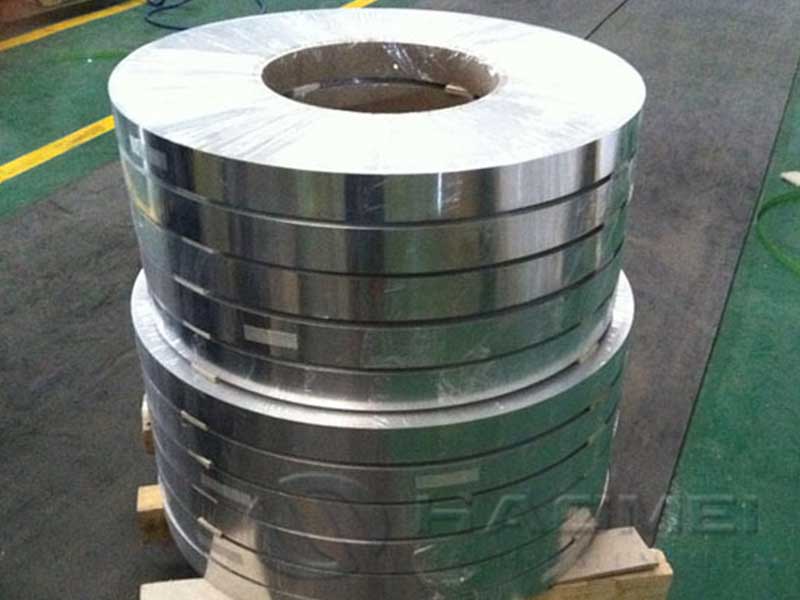
In suspended ceiling production, "aluminum strip" usually refers to coil stock slit to precise widths, then roll-formed or press-formed into ceiling panels, linear baffles, open-cell grids, hook-on trays, clip-in tiles, or carrier profiles. The strip has to be consistent because small thickness deviations can cause visible waviness after forming or inconsistent clip engagement in the field.
Typical parameters used for ceiling strip include:
- Thickness range: 0.40–1.50 mm (common ceiling panels often sit around 0.6–1.0 mm depending on module size and acoustic backing)
- Width range: 20–600 mm (wider strip for trays/panels, narrower slit widths for carriers and edge trims)
- Coil inner diameter: 150/300/505 mm depending on line equipment
- Flatness: controlled for roll forming; tighter flatness reduces "oil-canning" on large faces
- Surface finish: mill finish, prepainted, anodized-ready, or coated film-laminated
- Edge condition: deburred slit edge to prevent coating failure and improve installer safety
From the installer's perspective, the "quality" of the strip is obvious in two places: bend lines (no micro-cracks) and the final ceiling plane (no distortion or visual waves under grazing light).
Alloy choices that match ceiling use-cases
For suspended aluminum ceilings, the common alloy families are 1xxx, 3xxx, and 5xxx, selected based on formability, strength, and corrosion resistance.
- 1xxx series (such as 1050, 1060, 1070, 1100) emphasizes high aluminum purity. It offers excellent formability and surface appearance, making it friendly for complex shapes and high-quality coating results.
- 3xxx series (such as 3003, 3005) adds manganese for improved strength while keeping good formability. These alloys are widely used for ceiling panels and trims because they balance stiffness and bend performance.
- 5xxx series (such as 5052, 5005) uses magnesium for higher strength and strong corrosion resistance, especially helpful in coastal environments or areas with frequent cleaning. 5005 is often chosen when anodizing is specified due to good visual consistency.
Typical alloy and temper recommendations
Tempering is where ceiling strip becomes "tunable." The temper affects how the strip behaves during roll forming, punching, and bending.
- O temper (annealed): best for deep bending and complex forming; may be too soft for large flat panels unless stiffening features are added
- H14/H24: commonly used for ceiling panels; provides improved stiffness with reliable formability
- H16/H18: higher strength; used when rigidity is critical, but bend radius requirements become stricter
- H32 (for some 5xxx alloys): stabilized strain-hardened temper offering good strength and corrosion performance
In real projects, choosing temper is a conversation between design intent and production method. A ceiling with long, wide, flat faces benefits from a slightly harder temper to resist oil-canning, while a ceiling with tight hems and hook-on edges benefits from softer temper to avoid edge cracking.
Implementation standards customers actually encounter
Suspended ceiling strip touches multiple standards: aluminum chemistry and mechanical properties, dimensional tolerances, and coating performance.
Commonly referenced standards include:
- ASTM B209: Aluminum and Aluminum-Alloy Sheet and Plate (often used as a baseline for coil/strip quality requirements)
- EN 485 series: Aluminum and aluminum alloys-sheet/strip tolerances and mechanical properties (frequently specified in EU projects)
- ISO 9001: quality management system (not material-specific, but commonly required for suppliers)
- AAMA 2603 / AAMA 2604 / AAMA 2605: performance standards for architectural aluminum coatings (useful when PVDF or high-durability finishes are required)
- EN 13964: Suspended ceilings-requirements and test methods (system-level ceiling performance, indirectly influencing material expectations)
A practical way to read these is: material standards ensure the strip is consistent, coating standards ensure the color lasts, and ceiling system standards ensure the installed assembly behaves safely.
Coatings, surfaces, and what they change
The ceiling is a "lighting surface" as much as an architectural element. Coating choice changes reflectance, glare, cleanability, and perceived flatness.
- Polyester powder coating: common for interior ceilings; durable and available in many gloss levels
- PE/PU coil coating: efficient for mass production, consistent color batch-to-batch
- PVDF coating: used when color retention and chemical resistance are prioritized (more common in demanding public spaces)
- Anodizing (often with 5005): produces a metallic, premium finish with strong wear resistance, but requires careful alloy selection for uniform appearance
For acoustic ceiling panels, perforation and nonwoven backing add another layer of consideration: the strip must punch cleanly without burrs and maintain dimensional stability after perforation.
Chemical properties table (typical composition limits)
Below is a concise reference for common ceiling-strip alloys. Values vary slightly by standard and producer; confirm with the mill test certificate for your project.
| Alloy | Al (%) | Si (%) | Fe (%) | Cu (%) | Mn (%) | Mg (%) | Zn (%) | Cr (%) | Ti (%) |
|---|---|---|---|---|---|---|---|---|---|
| 1050 | ≥99.50 | ≤0.25 | ≤0.40 | ≤0.05 | ≤0.05 | ≤0.05 | ≤0.05 | - | ≤0.03 |
| 1060 | ≥99.60 | ≤0.25 | ≤0.35 | ≤0.05 | ≤0.03 | ≤0.03 | ≤0.05 | - | ≤0.03 |
| 1100 | ≥99.00 | ≤0.95 (Si+Fe) | - | 0.05–0.20 | ≤0.05 | - | ≤0.10 | - | ≤0.05 |
| 3003 | Rem. | ≤0.60 | ≤0.70 | 0.05–0.20 | 1.0–1.5 | - | ≤0.10 | - | ≤0.05 |
| 3005 | Rem. | ≤0.60 | ≤0.70 | ≤0.30 | 1.0–1.5 | 0.20–0.60 | ≤0.25 | ≤0.10 | ≤0.10 |
| 5005 | Rem. | ≤0.30 | ≤0.70 | ≤0.20 | ≤0.20 | 0.50–1.10 | ≤0.25 | ≤0.10 | ≤0.20 |
| 5052 | Rem. | ≤0.25 | ≤0.40 | ≤0.10 | ≤0.10 | 2.2–2.8 | ≤0.10 | 0.15–0.35 | ≤0.10 |
The "distinctive viewpoint": ceilings are geometry under stress
If you look at a suspended aluminum ceiling as a drawing, it's all straight lines. In the building, it's geometry under stress: temperature swings, vibration, repeated access above the ceiling, and light that exaggerates every imperfection. Aluminum strip succeeds here because it can be engineered at the coil level. Adjusting alloy and temper is like choosing the "behavior" of the ceiling before it exists.
For customers, the best specification is the one that connects performance to outcomes: a chosen alloy for coating uniformity, a temper that prevents oil-canning, a thickness that feels solid during handling, and a coating standard that protects color in the long run.