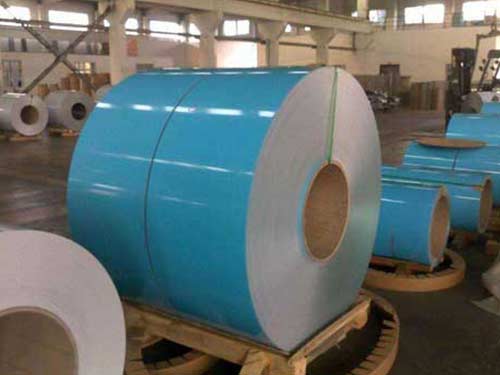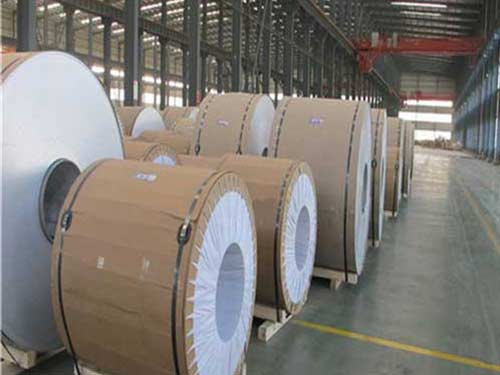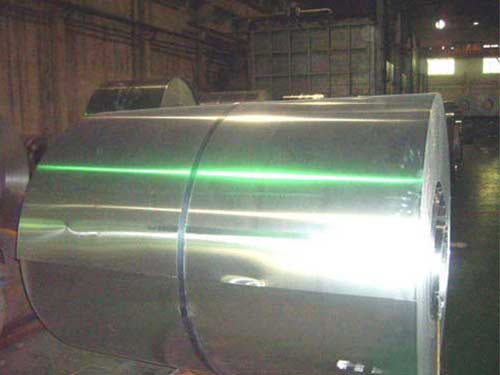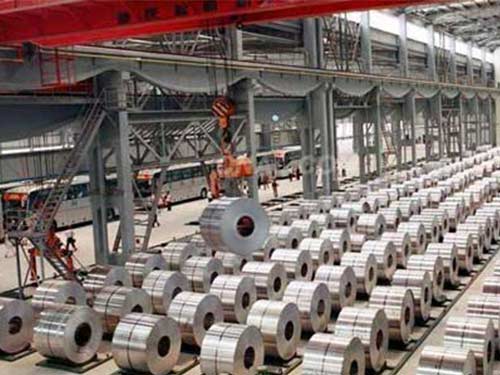

In oil, gas, and chemical processing, the "load" that quietly dictates service life is rarely just pressure or weight. The real, continuous load is corrosion-salt-laden air along coastal refineries, chloride-bearing wash water, acidic condensates, crevice-prone insulation systems, and aggressive cleaning cycles that punish weak metallurgy. From that viewpoint, 5083 aluminum coil earns its reputation not as a generic marine-grade alloy, but as a process-environment alloy-built for facilities where uptime is measured in years and shutdowns cost more than materials ever will.
Why 5083 Aluminum Coil Fits Oil & Chemical Environments
5083 is an Al-Mg alloy designed to perform when chlorides, humidity, and industrial atmospheres are unavoidable. Unlike many structural materials that depend primarily on coatings for survival, 5083's value comes from its inherent corrosion resistance supported by magnesium in solid solution and a stable oxide film.
In oil chemical facilities, 5083 aluminum coil is often selected for:
- Tank jacketing and insulation cladding where corrosion under insulation can be a hidden enemy
- Chemical transport and storage components requiring formability and corrosion resistance
- Deckhouse panels, offshore module skins, and walkways exposed to salt spray and chemicals
- Ventilation and exhaust ducting in corrosive process atmospheres
- Cryogenic or low-temperature service components, where toughness and impact performance are critical
A distinctive advantage of 5083 is that it balances high strength without relying on heat treatment, making performance more predictable during fabrication and across weld zones compared with some heat-treatable alloys.
Parameters of 5083 Aluminum Coil (Typical Supply Range)
5083 aluminum coil is produced to match fabrication realities: rolling, bending, profiling, cladding, stamping, and sometimes welding. Commonly supplied parameters include:
- Alloy: AA 5083 / EN AW-5083
- Temper options: O, H111, H112, H116, H321 (availability depends on thickness and mill practice)
- Thickness: typically from 0.5 mm to 12.0 mm (heavier gauges may be available as plate rather than coil)
- Width: commonly up to 2000 mm (slitting and cut-to-length supported)
- Surface finishes: mill finish, brushed, one-side protective film, chemical conversion ready
- Inner diameter: typically 508/610 mm (custom possible)
- Applications: insulation jacketing, tank shells, panel systems, chemical equipment skins, offshore modules
If your project needs robust corrosion performance in chloride exposure, H116 and H321 are frequently considered for marine/offshore-type environments due to their stress corrosion cracking resistance profile and controlled work hardening.
Implementation Standards That Matter in Oil & Chemical Projects
Oil and chemical buyers care less about "aluminum is aluminum" and more about traceability, consistency, and compliance. 5083 aluminum coil is commonly supplied to these standards (depending on region and project requirement):
- ASTM B209 / ASTM B209M: Aluminum and Aluminum-Alloy Sheet and Plate
- EN 485 (parts 1–4): Aluminum and aluminum alloys - Sheet, strip and plate (European dimensional and mechanical requirements)
- ISO 6361: Wrought aluminum and aluminum alloy sheets, strips and plates
- GB/T 3880: Rolled aluminum and aluminum alloy sheets and strips (common in China-based sourcing)
For offshore and oil chemical module work, clients often request additional controls beyond the base standard:
- Mill test certificate with full chemistry and mechanical properties
- Ultrasonic inspection requirements where thickness demands
- Surface quality limits for cladding and architectural-visible areas
- Intergranular corrosion testing or corrosion performance documentation when specified by end user
Alloy Tempering and Condition: Choosing the Right "Personality" of 5083
Temper is where 5083 becomes application-specific. The same chemistry can behave very differently in bending radius, buckling resistance, and long-term stability depending on work-hardening and stabilization.
5083-O (Annealed)
Chosen when deep forming, complex shaping, or tight bending is required. It offers maximum ductility and excellent forming margins, useful for shaped cladding parts, complex covers, and formed chemical equipment skins.
5083-H111 / H112 (Lightly strain-hardened / as fabricated)
Often used for general fabrication where moderate strength and good formability are both needed, and where thicknesses are produced by hot rolling and leveling. A practical choice for industrial skins, covers, and panels.
5083-H116 (Marine/offshore focused condition)
Common for salt-laden environments. It's tailored for improved corrosion behavior in severe atmospheres compared with generic work-hardened tempers, making it attractive for coastal refineries, offshore topsides, and chloride-exposed structures.
5083-H321 (Stabilized strain-hardened)
Designed to reduce susceptibility to sensitization and intergranular corrosion, especially when service involves moderately elevated temperatures. In oil chemical facilities, this can matter around warm piping corridors, sun-heated cladding systems, and equipment housings near process heat.
Selection guidance from a corrosion-first perspective: when chloride exposure is continuous and inspection access is limited, choosing H116 or H321 can be a risk-reducing decision, not merely a mechanical one.
Mechanical Properties: Typical Values (Reference)
Mechanical properties vary with thickness and temper, and exact values should be verified on the mill test certificate to the governing standard. Typical reference ranges:
- 5083-O: tensile strength around 275 MPa; yield strength around 125 MPa; elongation often 20%+
- 5083-H111/H112: tensile strength commonly 300 MPa range; yield strength around 145 MPa
- 5083-H116/H321: tensile strength often 305–350 MPa; yield strength commonly 215 MPa range; elongation typically 10–16%
For oil chemical users, the notable point is that 5083 delivers high usable strength with good toughness, rather than extreme hardness. That combination reduces cracking risk in vibration-prone structures and helps during fabrication.
Corrosion Behavior in Oil & Chemical Reality
5083 is recognized for excellent resistance in seawater and marine atmospheres, but oil chemical environments introduce mixed aggressors:
- Chlorides: strong driver for pitting and crevice corrosion
- Acidic condensates: localized attack in poorly ventilated areas
- Alkaline cleaners: can attack aluminum if concentration and temperature are high
- Galvanic couples: contact with copper alloys or stainless in wet electrolytes can accelerate corrosion
Design recommendations that support 5083 coil performance:
- Avoid stagnant crevices under gaskets, lap joints, and insulation bands
- Isolate dissimilar metals using compatible barriers and fasteners
- Use appropriate pretreatments and coatings where chemical splash is likely
- Consider H116/H321 where corrosion risk is high and access is limited
Chemical Composition of 5083 Aluminum Alloy (Typical Limits)
Below is a commonly referenced composition range for AA 5083, used by many specifications. Exact limits may vary slightly by standard; confirm per ASTM/EN/GB requirement for your procurement.
| Element | Composition (wt.%) |
|---|---|
| Magnesium (Mg) | 4.0 – 4.9 |
| Manganese (Mn) | 0.4 – 1.0 |
| Chromium (Cr) | 0.05 – 0.25 |
| Silicon (Si) | ≤ 0.40 |
| Iron (Fe) | ≤ 0.40 |
| Copper (Cu) | ≤ 0.10 |
| Zinc (Zn) | ≤ 0.25 |
| Titanium (Ti) | ≤ 0.15 |
| Others (each) | ≤ 0.05 |
| Others (total) | ≤ 0.15 |
| Aluminum (Al) | Balance |
The distinctive "corrosion logic" here is Mg + Mn: magnesium boosts solid-solution strengthening and corrosion behavior in marine environments, while manganese supports microstructural control for a dependable strength–ductility balance.
Processing and Fabrication Notes for 5083 Aluminum Coil
Oil and chemical projects often involve on-site forming, rolling, and joining. 5083 generally performs well in:
- Cold forming and bending with appropriate bend radii based on temper
- Welding (commonly using 5xxx fillers such as ER5356, chosen per design and service)
- Machining (more "gummy" than harder alloys; tooling and cutting parameters matter)
- Surface preparation for coating systems, especially where chemical splash occurs
If the coil will be used in insulation jacketing, attention to edge condition, protective films, and coil set control can improve installation speed and reduce rework in the field.
5083 Aluminum Coil as a Reliability Strategy, Not Just a Material
- strong corrosion resistance in chloride environments
- stable mechanical performance without heat treatment dependency
- good weldability and fabrication flexibility
- useful strength for panels, cladding, and structural skins