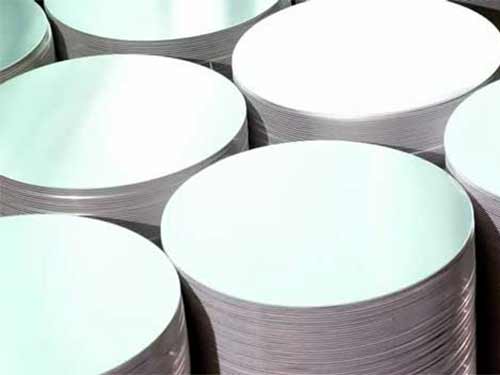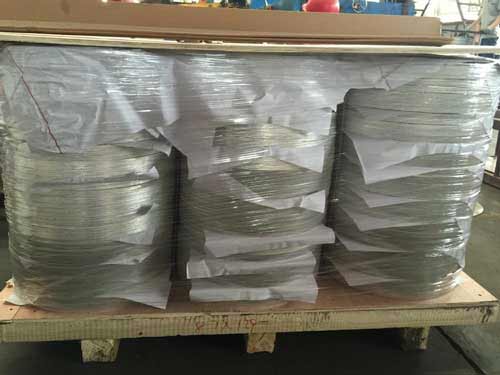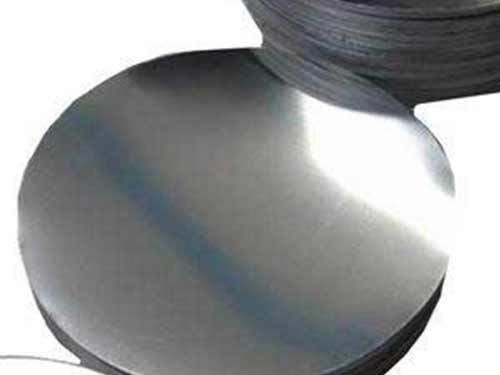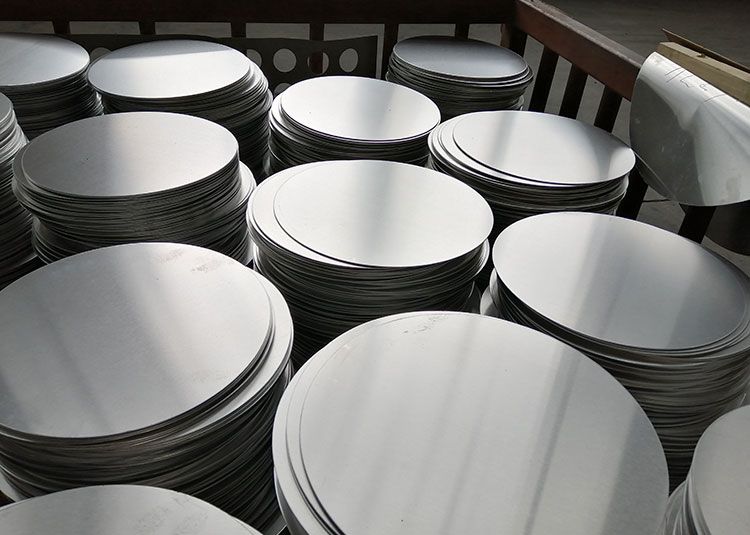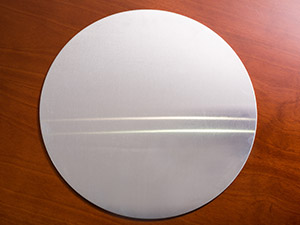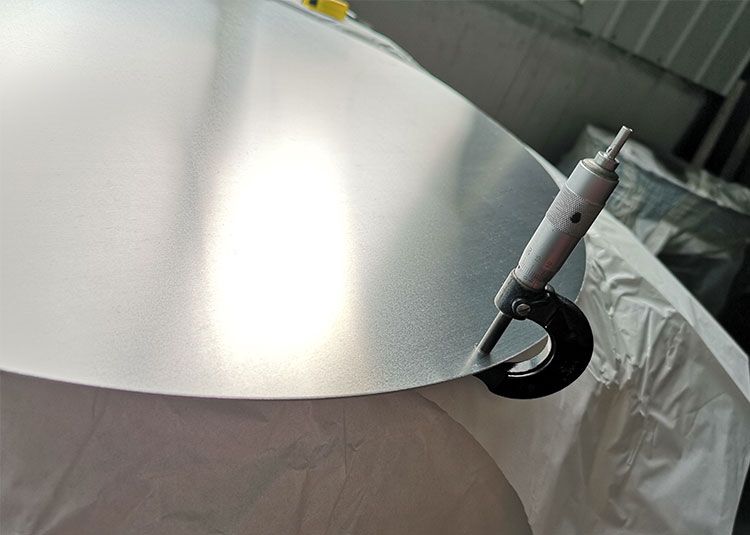

A1050 1/4 hard aluminum circle in 0.6mm and 0.7mm thickness is a practical, high-purity aluminum blank engineered for cookware stamping and spinning, especially for pots, saucepans, inner liners, lids, and small cookware bodies. Built on the AA1050 alloy family (commercially pure aluminum), this product balances excellent formability, fast heat response, clean surface quality, and stable production behavior-factors for high-yield pot manufacturing.
A1050 is a high-purity aluminum (≈99.5% Al) known for its corrosion resistance, conductivity, and ease of forming. The 1/4 hard temper (commonly corresponding to H22/H24-type behavior depending on mill route) is selected to add strength and dent resistance while still allowing deep drawing or spinning with controlled risk of tearing.
For cookware makers, the 0.6mm and 0.7mm gauges are frequently chosen for:
- Lightweight pot bodies
- Pot lids and covers
- Inner liners and decorative shells
- Small to medium diameter stamped parts
Features (Why This Circle Works for Pots)
1) Reliable Forming in Stamping and Spinning
A1050 has inherently high ductility. In 1/4 hard temper, it retains enough elongation for shaping while improving rigidity. This helps reduce issues such as:
- Over-soft "wavy" rims after forming
- Excessive denting during handling
- Poor dimensional stability during trimming or beading
2) Fast and Uniform Heat Transfer
High-purity aluminum is an excellent conductor. Cookware made from A1050 typically shows:
- Quick heat-up time
- Reduced hot-spot risk compared with low-conductivity metals
- More responsive cooking control (especially for thinner gauges like 0.6–0.7mm)
3) Clean Surface for Finishing
A1050 circles are commonly used where surface matters:
- Anodizing
- Painting / powder coating
- Non-stick coating systems (after appropriate pretreatment)
- Polishing / bright finishing
Consistent surface quality reduces coating defects, pinholes, and visual variability across batches.
4) Corrosion Resistance for Kitchen Environments
High aluminum purity means fewer galvanic sites and good natural oxide protection. With proper coating or anodizing, it performs well in humid kitchens and typical food-contact environments.
Typical Applications
| Application | Why A1050 1/4 Hard (0.6–0.7mm) Fits |
|---|---|
| Pot lids (flat or shallow formed) | Stiff enough to hold shape; easy to stamp; clean surface finish |
| Lightweight pot bodies (small/medium) | Good draw/spin performance; fast heat response; lower mass |
| Inner liner shells | High purity supports clean finishing and corrosion resistance |
| Decorative outer shells | Excellent anodizing and appearance consistency |
| Cookware accessories (covers, shallow pans) | Economical, easy fabrication, stable supply |
Technical Specifications (Typical Supply Range)
Actual values depend on diameter, tooling route, and customer standard. The table below reflects common industrial supply parameters for cookware circles.
| Item | Typical Specification |
|---|---|
| Alloy | AA/A1050 |
| Temper | 1/4 Hard (commonly H22/H24-style depending on process) |
| Thickness | 0.60 mm / 0.70 mm |
| Diameter range | Common cookware diameters (custom per order) |
| Edge condition | Deburred / smooth edge for safe handling and forming stability |
| Flatness | Controlled for stamping/spinning (mill standard or customer-defined) |
| Surface | Mill finish (optional: film/protection paper) |
| Manufacturing route | DC cast → hot roll → cold roll → anneal/temper → blanking |
Chemical Composition (AA1050 Typical Limits)
AA1050 is defined by high aluminum purity. Minor elements are controlled to maintain formability and surface performance.
| Element | Typical Limit (%) |
|---|---|
| Al | ≥ 99.50 |
| Si | ≤ 0.25 |
| Fe | ≤ 0.40 |
| Cu | ≤ 0.05 |
| Mn | ≤ 0.05 |
| Mg | ≤ 0.05 |
| Zn | ≤ 0.05 |
| Ti | ≤ 0.03 |
| Others (each) | ≤ 0.03 |
| Others (total) | ≤ 0.10 |
Note: Exact limits may vary slightly by standard (ASTM/EN/GB) and mill certification.
Mechanical Properties (Typical for 1/4 Hard A1050)
Mechanical properties vary with thickness, processing, and coil-to-circle conversion. The following are representative ranges used in cookware procurement.
| Property | Typical Range |
|---|---|
| Tensile strength (Rm) | 90–120 MPa |
| Yield strength (Rp0.2) | 40–80 MPa |
| Elongation (A50) | 8–18% |
| Hardness (HV) | ~28–40 |
| Density | 2.71 g/cm³ |
What this means in production:
- Enough strength for better handling and dent resistance than fully annealed (O temper)
- Enough ductility for shallow-to-moderate drawing and spinning, depending on draw ratio and tooling
Performance in Cookware Production
Forming Behavior (Stamping / Deep Drawing / Spinning)
For 0.6–0.7mm circles, forming success depends on tooling polish, lubrication, blank holder pressure, and draw ratio. A1050 1/4 hard is often chosen when manufacturers want:
- Reduced "oil canning" on flat areas
- Better rim integrity during curling and beading
- Lower scrap rate than harder tempers
Recommended processing notes (practical):
- Use stable lubrication for consistent flow and reduced scoring
- Ensure die radius is appropriate for thin gauges
- For deeper draws, some producers prefer intermediate anneal or softer temper-evaluate per part geometry
Thermal Performance
Because A1050 conducts heat efficiently, it's useful for pots requiring quick response. In thin gauges, you typically get:
- Rapid heat transfer (good for boiling and quick cooking)
- Lower thermal inertia (temperature changes quickly with stove input)
If the pot design requires heavy heat storage or induction compatibility, manufacturers often combine A1050 with:
- Thicker bases
- Clad structures
- Induction stainless discs (bonded or impact-bonded)
Surface & Coating Compatibility
A1050's purity supports consistent finishing. Typical downstream options include:
- Anodizing: uniform oxide growth and appearance
- Non-stick coatings: good base metal consistency (final performance depends on pretreatment and coating system)
- Painting: stable adhesion when degreasing and conversion coating are controlled
Why 0.6mm vs 0.7mm?
| Thickness | Best Fit | Practical Benefit |
|---|---|---|
| 0.60 mm | Lids, lightweight shells, shallow formed parts | Lower cost and weight; very fast heat response |
| 0.70 mm | Pot bodies needing extra rigidity | Improved dent resistance and shape stability; easier to keep geometry after forming |
A 0.1mm increase may sound small, but in thin cookware it noticeably affects stiffness, handling feel, and deformation resistance.
| Benefit | Customer Outcome |
|---|---|
| High purity (A1050) | Excellent corrosion resistance and surface finish consistency |
| 1/4 hard temper | Better rigidity and reduced deformation vs soft temper |
| Thin gauge (0.6–0.7mm) | Lightweight cookware, fast heating, lower material cost |
| Good formability | Higher stamping/spinning yield, fewer cracks and wrinkles (with correct tooling) |
| Strong finishing compatibility | Reliable anodizing/painting/non-stick preparation results |
Selection Checklist (What to Confirm When Ordering)
| Parameter to Specify | Why It Matters |
|---|---|
| Exact thickness tolerance | Controls forming stability and final weight |
| Diameter and diameter tolerance | Affects draw ratio, trimming, and tooling alignment |
| Temper requirement | Impacts cracking risk vs stiffness |
| Surface requirement (film, paper, scratch level) | Reduces rejection during coating or anodizing |
| Edge quality | Prevents micro-cracks and improves operator safety |
| Grain/earing control (if required) | Helps minimize earing during deep drawing |