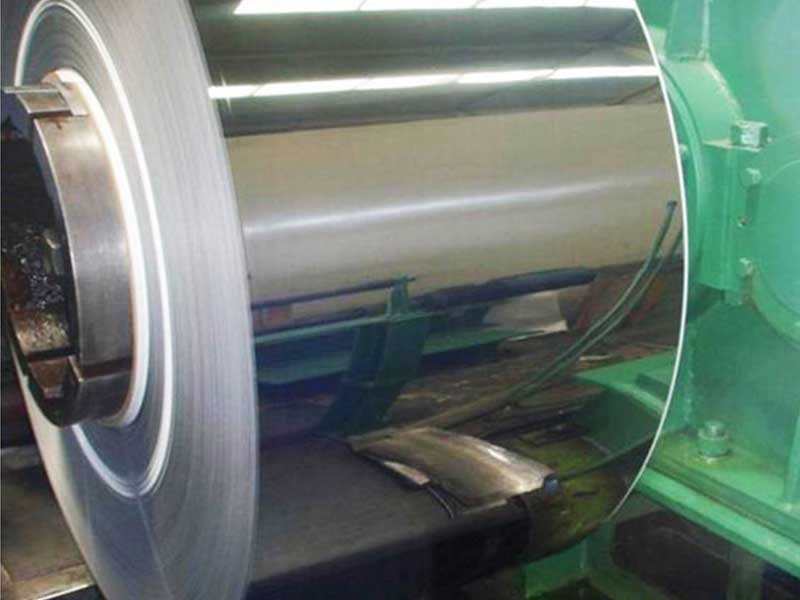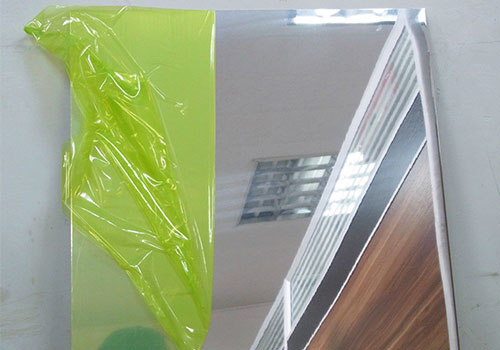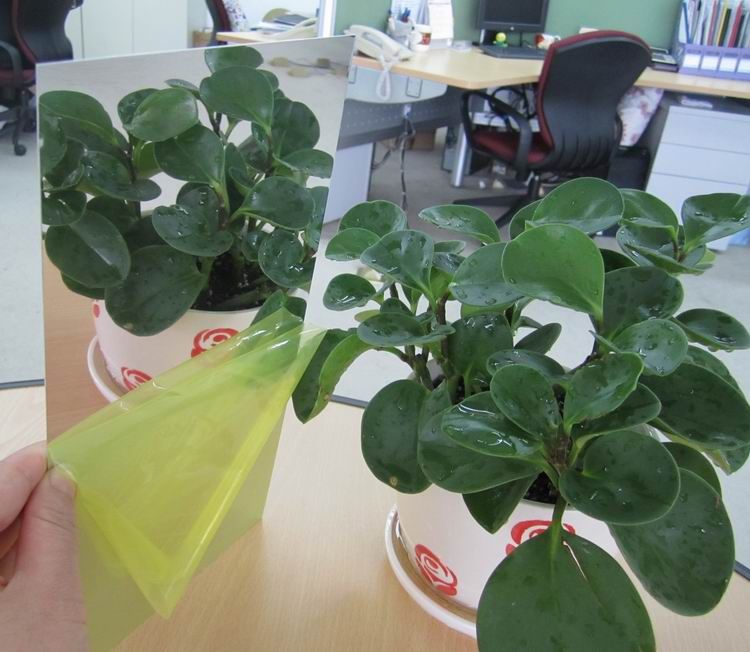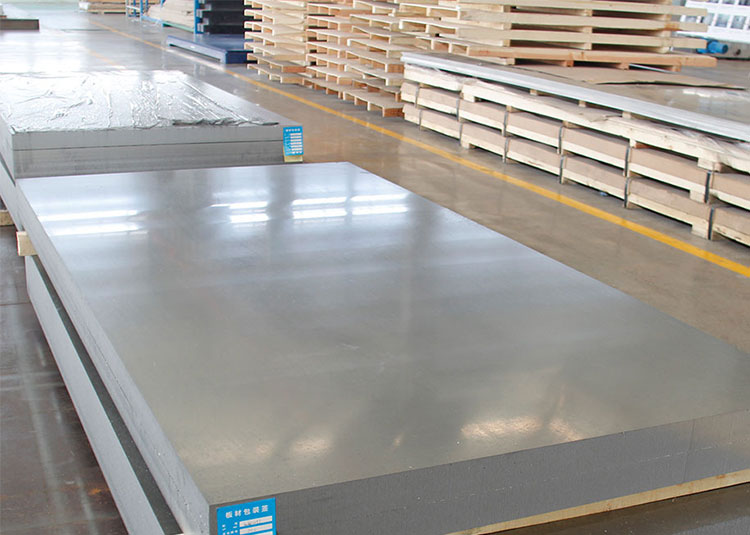

In the world of decorative metals, some materials perform quietly in the background, while others speak through light. 1050 H18 aluminum coil mirror finished coil belongs to the second category. It is not simply an aluminum product with a reflective face; it is a carefully engineered balance of purity, hardness, surface treatment, and process consistency.
For buyers, fabricators, and designers, the appeal of 1050 mirror finished aluminum coil lies in its simplicity and discipline. It is based on a high-purity aluminum alloy, strengthened through cold working to the H18 temper, and processed into a highly reflective surface that supports applications in lighting, interior decoration, appliance panels, signage, architectural trim, and insulated equipment shells. The result is a coil that combines aesthetic brightness with predictable forming behavior and excellent corrosion resistance.
Why 1050 H18 Mirror Aluminum Coil Is Different
Many aluminum alloys are chosen for strength. 1050 aluminum coil is chosen for purity. With a minimum aluminum content of 99.50%, this alloy offers exceptional corrosion resistance, strong thermal conductivity, high electrical conductivity, and excellent suitability for surface finishing. When transformed into a mirror finished coil, the alloy reveals one of its most valuable characteristics: a clean and uniform substrate that can support a high-quality reflective finish.
The H18 temper adds another dimension. In this condition, the aluminum is strain-hardened to a relatively hard state compared with softer tempers such as H14 or H24. This makes the coil more suitable for applications where greater stiffness, improved surface stability, and better resistance to handling deformation are required. From a manufacturing viewpoint, this means the material is not merely polished for appearance; it is mechanically conditioned for reliability.
Seen from a distinctive viewpoint, 1050 H18 mirror aluminum coil is best described as a surface-performance material. Its value is not only in what it is made of, but in how it behaves under light, under fabrication, and over time.
The Technical Identity of 1050 H18 Mirror Finished Coil
The designation itself tells an important story.
1050 identifies the alloy family. This is a commercially pure aluminum grade in the 1xxx series, known for high aluminum content and strong resistance to atmospheric attack.
H18 identifies the temper. In aluminum temper terminology, "H" refers to strain hardening, and "18" means the material has been cold worked to its full hard condition. Compared with softer tempers, H18 provides higher tensile strength and hardness, though with lower ductility.
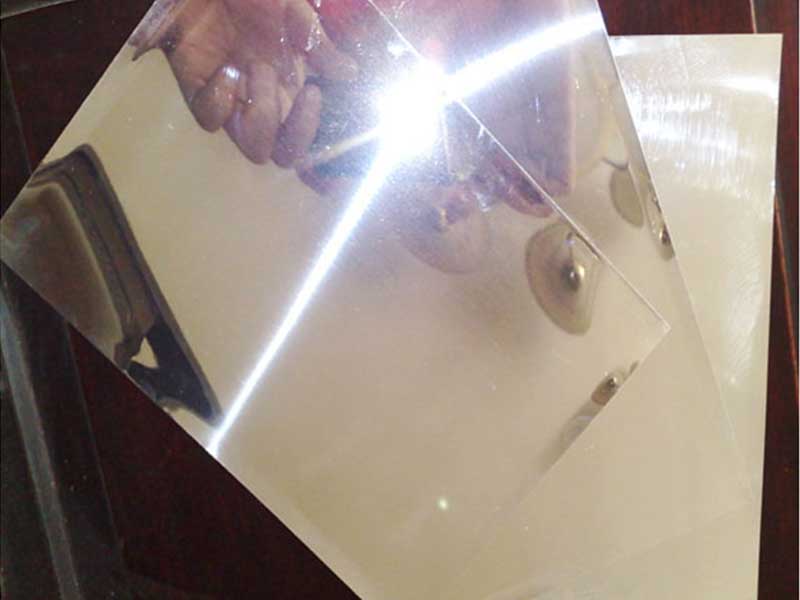
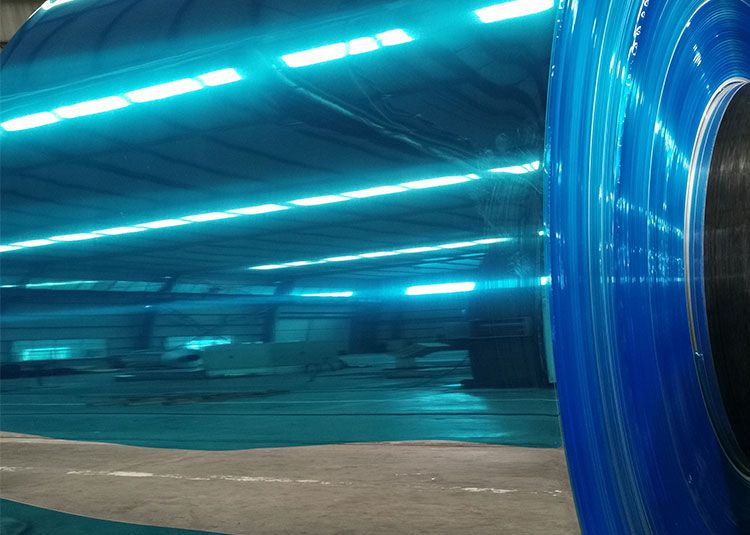
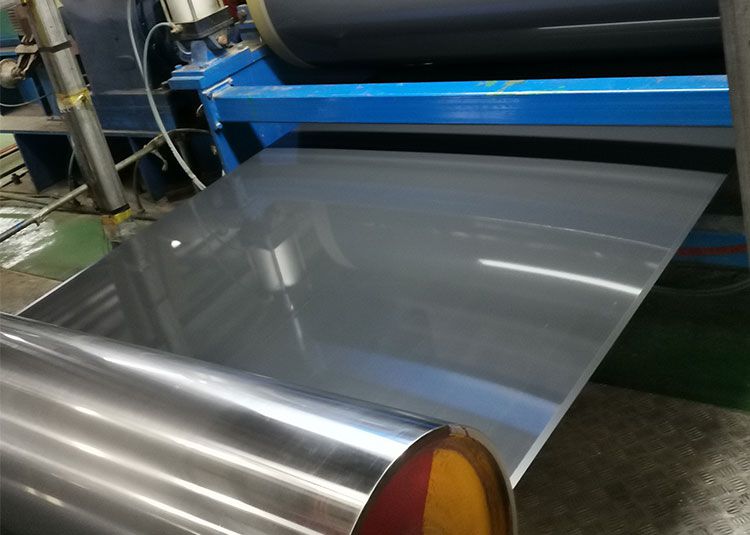
Mirror finished coil refers to the surface treatment. The coil surface is mechanically polished, rolled, chemically brightened, anodized, or processed through combined finishing routes to achieve high reflectivity and a smooth visual effect. Depending on the production route, the mirror finish may be categorized as standard bright finish, high mirror finish, or anodized mirror finish.
Typical Product Parameters of 1050 H18 Aluminum Coil Mirror Finished Coil
The exact specification depends on end-use requirements, but typical supply parameters are often as follows:
| Parameter | Typical Range |
|---|---|
| Alloy | 1050 |
| Temper | H18 |
| Aluminum Content | ≥ 99.50% |
| Thickness | 0.20 mm – 2.00 mm |
| Width | 20 mm – 1650 mm |
| Coil Inner Diameter | 150 mm, 300 mm, 405 mm, 505 mm |
| Surface Finish | Mirror finished, bright polished, anodized mirror optional |
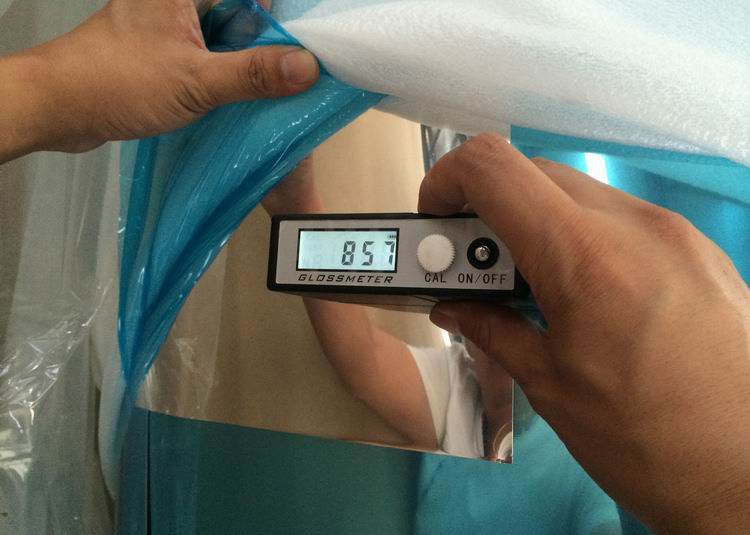
| Reflectivity | Usually 80% – 95% depending on process |
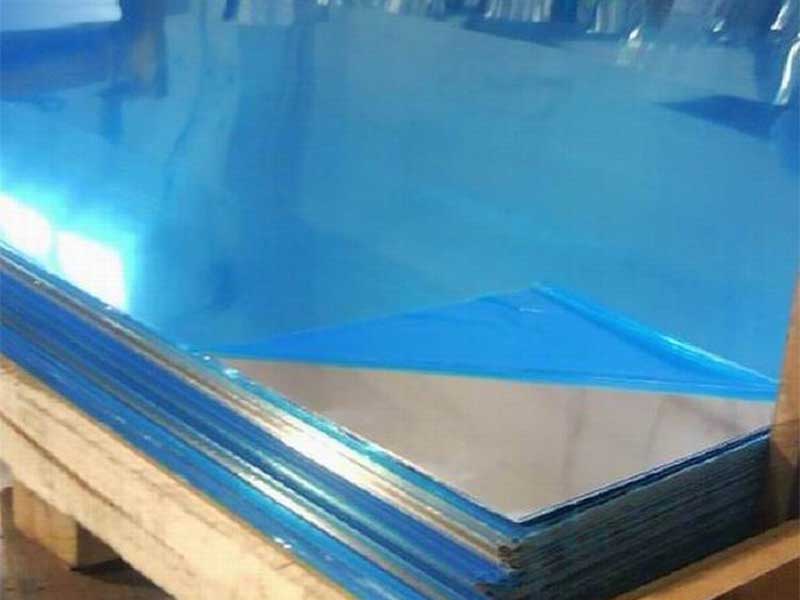
| Surface Protection | PE film, PVC film, paper interleave optional |
| Edge Condition | Mill edge or slit edge |
| Flatness | Controlled according to application requirement |
| Application Temperature | Suitable for common indoor and industrial environments |
These ranges show why the material is so adaptable. Thin gauges serve lighting reflectors and decorative laminates, while thicker gauges are often selected for appliance panels, signage bases, and architectural trim components.
Implementation Standards and Common Supply Specifications
For professional procurement, product quality is not defined only by brightness. It is also tied to the standards used during production and inspection. 1050 H18 mirror aluminum coil is commonly produced and supplied in accordance with internationally recognized standards such as:
| Standard | Scope |
|---|---|
| ASTM B209 | Standard specification for aluminum and aluminum-alloy sheet and plate |
| EN 485 | Aluminum and aluminum alloys, sheet, strip and plate |
| EN 573 | Chemical composition and designation of wrought aluminum alloys |
| GB/T 3880 | Aluminum and aluminum alloy sheets and strips for general industrial use |
| JIS H4000 | Aluminum and aluminum alloy plates, sheets and strips |
These standards help define acceptable limits for chemical composition, mechanical properties, dimensional tolerances, and surface quality. In mirror-finished products, additional internal quality control is usually applied for gloss, reflectivity, waviness, scratch resistance, and protective film adhesion.
Chemical Composition of 1050 Aluminum Alloy
Because 1050 is a high-purity aluminum grade, its chemistry is tightly controlled. The alloy is intentionally simple, and that simplicity is one of its greatest technical strengths.
| Element | Chemical Composition % |
|---|---|
| Aluminum Al | ≥ 99.50 |
| Silicon Si | ≤ 0.25 |
| Iron Fe | ≤ 0.40 |
| Copper Cu | ≤ 0.05 |
| Manganese Mn | ≤ 0.05 |
| Magnesium Mg | ≤ 0.05 |
| Zinc Zn | ≤ 0.05 |
| Titanium Ti | ≤ 0.03 |
| Vanadium V | ≤ 0.05 |
| Others Each | ≤ 0.03 |
| Others Total | ≤ 0.03 |
This chemistry explains several practical advantages. The very high aluminum content supports corrosion resistance and makes the material highly responsive to polishing and bright finishing. Low levels of alloying additions reduce the risk of surface irregularity and help maintain a cleaner reflective appearance.
Mechanical Properties in the H18 Temper
While exact values vary by thickness and processing route, typical mechanical properties of 1050 H18 aluminum coil can be summarized as follows:
| Property | Typical Value |
|---|---|
| Tensile Strength | 105 – 145 MPa |
| Yield Strength | ≥ 85 MPa |
| Elongation | Low compared with softer tempers |
| Hardness | Relatively high for 1xxx series in full hard temper |
| Formability | Moderate to limited in deep forming |
| Corrosion Resistance | Excellent |
| Thermal Conductivity | High |
| Electrical Conductivity | High |
A distinctive way to interpret these figures is to think of H18 as a temper that protects the mirror itself. A softer temper may offer easier forming, but it can also be more vulnerable to handling dents, surface distortion, and shape instability. H18 sacrifices some ductility in exchange for a more disciplined sheet behavior, which is often valuable in decorative and reflective applications.
Surface Processing: Where the Mirror Effect Actually Comes From
One common misconception is that mirror aluminum is simply polished aluminum. In reality, mirror finished aluminum coil is the result of a much more sensitive chain of operations. Each step affects the final optical performance.
The base coil must begin with consistent chemistry, low inclusion content, and a controlled rolling structure. Surface preparation is then critical. Degreasing, fine grinding, mechanical polishing, rolling brightening, or chemical brightening may be used depending on target reflectivity. In some cases, anodizing follows to improve corrosion resistance, increase surface durability, and stabilize the appearance.
From this viewpoint, the mirror finish is less a coating and more a precision-managed surface state. The best mirror aluminum does not merely reflect an image. It reflects process discipline.
Alloy Tempering and Performance Conditions
The choice of H18 temper should always be connected to the fabrication route and service condition. In mirror applications, temper is not just about strength; it also influences visual stability.
In a softer temper such as H14, the aluminum may be easier to bend, stamp, or shape. However, if the part is expected to remain visually flat and resist light deformation during transportation and installation, H18 can be a stronger option. This is especially important in long decorative strips, reflector back panels, appliance trims, and sheet components that are viewed under direct light.
That said, H18 is not ideal for every forming operation. Tight-radius bending, deep drawing, and complex stamped profiles may require temper reconsideration. For projects where appearance after installation matters more than aggressive forming, 1050 H18 mirror finished coil often provides the best balance.
Practical Advantages in Real Applications
The commercial value of 1050 h18 aluminum coil mirror finished coil comes from a combination of optical quality and process efficiency.
Its high reflectivity makes it useful in lighting systems, reflector panels, and luminous equipment where light management matters. In decorative fields, the bright surface creates a clean, modern visual effect while remaining lighter than stainless steel. In appliance housings and insulated equipment panels, it offers an attractive finish together with resistance to corrosion. In signage and display production, it provides a premium look without the weight penalty of thicker alternative metals.
Another overlooked advantage is fabrication economy. Since 1050 alloy is relatively easy to slit, shear, laminate, and surface protect, processors can work with it efficiently in coil form. The mirror finish also allows manufacturers to create elegant visual effects without secondary painting in some applications, which can reduce process steps.
What Buyers Should Really Check
When sourcing 1050 H18 mirror aluminum coil, reflectivity alone should never be the only checkpoint. Surface quality must be assessed in the context of the final application. For high-visibility decorative use, details such as orange peel, waviness, roll marks, micro-scratches, and film residue can affect commercial value more than a small difference in tensile strength.
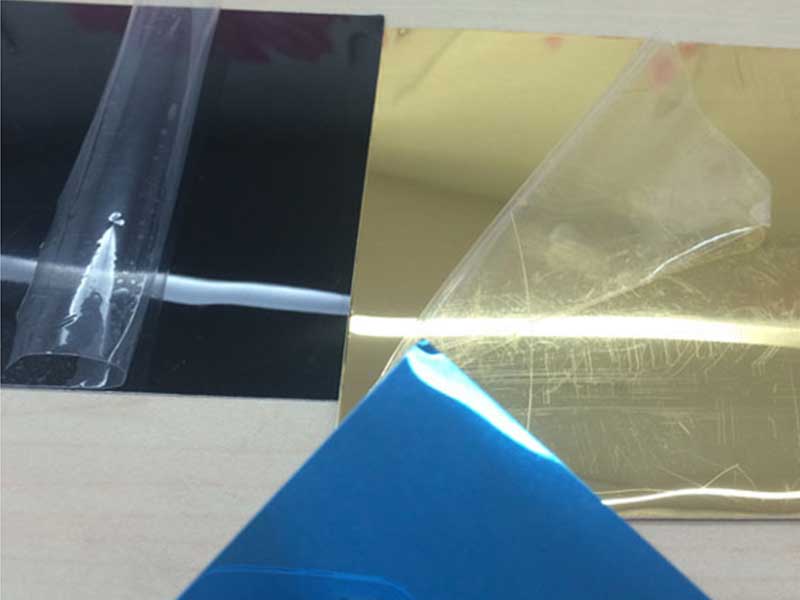
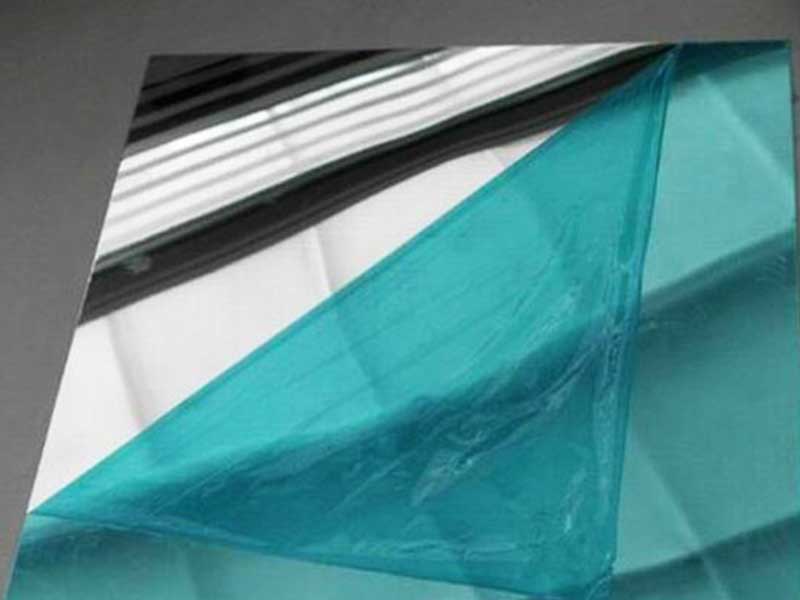
It is also important to confirm whether the product is mechanical mirror finish or anodized mirror finish, since this will influence durability and service performance. Protective film type matters as well. A film that is too aggressive may leave adhesive traces, while a film that is too weak may fail during transport.
Coil thickness tolerance, width precision, and edge quality are equally important for automated processing lines. In many projects, dimensional consistency is what protects the mirror surface from downstream damage.
A Material That Works Through Light
There is a reason 1050 H18 aluminum coil mirror finished coil remains in demand across decorative and industrial sectors. It occupies a useful space between raw function and refined appearance. It is pure enough to finish beautifully, hard enough to hold shape reliably, and versatile enough to serve in many processing environments.
From a distinctive perspective, this product should not be viewed as a simple bright aluminum coil. It is a light-responsive engineering material. Its high-purity chemistry supports a clean surface. Its H18 temper protects structural discipline. Its mirror finish transforms ordinary metal into a tool for visual performance.
For manufacturers seeking an aluminum solution that combines high reflectivity, corrosion resistance, lightweight performance, and stable mechanical behavior, 1050 mirror finished aluminum coil in H18 temper offers an efficient and elegant answer. In modern applications where surfaces are expected to work as hard as structures, this alloy continues to prove that reflection is not just an appearance feature. It is a form of precision.
Keywords Naturally Related to This Product
1050 H18 aluminum coil mirror finished coil, 1050 mirror aluminum coil, mirror finished aluminum sheet coil, high reflectivity aluminum coil, 1050 aluminum alloy H18, decorative aluminum mirror coil, bright polished aluminum coil, anodized mirror aluminum coil, aluminum reflector coil, and pure aluminum mirror finish coil are all relevant search terms connected with this product category.