
Aluminium Foil A1235 & 8079: Two "Quiet Workhorses" Behind Everyday Barrier Performance
In the aluminium foil world, most conversations focus on thickness, shine, or whether a roll is "food grade." A more revealing way to understand Aluminium Foil A1235 and 8079 is to treat them like two different barrier personalities built from the same metal family. Both are designed to block oxygen, light, aroma, and moisture, yet they succeed in slightly different ways depending on purity, alloying elements, and temper. That subtle difference is exactly why A1235 and 8079 are so widely specified for packaging, insulation, pharmaceutical foil, and laminated structures.
Why A1235 and 8079 Dominate Thin Gauge Foil Applications
A1235 foil: purity-driven consistency
A1235 (often written as 1235) belongs to the high-purity aluminium group. Its value is not "exotic alloying," but reliability: stable rolling behavior, good surface quality, and predictable barrier performance once it is converted into laminated foil, paper/foil, or plastic/foil composites.
Because A1235 is very close to pure aluminium, it tends to show strong conductivity and clean surface response, which matters when the foil is later coated, printed, or adhesively laminated.
8079 foil: engineered strength for demanding converting
8079 aluminium foil is often selected when you want a little more mechanical confidence at very thin gauges. It is commonly used for pharmaceutical blister foil, cold forming laminate structures, lidding, and high-barrier packaging, especially when the converting process includes tight bends, aggressive tension control, or deep-forming stresses.
The "distinctive" advantage of 8079 is that its chemistry and process control are frequently tuned to deliver higher strength and better puncture resistance at comparable thickness, which is why many converters like it for difficult forming and robust barrier packs.
Technical Parameters That Buyers Actually Feel in Production
Instead of listing generic properties, consider how these parameters translate into real manufacturing outcomes.
Thickness range and gauge stability
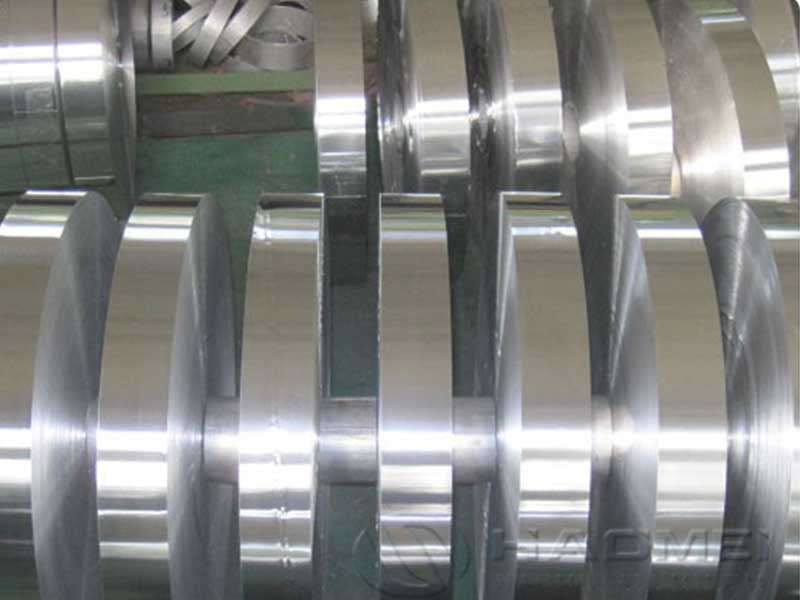
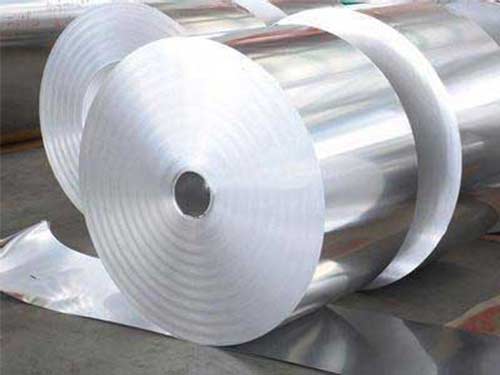
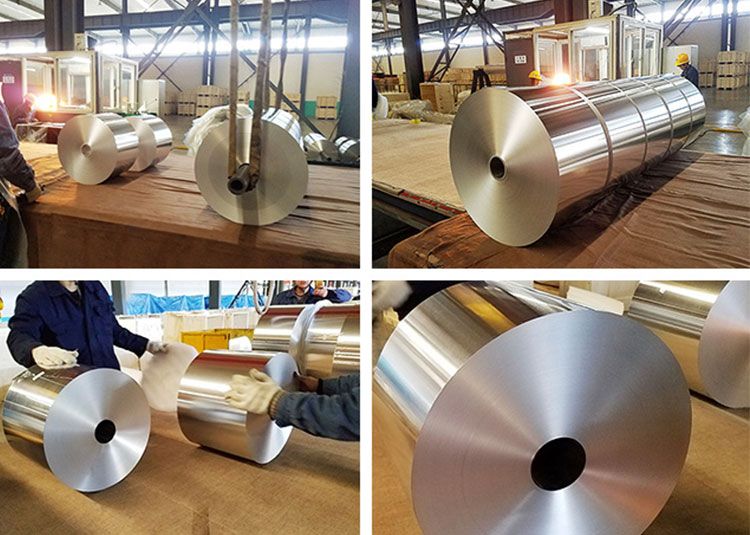
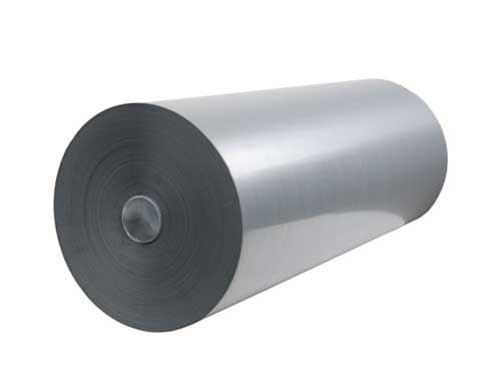
Thin foil performance is not just nominal thickness; it's thickness uniformity across width and along length. Both A1235 and 8079 are produced in common foil gauges used in packaging and insulation, and they are regularly supplied as jumbo rolls or slit rolls to match laminators and printing lines.
Surface quality and pinhole risk
At very low thickness, pinholes are the silent enemy of barrier integrity. Good melt cleanliness, filtration, rolling oil control, and annealing discipline are what separate premium foil from "looks okay" foil. A1235's high purity supports stable rolling; 8079 is often favored when the end user expects extra durability in thin gauges.
Temper choice: how foil "behaves" during converting
Foil temper is frequently the difference between smooth conversion and chronic web breaks.
- O (soft/annealed) is selected when you need maximum formability, dead-fold behavior, and stress relief for laminating and forming.
- H18 / H19 (hard) is chosen when stiffness, tension stability, and certain lidding behaviors matter.
- Intermediate tempers such as H22/H24 may be used for balanced performance depending on the product design and local standards.
The most practical viewpoint is this: soft temper helps shaping and sealing processes; hard temper helps handling and runnability. Choosing between A1235-O and 8079-O (or their hard tempers) is usually a decision about how much mechanical margin the process needs.
Implementation Standards and Common Specification References
Aluminium foil A1235 and 8079 are typically produced and inspected under widely adopted aluminium and foil standards. Depending on the destination market and contractual requirements, projects may reference standards such as:
- ASTM B479 (Aluminum and Aluminum-Alloy Foil for Flexible Barrier, Food, Pharmaceutical, and Similar Uses)
- EN 546 series (Aluminium and aluminium alloys - Foil)
- GB/T standards commonly used in Chinese supply chains for aluminium foil and inspection items
In practice, buyers often specify not only the alloy and temper but also requirements around pinhole count, surface cleanliness, oil residue, roughness, tensile properties, elongation, wettability/dyne level, and coil joining limits, because these control real-world converting yield.
Alloy Tempering and Supply Conditions: What to Specify to Avoid Misalignment
A distinctive way to clarify foil tempering is to treat it like a "contract" between metal and machine.
A1235-O (annealed)
Commonly used for household foil, semi-rigid containers (when laminated or supported), insulation facings, and general flexible packaging laminates where formability and dead-fold are central.
8079-O (annealed)
Frequently preferred for pharmaceutical and high-barrier laminates requiring strong resistance to cracking during forming and folding, while still maintaining softness for shaping.
A1235-H18 / 8079-H18 (hard)
Used where stiffness, flatness, and web handling at speed are critical. Hard temper is often chosen for lidding structures or applications needing a crisp feel and higher strength.
If the end-use includes heat sealing, remember the aluminium itself is not heat-sealed directly; the seal layer is usually lacquer, PE, PP, or other polymer. That makes surface condition and cleanliness as important as the temper.
Chemical Composition: A1235 vs 8079 (Typical Limits)
The chemical difference between A1235 and 8079 is subtle but meaningful. A1235 emphasizes high aluminium content, while 8079 permits slightly higher alloying elements to reach targeted strength and processing behavior.
Below is a typical composition table commonly referenced in industry practice; exact limits can vary by standard and supplier agreement, so final values should follow the mill test certificate and the governing standard specified in the purchase order.
Chemical Composition Table (wt.%)
| Alloy | Al (min) | Si (max) | Fe (max) | Cu (max) | Mn (max) | Mg (max) | Zn (max) | Ti (max) |
|---|---|---|---|---|---|---|---|---|
| A1235 | 99.35 | 0.65 (combined with Fe typically controlled) | 0.65 | 0.05 | 0.05 | 0.05 | 0.10 | 0.03 |
| 8079 | remainder | 0.30 | 1.30 | 0.10 | 0.10 | 0.10 | 0.10 | 0.08 |
How to interpret this table in a converting-focused way
Higher Fe/Si allowances can influence strength and rolling response, which is one reason 8079 is often positioned for demanding foil structures. Meanwhile, A1235's high purity supports excellent surface response and consistent barrier when processed correctly.
Typical Mechanical Property Targets (Temper-Dependent)
Mechanical properties in foil are strongly influenced by temper, thickness, and processing route, so they are usually specified as ranges according to the applicable standard (ASTM/EN/GB) and agreed inspection method.
In general terms:
- O temper emphasizes elongation and formability, supporting deep drawing, folding, and lamination without cracking.
- H18/H19 emphasizes tensile strength and stiffness for high-speed handling and resistant lidding behavior.
If you want the specification to protect your production line, focus on tensile strength, elongation, pinholes, oil residue, and surface wetting rather than a single "hardness" descriptor.
Application Fit: Choosing Between Aluminium Foil A1235 and 8079
When A1235 is the smarter choice
A1235 is often ideal when your product needs clean appearance, stable lamination, and cost-effective barrier performance across large volumes, such as:
- household foil and food wrapping structures
- insulation facings and reflective laminates
- general-purpose flexible packaging where forming is moderate
When 8079 earns its premium
8079 is typically chosen when a project demands higher mechanical safety margin in thin gauge foil, especially for:
- pharmaceutical blister and lidding foil
- high-barrier packs needing better puncture resistance
- applications with aggressive forming, folding, or tight converting tensions
What "Good Foil" Looks Like Beyond the Datasheet
A unique but practical way to evaluate A1235 and 8079 is to look for "quiet signals" of quality:
- low and stable pinhole levels at target gauge
- consistent surface energy for coating/printing/laminating
- controlled rolling oil residue to prevent delamination or odor transfer
- stable flatness and winding to reduce web breaks
- temper consistency coil-to-coil, supporting repeatable machine settings
These are the details that reduce scrap rate, not just satisfy an incoming inspection sheet.