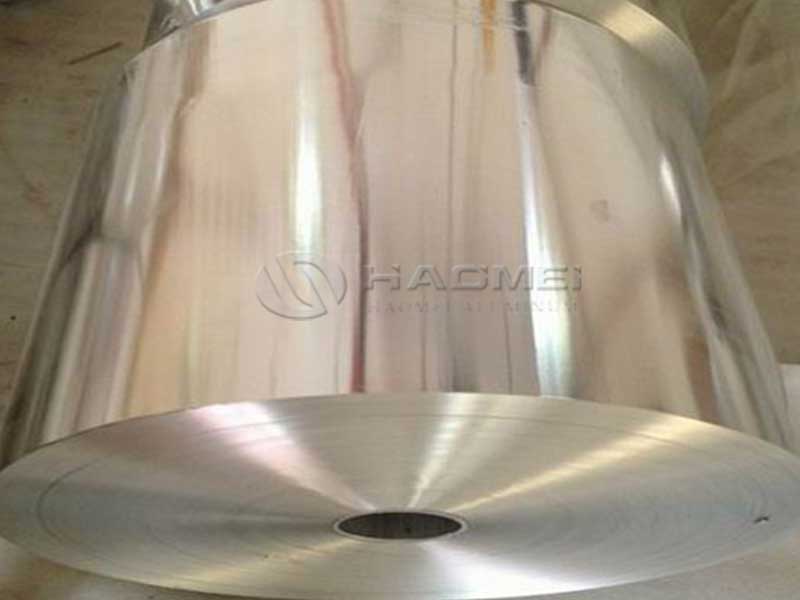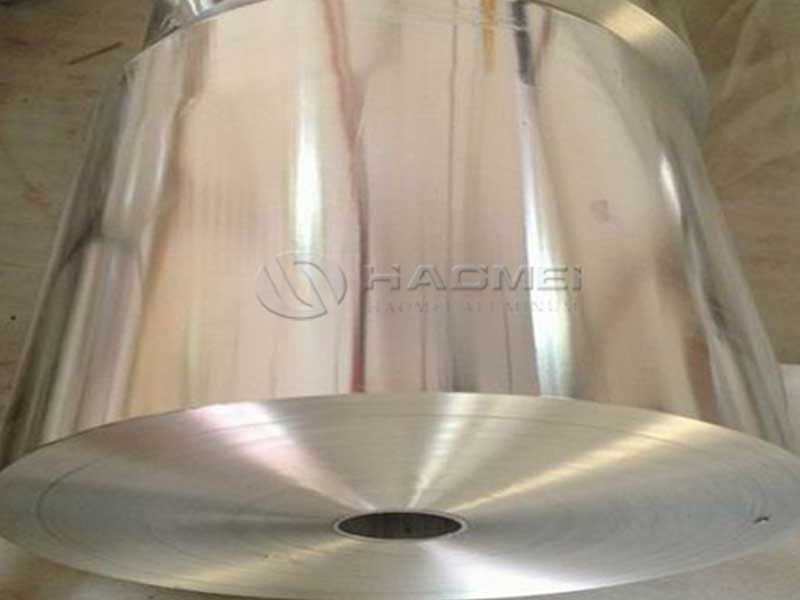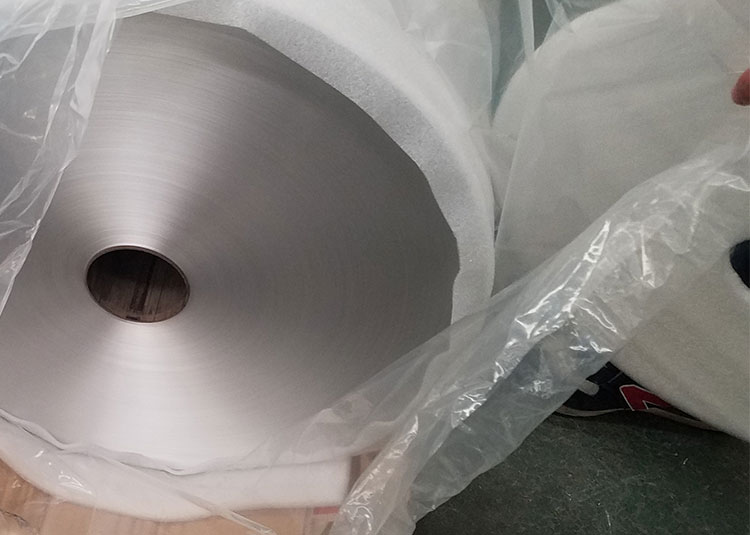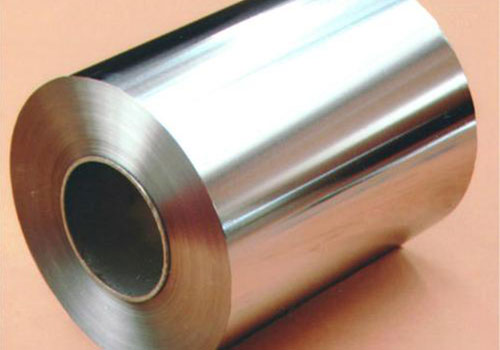

Battery tab aluminum foil is a critical conductive material used in lithium-ion batteries for electric vehicles. It connects the electrode assembly to the external circuit and directly affects current transmission, heat generation, vibration durability, and long-term battery safety. In EV battery packs, tabs are exposed to frequent charge-discharge cycles, thermal expansion, vehicle vibration, and repeated mechanical stress. For this reason, enhanced fatigue resistance has become one of the most important performance targets for battery tab aluminum foil.
What Is Battery Tab Aluminum Foil?
Battery tab aluminum foil is a high-purity aluminum alloy foil used mainly for the positive tab of lithium-ion batteries. It is typically welded to the aluminum current collector and then connected to the battery cap, terminal, or busbar. In EV cells, the tab must maintain stable conductivity and mechanical integrity throughout thousands of cycles.
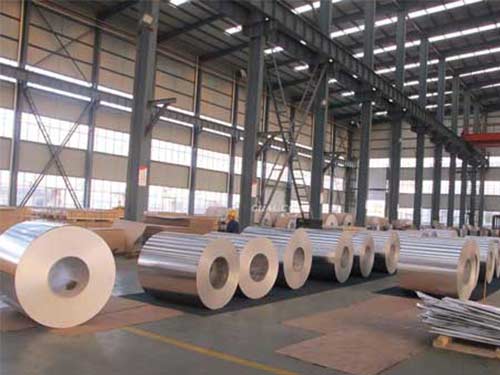
Compared with conventional industrial foil, battery tab foil requires tighter control of thickness, tensile properties, surface cleanliness, edge quality, and fatigue behavior. Advanced rolling and annealing processes are used to improve microstructure uniformity and reduce crack initiation under repeated bending or vibration.
Main Functions of Battery Tab Aluminum Foil
Battery tab foil serves several essential functions in EV battery systems:
| Function | Description | Importance in EV Batteries |
|---|---|---|
| Current conduction | Transfers electrical current from the electrode to the external circuit | Low resistance supports high power output and charging efficiency |
| Mechanical connection | Acts as the physical link between cell core and terminal | Strong bonding reduces failure risk during vibration and cycling |
| Heat management support | Helps minimize local resistance heating | Lower heat generation improves cell stability |
| Weldability | Enables ultrasonic, laser, or resistance welding | Reliable joining is critical for automated battery production |
| Fatigue durability | Withstands repeated bending, expansion, and vibration | Long service life is essential in EV driving conditions |
Why Enhanced Fatigue Resistance Matters
In electric vehicles, battery tabs are subject to dynamic stress during manufacturing, module assembly, road vibration, thermal cycling, and battery swelling. Poor fatigue resistance can lead to microcracks, rising contact resistance, local overheating, or tab fracture.
Enhanced fatigue resistant aluminum foil offers these advantages:
| Performance Benefit | Practical Value |
|---|---|
| Longer tab service life | Reduces risk of electrical interruption over battery lifetime |
| Better vibration tolerance | Supports use in EV, HEV, and PHEV battery packs |
| Lower crack sensitivity | Improves reliability after repeated bending or forming |
| Stable internal resistance | Helps maintain efficient current flow |
| Improved weld zone integrity | Supports strong and durable tab joints |
Typical EV Applications
Battery tab aluminum foil is widely used in power battery manufacturing, especially where high reliability and cycle stability are required.
| Application Area | Typical Use |
|---|---|
| EV pouch cells | Positive tabs for high energy density traction batteries |
| Prismatic lithium-ion batteries | Internal or external tab connection parts |
| HEV and PHEV battery systems | Tabs exposed to frequent high-rate cycling |
| Energy storage packs | Long-life tab materials for stationary systems derived from EV technology |
| High-power battery modules | Cells requiring low resistance and strong vibration performance |
Common Alloys and Temper Conditions
The selection of alloy and temper has a direct effect on strength, elongation, fatigue life, and weldability. Battery tab foil is generally based on high-purity aluminum or soft aluminum alloys optimized for conductivity and formability.
| Alloy | Typical Temper | Main Characteristics | Typical Use |
|---|---|---|---|
| 1060 | O | Very high purity, excellent conductivity, good formability | Standard battery tab foil |
| 1070 | O | Higher conductivity, soft temper, good corrosion resistance | Premium conductive tab applications |
| 1100 | O | Good strength-conductivity balance, excellent processing performance | General lithium battery tabs |
| 1235 | O | High purity, soft, thin gauge capability | Ultra-thin tab foil |
| 1xxx customized alloy | O / H14 / partial annealed | Tailored fatigue and forming performance | Advanced EV battery designs |
Soft temper is most commonly used because it provides better flexibility, better ultrasonic welding behavior, and higher resistance to crack formation during repeated flexing.
Chemical Composition
Typical chemical composition depends on the chosen alloy. The table below shows common reference values for widely used battery tab aluminum foil alloys.
| Alloy | Al (%) | Si (%) | Fe (%) | Cu (%) | Mn (%) | Mg (%) | Zn (%) | Others (%) |
|---|---|---|---|---|---|---|---|---|
| 1060 | ≥ 99.60 | ≤ 0.25 | ≤ 0.35 | ≤ 0.05 | ≤ 0.03 | ≤ 0.03 | ≤ 0.05 | ≤ 0.03 each |
| 1070 | ≥ 99.70 | ≤ 0.20 | ≤ 0.25 | ≤ 0.04 | ≤ 0.03 | ≤ 0.03 | ≤ 0.04 | ≤ 0.03 each |
| 1100 | ≥ 99.00 | Si+Fe: ≤ 0.95 | - | 0.05–0.20 | ≤ 0.05 | - | ≤ 0.10 | ≤ 0.05 each |
| 1235 | ≥ 99.35 | ≤ 0.65 | - | ≤ 0.05 | ≤ 0.05 | ≤ 0.05 | ≤ 0.10 | ≤ 0.05 each |
Actual composition can be adjusted within applicable standards and customer performance targets.
Technical Specifications
Battery tab aluminum foil for EV applications is supplied in very tight dimensional tolerances to ensure stable automatic processing and reliable welding.
| Parameter | Typical Range |
|---|---|
| Thickness | 0.02 mm – 0.20 mm |
| Width | 5 mm – 200 mm |
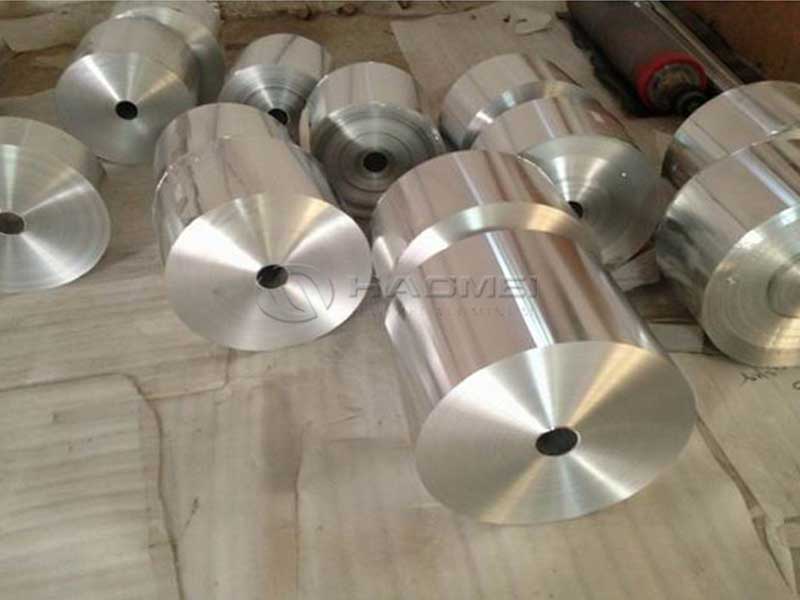
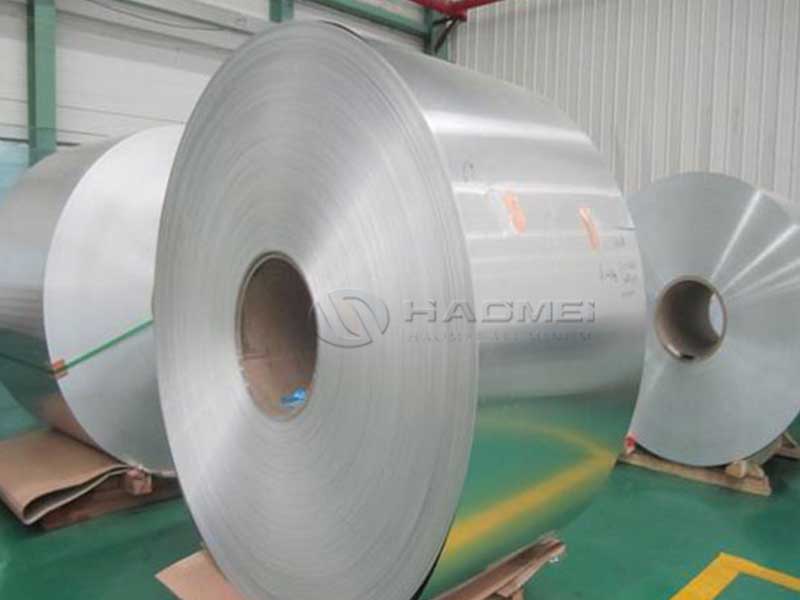
| Coil inner diameter | 150 mm / 300 mm / 400 mm / customized |
| Tensile strength | 60 MPa – 130 MPa |
| Elongation | 3% – 25% |
| Electrical conductivity | Approx. 59%–63% IACS depending on alloy |
| Surface condition | Clean, oil-controlled, scratch-free, oxide-controlled |
| Edge quality | Burr-free or low-burr slit edge |
| Flatness | High flatness for automated tab punching and welding |
Fatigue-Related Performance Indicators
For long lasting EV battery tabs, conventional tensile data alone is not enough. Fatigue performance depends on metallurgical consistency, grain refinement, residual stress control, and surface quality.
| Indicator | Desired Performance Trend | Effect on Service Life |
|---|---|---|
| Repeated bending resistance | High | Reduces crack initiation |
| Surface defect level | Low | Prevents stress concentration |
| Grain uniformity | High | Improves mechanical consistency |
| Residual rolling stress | Low | Enhances dimensional and fatigue stability |
| Elongation in soft temper | Moderate to high | Supports forming and cyclic deformation |
| Weld heat-affected zone stability | High | Reduces failure near welded joints |
Relevant Implementation Standards
Battery tab aluminum foil may be produced according to general aluminum foil standards, battery industry controls, and customer-specific EV specifications.
| Standard / Reference | Scope |
|---|---|
| GB/T 3880 | Wrought aluminum and aluminum alloy plates, sheets and strips |
| GB/T 3190 | Chemical composition of wrought aluminum and aluminum alloys |
| ASTM B209 | Aluminum and aluminum-alloy sheet and plate |
| EN 485 | Aluminum and aluminum alloys sheet, strip and plate |
| RoHS | Restriction of hazardous substances compliance |
| REACH | Chemical substance compliance for global supply |
| ISO 9001 | Quality management system |
| IATF 16949 | Automotive quality management for EV battery supply chain |
Many EV battery manufacturers also require internal tests for weldability, peel strength, electrolyte compatibility, and dynamic fatigue life.
Manufacturing Features That Improve Fatigue Resistance
Enhanced fatigue resistant battery tab foil is usually produced through optimized process control.
| Process Feature | Technical Contribution |
|---|---|
| High-purity melt control | Reduces inclusions that can trigger cracks |
| Precision rolling | Ensures tight thickness tolerance and smooth surface |
| Controlled annealing | Balances softness, strength, and elongation |
| Surface cleaning treatment | Improves welding consistency |
| Slitting quality control | Minimizes edge cracks and burr defects |
| Microstructure optimization | Supports repeated flexing performance |
Advantages for EV Battery Manufacturers
Customers choosing high-quality battery tab aluminum foil benefit from improved manufacturing efficiency and field reliability.
| Advantage | Customer Value |
|---|---|
| Stable conductivity | Efficient current transfer in high-power cells |
| Excellent weldability | Better compatibility with automated production |
| Enhanced fatigue resistance | Longer tab life in demanding EV conditions |
| Tight tolerance control | Improved consistency in punching and assembly |
| Clean surface | Lower defect risk during joining |
| Custom alloy and temper options | Adaptation to different battery chemistries and designs |