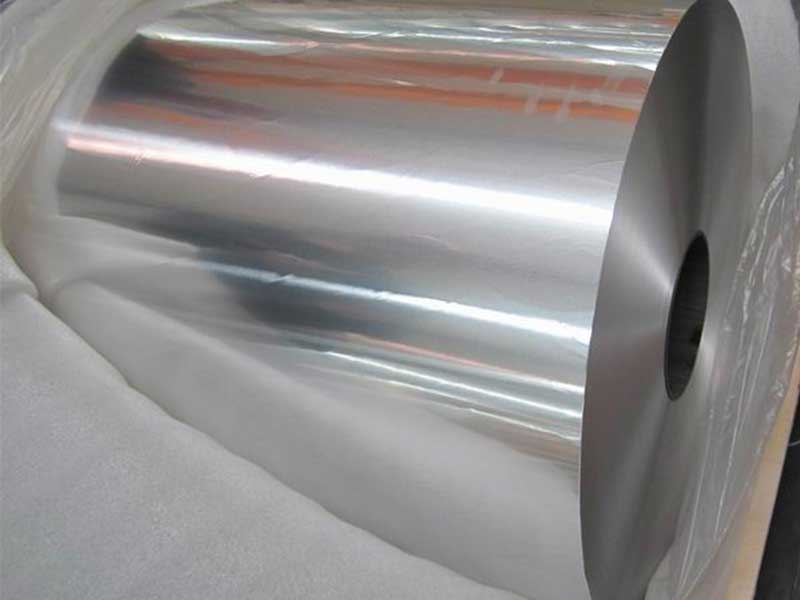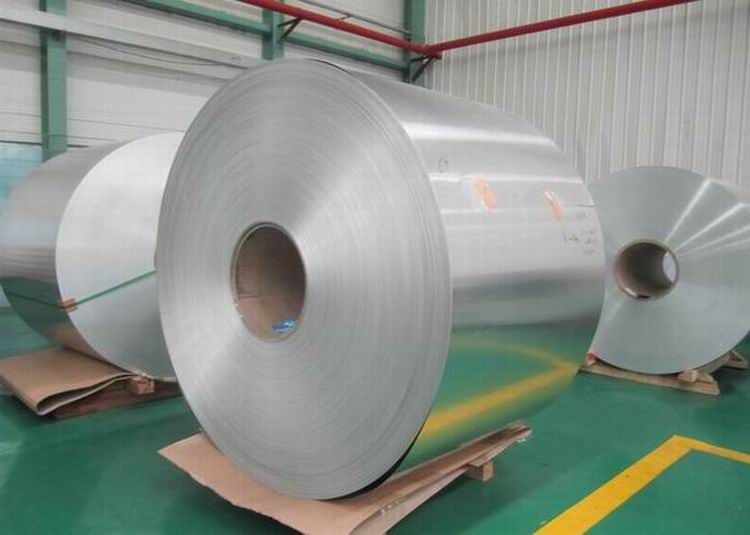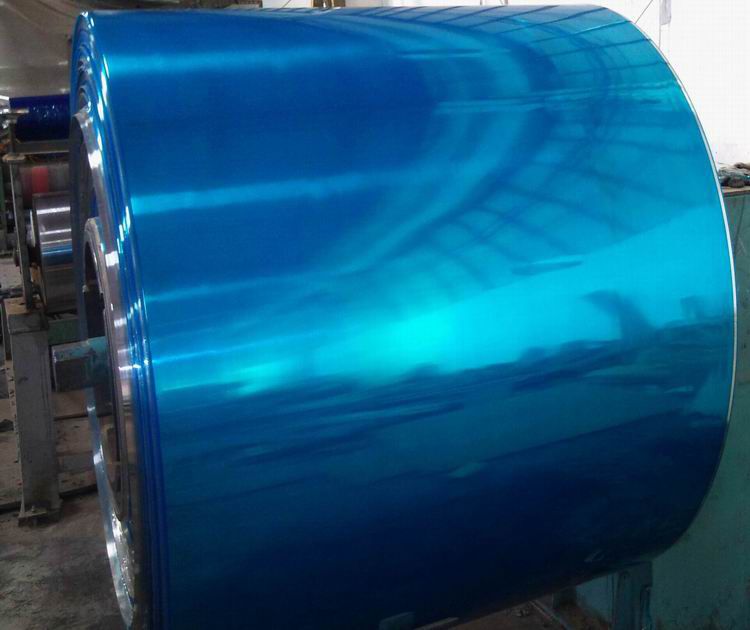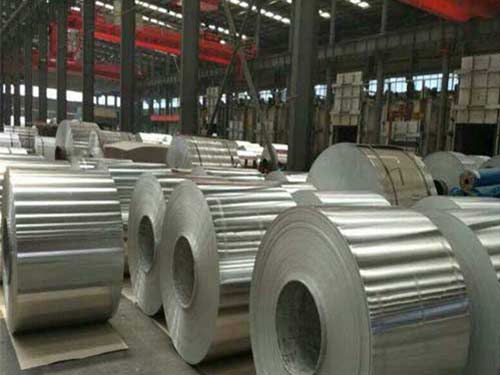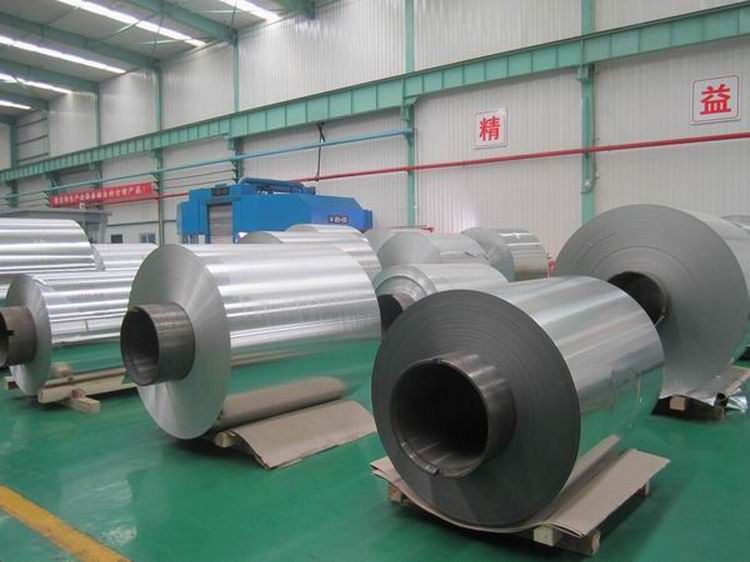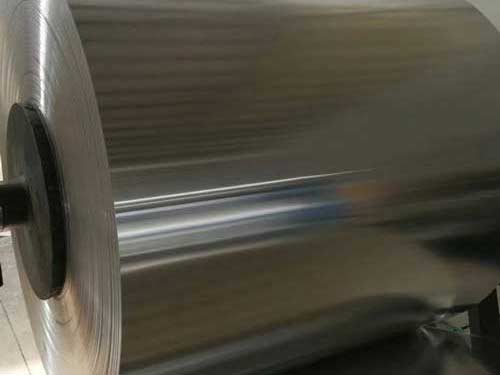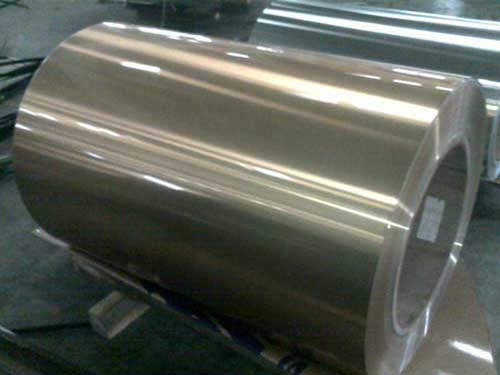

When buyers compare 1050 1060 1100 alloy aluminum coil, the discussion often starts with purity and price. But a more useful perspective is to look at what these coils actually do in manufacturing. These are not flashy structural alloys designed for maximum strength. Instead, they are the quiet workhorses of fabrication-chosen because they bend easily, conduct heat and electricity efficiently, accept surface treatment well, and remain stable in a wide variety of everyday industrial environments.
From insulation cladding and roofing sheets to lighting parts, cookware, transformer windings, signage, and decorative panels, 1050 1060 1100 aluminum coil serves industries that value consistency, cleanliness, and formability. Their strength lies in being easy to process. In many factories, that advantage saves more time and cost than a higher-strength alloy ever could.
the role of 1050, 1060, and 1100 aluminum coil
These three grades belong to the commercially pure aluminum family. Their aluminum content is very high, which gives them a combination of excellent corrosion resistance, high ductility, good thermal conductivity, and strong electrical performance.
What makes them especially attractive is not only their chemistry, but how smoothly they move through production. They stamp without cracking, roll-form cleanly, weld well in suitable processes, and can be anodized or coated for appearance and protection. For customers who need stable quality over large coil quantities, these alloys are often the most practical answer.
A simple way to distinguish them is this:
1050 aluminum coil is known for very high purity and excellent corrosion resistance, often used where deep drawing, chemical resistance, or conductivity matters.
1060 aluminum coil has even higher aluminum content and is widely selected for electrical applications, insulation jacketing, and products requiring strong elongation and workability.
1100 aluminum coil contains a small amount of copper, which slightly improves strength while still preserving very good formability and corrosion resistance. It is common in cookware, decorative use, fins, and general sheet metal fabrication.
Functions from a practical manufacturing viewpoint
Instead of viewing these alloys only by composition, it is helpful to understand their functions in production lines.
They reduce forming difficulty.
For parts that need bending, spinning, drawing, embossing, or stamping, these alloys are forgiving. This lowers the risk of edge cracking, tool marks, and waste during processing.
They support efficient heat transfer.
In applications such as heat shields, lighting components, and some heat exchange parts, their thermal conductivity helps move heat quickly and evenly.
They carry electricity effectively.
Especially in the case of 1060 aluminum coil, electrical conductivity is a major reason for selection in busbars, transformer strips, and cable-related uses.
They protect through natural corrosion resistance.
The oxide layer formed on the aluminum surface makes these coils suitable for humid environments, insulation systems, roofing, and general indoor or outdoor service.
They create clean surface finishes.
For anodized panels, reflective surfaces, nameplates, and decorative trim, the smooth rolling surface of these alloys can produce attractive results after proper treatment.
Typical applications of 1050 1060 1100 alloy aluminum coil
Because these alloys are easy to fabricate, their applications are broad and often overlap.
In building and insulation fields, they are used for pipe jacketing, roof panels, wall cladding, moisture barriers, and thermal insulation coverings. Their low weight and anti-corrosion behavior make installation simpler and service life longer.
In electrical industries, 1060 alloy aluminum coil is especially valued for conductor components, transformer winding material, and electrical connectors where conductivity and formability must be balanced.
In kitchenware and consumer goods, 1100 aluminum coil appears in cookware, bottle caps, utensils, lamp parts, and appliance trim because it shapes easily and offers a clean surface.
In signage and decoration, all three grades can be painted, embossed, brushed, or anodized. This makes them suitable for channel letters, reflective plates, traffic signs, and architectural decoration.
In industrial manufacturing, they are often converted into stamped components, fan blades, fins, tanks, containers, chemical equipment parts, and lightweight covers.
Common parameters customers check before buying
The performance of 1050 1060 1100 aluminum coil depends not only on alloy grade, but also on size, temper, and surface quality.
Typical supply range includes:
| Item | Common Range |
|---|---|
| Thickness | 0.2 mm – 6.0 mm |
| Width | 20 mm – 2650 mm |
| Coil inner diameter | 150 mm, 300 mm, 405 mm, 505 mm |
| Coil weight | Usually 1–8 tons, customizable |
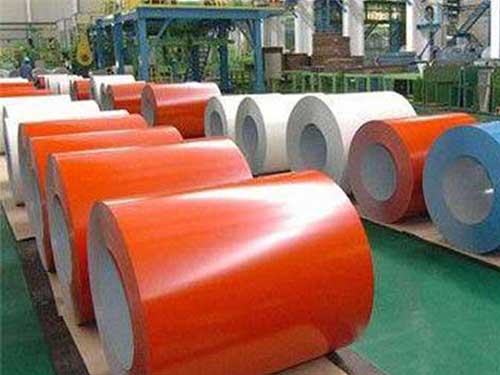
| Surface | Mill finish, coated, embossed, anodized, stucco, brushed |
| Edge | Mill edge or slit edge |
Tolerance requirements can vary by application, especially for electrical use, deep drawing, or continuous coating lines. Customers often also specify flatness, camber, surface cleanliness, oil level, and mechanical consistency across the full coil length.
Alloy tempering and supply conditions
Temper has a direct effect on machinability and forming behavior. For these alloys, common tempers include:
| Temper | Condition | Main Feature |
|---|---|---|
| O | Annealed | Softest state, best formability |
| H12 | Strain hardened, quarter hard | Slightly increased strength, good workability |
| H14 | Strain hardened, half hard | Balanced strength and formability |
| H16 | Strain hardened, three-quarter hard | Higher hardness for certain forming limits |
| H18 | Full hard | Maximum hardness, low ductility |
| H24 | Strain hardened and partially annealed | Stable balance for fabrication |
| H26 | Harder partially annealed condition | Better strength with controlled formability |
For deep drawing and spinning, O temper aluminum coil is often preferred. For roofing, cladding, and general sheet fabrication, H14 or H24 is common. For applications requiring higher rigidity, buyers may choose H18.
Chemical composition table
The exact composition should follow the applicable specification, but the typical chemistry is shown below.
| Alloy | Al (%) | Si (%) | Fe (%) | Cu (%) | Mn (%) | Mg (%) | Zn (%) | Ti (%) | Others (%) |
|---|---|---|---|---|---|---|---|---|---|
| 1050 | 99.50 min | 0.25 max | 0.40 max | 0.05 max | 0.05 max | 0.05 max | 0.05 max | 0.03 max | 0.03 each / 0.10 total |
| 1060 | 99.60 min | 0.25 max | 0.35 max | 0.05 max | 0.03 max | 0.03 max | 0.05 max | 0.03 max | 0.03 each / 0.10 total |
| 1100 | 99.00 min | Si + Fe: 0.95 max | - | 0.05–0.20 | 0.05 max | - | 0.10 max | - | 0.05 each / 0.15 total |
The small copper addition in 1100 aluminum coil is one reason it offers slightly different strength characteristics from 1050 and 1060, while still remaining highly workable.
Mechanical and physical characteristics
Typical values vary with temper and standard, but these alloys are generally known for:
| Property | 1050 | 1060 | 1100 |
|---|---|---|---|
| Density | About 2.71 g/cm³ | About 2.70 g/cm³ | About 2.71 g/cm³ |
| Electrical conductivity | Excellent | Excellent, often preferred | Very good |
| Thermal conductivity | Very high | Very high | Very high |
| Corrosion resistance | Excellent | Excellent | Excellent |
| Formability | Excellent | Excellent | Excellent |
| Strength level | Low | Low | Slightly higher than 1050/1060 |
This explains why they are usually selected for function, finish, and process efficiency rather than load-bearing strength.
Implementation standards commonly referenced
Reliable sourcing depends on compliance with recognized standards. Common implementation standards for 1050 1060 1100 alloy aluminum coil include:
| Standard | Region / Use |
|---|---|
| ASTM B209 | Aluminum and aluminum-alloy sheet and plate |
| EN 485 | European standards for sheet, strip, and plate |
| EN 573 | Chemical composition and alloy designation |
| GB/T 3880 | China standard for aluminum and aluminum alloy sheets and strips |
| JIS H4000 | Japanese industrial standard for aluminum sheet, plate, and strip |
Depending on end use, additional requirements may apply for coated coil, anodizing quality, food-contact suitability, or electrical conductivity.
Choosing the right grade
If the application emphasizes general corrosion resistance, soft forming, and economy, 1050 aluminum coil is a dependable choice. If conductivity is a priority, 1060 aluminum coil is often the stronger candidate. If the project needs a touch more strength without losing processing ease, 1100 aluminum coil is frequently the most balanced option.
In real purchasing decisions, however, alloy alone is not enough. The best result comes from matching alloy, temper, thickness, width, and surface condition to the actual fabrication method. A coil intended for embossing behaves differently from one meant for spinning or transformer winding. That is why experienced suppliers focus on the full processing route, not just the alloy code.
Final thought
The real value of 1050 1060 1100 alloy aluminum coil is not that it does one dramatic thing. Its value is that it does many important things reliably: it forms smoothly, conducts efficiently, resists corrosion naturally, and delivers a surface that manufacturers can trust. For customers seeking aluminum coil that keeps production simple and end-use performance stable, these grades remain some of the most practical and versatile choices on the market.