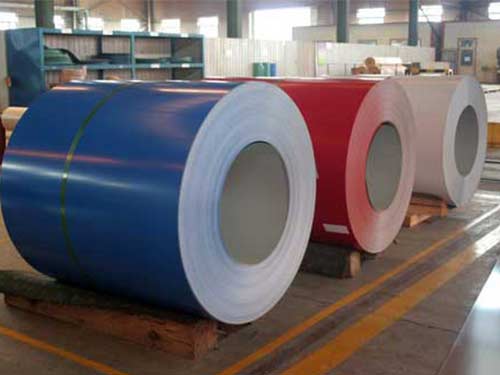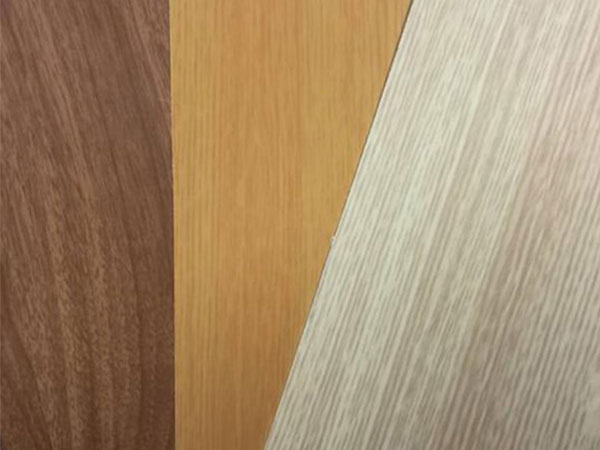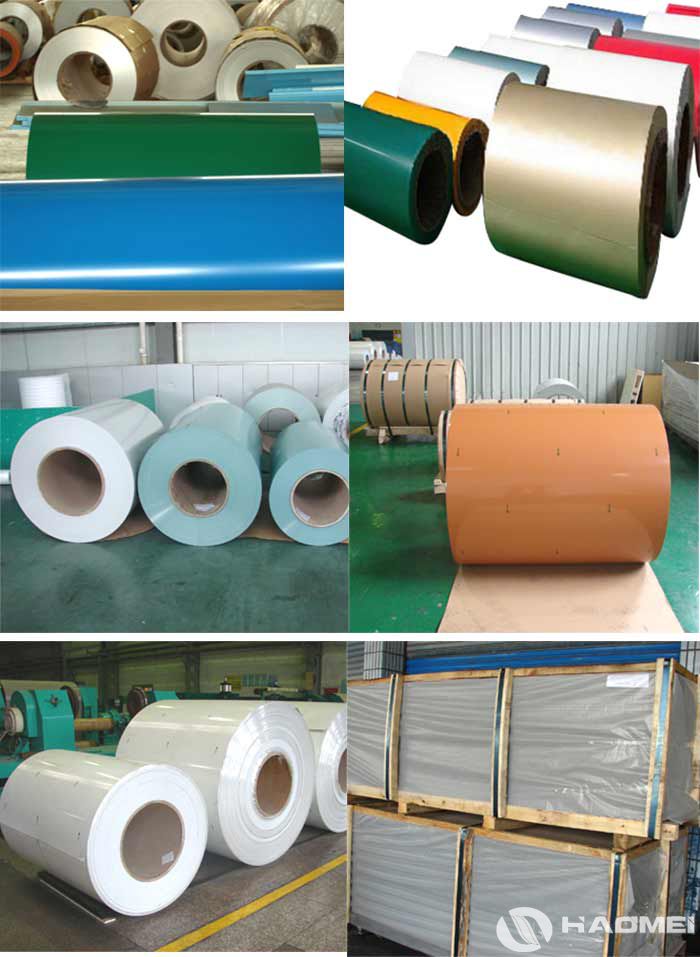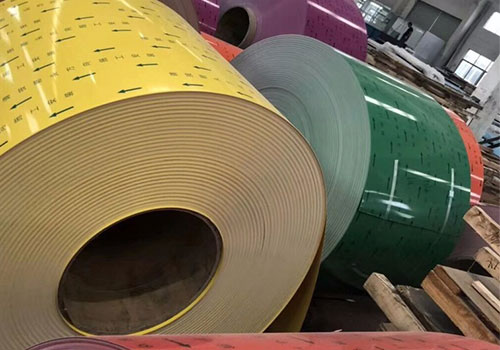

In modern architecture, surfaces are no longer expected to merely protect a building. They are asked to persuade, to imitate, to elevate, and sometimes to tell a story before anyone steps inside. That is exactly where PE PVDF color coated marble stone aluminum coil has found its strongest voice. It delivers the visual depth of natural marble, yet it behaves like engineered metal: lighter, more formable, more stable, and far easier to process in large-scale façade and interior systems.
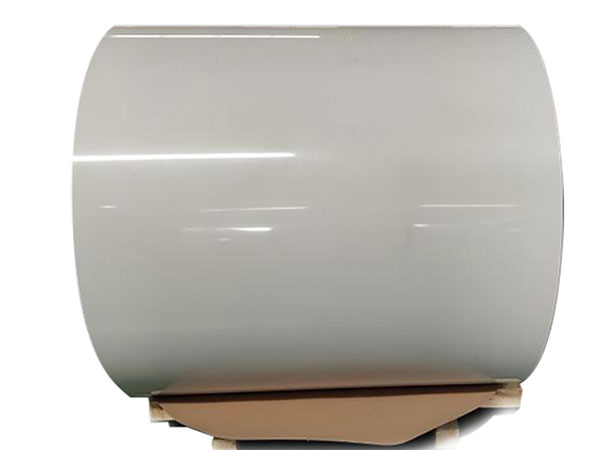
From a unique technical perspective, this material is not simply an aluminum coil with a printed stone pattern. It is better understood as a controlled composite appearance system built on an aluminum alloy substrate, chemical pretreatment, precision coating layers, and carefully tuned curing performance. The beauty on the surface is only the visible result; the real value lies in how every hidden layer contributes to corrosion resistance, adhesion, color retention, flexibility, and manufacturability.
Why Marble Stone Pattern Aluminum Coil Is More Than an Aesthetic Substitute
Natural marble is admired for its texture, but it is heavy, brittle, expensive to transport, difficult to install, and variable in quality. By contrast, color coated marble stone aluminum coil reproduces the visual language of marble while solving many practical engineering problems.
What makes this especially attractive is the combination of decorative realism and industrial repeatability. Natural stone often varies from slab to slab, which can be a disadvantage when architects want consistent appearance across curtain walls, ceilings, cladding panels, honeycomb panels, shutters, and interior decorative systems. A marble-finish coated aluminum coil can be manufactured with stable pattern control, uniform gloss, predictable thickness, and dependable mechanical performance.
Seen from this angle, the product is not a fake stone. It is a performance-driven architectural skin inspired by stone.
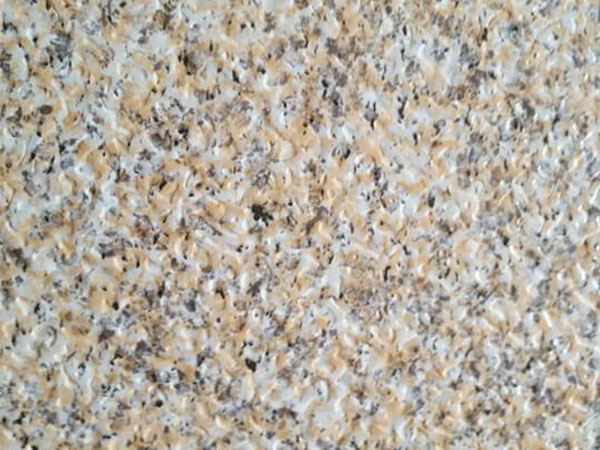
The marble pattern is created through roller coating, pattern transfer, or advanced printing processes, followed by protective topcoat application. The final surface is expected to do several jobs at once:
- deliver natural stone-like depth and grain variation
- resist UV aging and chalking
- maintain adhesion after bending and fabrication
- withstand humidity, pollutants, and common atmospheric corrosion
- support downstream fabrication into ACP, solid panels, roofing, ceiling strips, and decorative trims
This is where PE coated marble aluminum coil and PVDF coated marble aluminum coil begin to differ in a meaningful way.
PE vs PVDF Marble Stone Color Coated Aluminum Coil
PE coating, or polyester coating, is widely used for indoor decoration and general-purpose exterior applications where cost efficiency and broad color flexibility matter. It offers good formability, good decorative effect, and strong economic value. For indoor ceilings, partitions, signboards, shop fitting, and low-to-medium weather exposure, PE marble coated aluminum coil is often the preferred option.
PVDF coating, based on polyvinylidene fluoride resin systems, is designed for higher weather resistance. It is especially suitable for curtain wall panels, exterior cladding, roofing systems, and projects exposed to strong sunlight, humidity, industrial atmosphere, or coastal conditions. PVDF excels in color retention, chalk resistance, and long-term surface stability.
From an engineering standpoint, the difference is not just cost or lifespan. The difference is in molecular durability. PVDF resin has exceptional bond stability, which helps preserve the coating film against ultraviolet degradation and chemical attack. PE, while highly practical and versatile, is generally selected where extreme weathering resistance is not the primary design requirement.
Typical Product Structure
A high-quality marble pattern coated aluminum coil usually includes the following layers:
- aluminum alloy substrate
- degreasing and cleaning treatment
- chemical conversion coating or chromate-free pretreatment
- primer coating
- decorative marble pattern coating layer
- protective clear coat or finish coat
- optional back coat on the reverse side
The quality of pretreatment is often underestimated. In reality, pretreatment is one of the most critical stages because it governs adhesion, corrosion resistance, and long-term coating integrity. Even the most advanced coating resin cannot compensate for poor substrate cleaning or unstable conversion film quality.
Common Alloy Grades and Tempers
The base alloy selection depends on forming demand, strength requirements, flatness expectations, and application environment. In the coated aluminum coil market, the most common alloys for marble stone finishes include:
- AA1100: high purity aluminum, excellent formability, suitable for decorative applications
- AA3003: manganese-containing alloy with good corrosion resistance and moderate strength, widely used in building decoration
- AA3004: higher strength than 3003, often used when better panel rigidity is required
- AA3105: widely used for architectural coated coil, offering a balanced combination of formability and strength
- AA5005: known for good anodizing/decorative properties and corrosion resistance
- AA5052: higher magnesium content, stronger corrosion resistance, suitable for more demanding environments
Typical tempers include:
- H14
- H16
- H24
- H26
- O temper for applications requiring deep forming or special post-processing flexibility
In many architectural projects, 3003 H24, 3105 H24, and 5005 H24 are among the most practical choices because they combine good shape stability with sufficient workability for roll forming, bending, and panel fabrication.
Typical Parameters of PE PVDF Marble Stone Aluminum Coil
The following parameters are commonly available in production and supply, though exact ranges can vary by manufacturer and project requirement.
| Parameter | Typical Range / Option |
|---|---|
| Base alloy | 1100, 3003, 3004, 3105, 5005, 5052 |
| Temper | O, H14, H16, H24, H26 |
| Coil thickness | 0.20 mm to 2.00 mm |
| Common thickness | 0.30 mm, 0.50 mm, 0.70 mm, 1.00 mm |
| Coil width | 30 mm to 1600 mm |
| Common width | 1000 mm, 1200 mm, 1250 mm, 1500 mm |
| Inner diameter | 405 mm, 505 mm, 605 mm |
| Outer diameter | According to coil weight and line capacity |
| Coating type | PE, HDPE, SMP, PVDF |
| Top coating thickness | PE: 14–25 μm, PVDF: 25–35 μm |
| Primer thickness | 4–8 μm |
| Back coating thickness | 5–12 μm |
| Gloss | Matt, low gloss, high gloss, customized |
| Pattern type | Marble, granite, stone grain, customized decorative print |
| Protective film | Optional, thickness customizable |
| Adhesion | Grade 0 or as specified by customer/testing standard |
| Pencil hardness | Typically HB to 2H |
| Impact resistance | According to coating system and substrate thickness |
| T-bend | 0T to 3T depending on alloy, temper, and coating system |
Chemical Composition of Typical Alloys
Below is a reference table for common substrate alloys used in stone pattern color coated aluminum coil. Values may vary according to applicable standards and production tolerances.
| Alloy | Si % | Fe % | Cu % | Mn % | Mg % | Cr % | Zn % | Ti % | Al % |
|---|---|---|---|---|---|---|---|---|---|
| 1100 | Si+Fe total typically ≤ 0.95 | included | 0.05–0.20 | 0.05 max | - | - | 0.10 max | - | 99.00 min |
| 3003 | 0.60 max | 0.70 max | 0.05–0.20 | 1.0–1.5 | - | - | 0.10 max | - | Remainder |
| 3004 | 0.30 max | 0.70 max | 0.25 max | 1.0–1.5 | 0.8–1.3 | - | 0.25 max | - | Remainder |
| 3105 | 0.60 max | 0.70 max | 0.30 max | 0.30–0.80 | 0.20–0.80 | 0.20 max | 0.40 max | 0.10 max | Remainder |
| 5005 | 0.30 max | 0.70 max | 0.20 max | 0.20 max | 0.50–1.10 | 0.10 max | 0.25 max | - | Remainder |
| 5052 | 0.25 max | 0.40 max | 0.10 max | 0.10 max | 2.2–2.8 | 0.15–0.35 | 0.10 max | - | Remainder |
These chemical properties shape real-world behavior. Higher magnesium in 5052 improves corrosion resistance and strength. Manganese in 3003 and 3004 contributes to moderate strength and good processing performance. High purity 1100 supports excellent ductility and surface uniformity for decorative use.
Mechanical and Coating Performance Considerations
In coated architectural aluminum, performance is not judged by metal strength alone. The relationship between substrate and coating is what determines whether the material can survive fabrication and service conditions.
Important performance indicators often include:
- tensile strength
- yield strength
- elongation
- coating adhesion
- cupping performance
- impact resistance
- solvent resistance
- boiling water resistance
- salt spray resistance
- UV weathering resistance
- color difference consistency
- gloss retention
For marble pattern products, another subtle issue arises: pattern stability after forming. If the coil is bent, profiled, or roll-formed into narrow strips or panels, the decorative pattern must still appear natural. This requires careful control of pattern repetition, printing registration, and coating flexibility.
Implementation Standards Commonly Referenced
Depending on market and application, manufacturers may produce PE PVDF color coated aluminum coil according to a combination of aluminum substrate standards, coating standards, and building material performance specifications. Commonly referenced standards may include:
- ASTM B209 for aluminum and aluminum-alloy sheet and plate
- EN 485 for aluminum and aluminum alloy sheet, strip and plate
- GB/T 3880 for wrought aluminum and aluminum alloy plates, sheets and strips
- AAMA 2603, AAMA 2604, AAMA 2605 for architectural coatings performance, especially relevant to exterior coating quality levels
- GB/T 23443 for architectural color coated aluminum sheet and strip
- Qualicoat-related requirements in certain project environments
- RoHS or REACH related compliance where required
For high-end exterior use, PVDF systems are often expected to align with the spirit or direct requirements of AAMA 2605, especially for long-term weather resistance. For interior decorative use, PE systems can be selected according to appearance, flexibility, and processing needs without requiring such high weathering benchmarks.
Surface Appearance: The Science Behind a Convincing Marble Finish
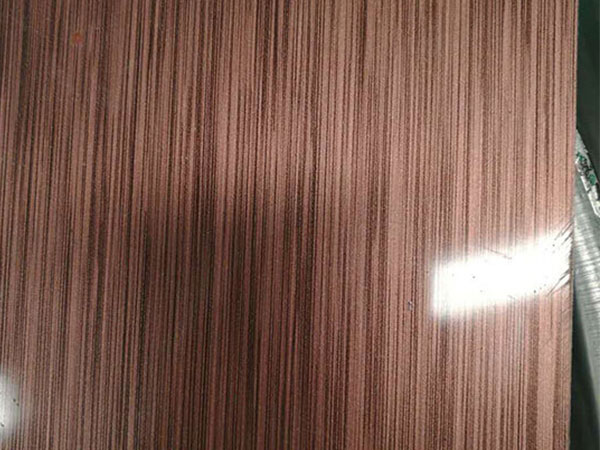
A marble look is easy to imitate badly and surprisingly difficult to imitate well. The best imitation stone coated aluminum coil does not rely on a single printed image. It creates visual depth through a coordinated balance of pattern density, color layering, gloss variation, and clear coat behavior.
Several details define premium surface quality:
- natural rather than repetitive grain transition
- realistic contrast between veins and background tone
- stable color control from coil to coil
- smooth film without pinholes, orange peel, or roller marks
- clear coat transparency that enhances depth instead of flattening texture
- compatibility with slitting, bending, and panel lamination processes
This is where experienced coil coating lines stand apart. A decorative surface must remain industrially scalable without looking industrially repetitive.
Typical Applications
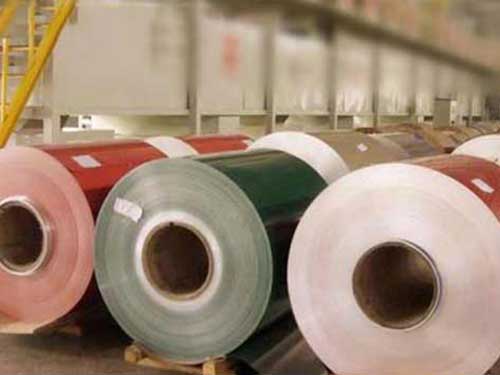
Because of its balance of weight, appearance, and processability, marble stone color coated aluminum coil is used in a wide range of applications:
- aluminum composite panels
- solid aluminum wall panels
- curtain wall cladding
- ceilings and ceiling tiles
- interior wall decoration
- column covers
- elevator decoration panels
- furniture and cabinet facings
- roofing and fascia systems
- appliance and display decoration
- honeycomb panel facings
In indoor environments, PE marble coated coil often provides excellent value. In high-exposure outdoor environments, PVDF marble coated coil offers more reliable service life and color durability.
Processing Advantages for Fabricators
From the fabricator's viewpoint, the value of coated marble aluminum coil becomes even more obvious. It can be slit, cut, embossed, laminated, bent, punched, roll formed, and bonded into composite systems with significantly lower structural burden than natural stone.
This translates into several practical advantages:
- reduced transport and handling cost
- easier installation at height
- lower support structure load
- improved fabrication efficiency
- more consistent project color matching
- less breakage compared with stone slabs
- better suitability for curved and custom-shaped surfaces
For manufacturers of ACP and decorative panels, coil form also improves production continuity. Instead of handling rigid, fragile slabs, they process a continuous decorative metal substrate with predictable dimensions and stable coating behavior.
How to Choose the Right Specification
Selecting the right PE or PVDF marble aluminum coil depends on environment, fabrication method, and visual expectations.
For interior use, such as retail spaces, office lobbies, ceilings, and wall panels, a PE system on 1100, 3003, or 3105 substrate is often sufficient. If the material needs more rigidity or resistance to mild exterior conditions, 3004 or 5005 may be preferred.
For exterior façades, canopies, coastal projects, and long-design-life buildings, PVDF coating on 3003, 3004, 3105, 5005, or 5052 is generally more appropriate. If the environment includes high humidity, industrial emissions, or salt-laden air, alloy selection and pretreatment quality become just as important as coating choice.
Thickness should be matched to fabrication. Thinner gauges may work well for ACP facing skins and ceiling products, while thicker gauges are often selected for solid panels and shaped façade components.
Quality Control Points That Serious Buyers Should Not Ignore
When sourcing marble finish coated aluminum coil, appearance alone should never be the only purchase criterion. Serious quality assessment should also include:
- substrate alloy certificate
- coating thickness report
- gloss and color tolerance data
- adhesion test result
- T-bend performance
- impact resistance
- MEK solvent resistance where relevant
- salt spray or humidity resistance data
- UV weathering test information
- batch consistency across coils
In premium architectural supply, consistency is often more valuable than a single sample. A project does not succeed because one panel looks good in a showroom. It succeeds when all delivered coils behave the same way in production and maintain the same decorative effect after installation.
The Real Value of Imitation Marble Aluminum Coil
The phrase "imitation marble" sometimes sounds like compromise. In reality, it often represents optimization. The material preserves the emotional appeal of stone while replacing many of stone's logistical and structural disadvantages with engineered predictability.
That is why PE PVDF color coated marble stone aluminum coil continues to gain ground in commercial buildings, transport hubs, branded interiors, modular construction, and lightweight façade systems. It is not trying to be geology. It is offering architecture a more agile vocabulary: the richness of marble translated into the language of modern manufacturing.