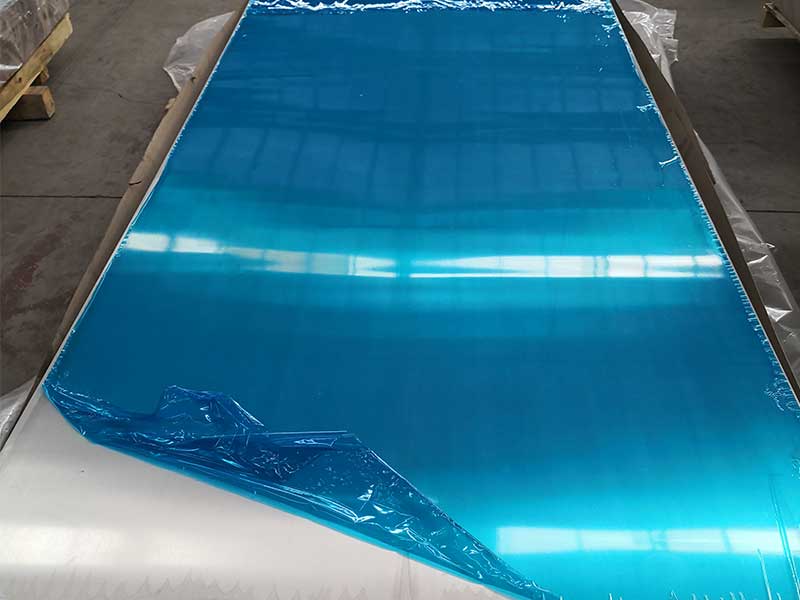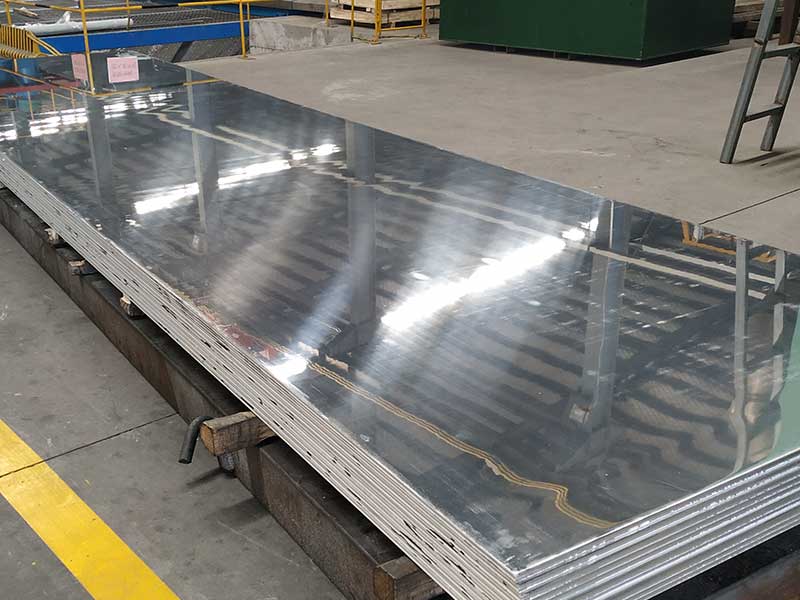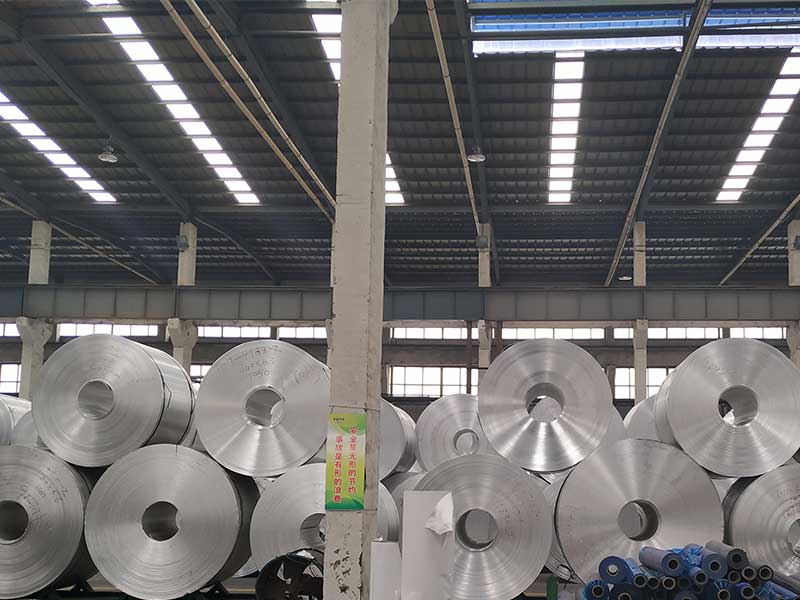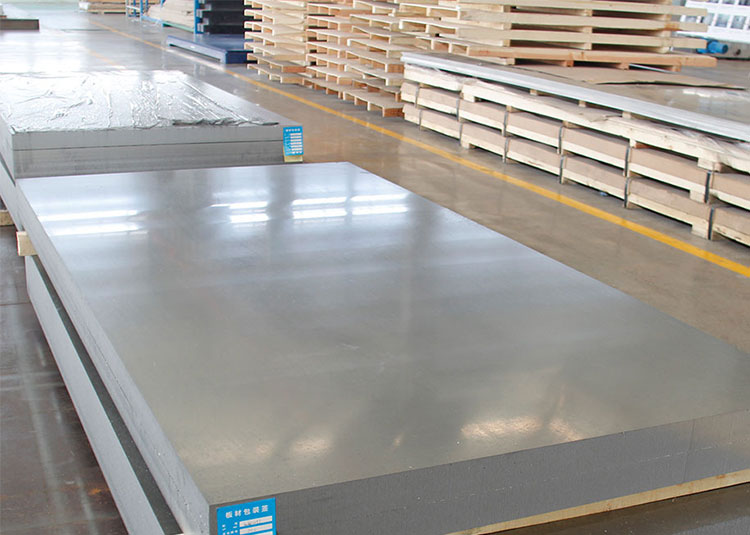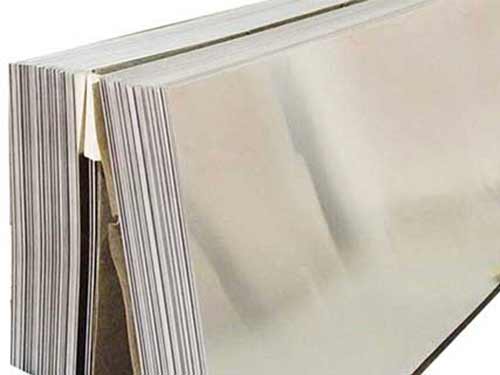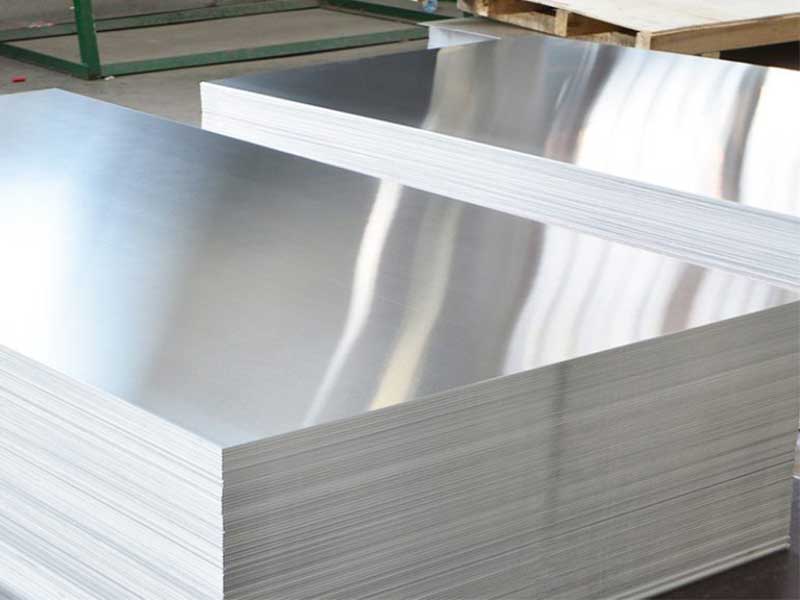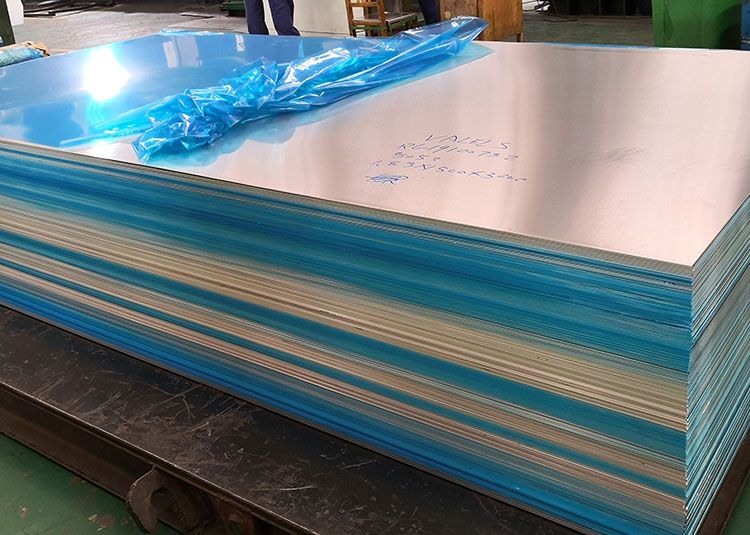

A5052 H24 mill finish aluminum sheet plate is a widely used Al-Mg alloy aluminum product known for its excellent corrosion resistance, moderate-to-high strength, good formability, and attractive mill finish surface. In thicknesses such as 2mm, 3mm, and 6mm, it is especially popular for fabrication, transportation equipment, marine components, building panels, tanks, enclosures, and general industrial use.
For buyers who need a material that balances strength, lightweight performance, weldability, and anti-rust properties, 5052 H24 aluminum sheet is one of the most practical choices in the 5000 series.
What Is A5052 H24 Aluminum Sheet Plate?
A5052 is an aluminum-magnesium alloy with a small amount of chromium. It is non-heat-treatable, which means its strength is mainly achieved through cold working and strain hardening rather than heat treatment. The H24 temper indicates the sheet has been strain hardened and partially annealed, giving it a good balance between strength and formability.
A mill finish means the sheet is supplied with the natural surface produced during rolling, without additional polishing, coating, or embossing. This finish is suitable for many industrial and structural applications, and it can also serve as a base for further fabrication or surface treatment.
Main Features of A5052 H24 Mill Finish Aluminum Plate
A5052 H24 sheet plate offers several advantages that make it a preferred material across many industries.
| Feature | Description |
|---|---|
| Corrosion resistance | Excellent resistance to seawater, humidity, and many industrial environments |
| Strength | Higher strength than 1100 and 3003 aluminum alloys |
| Formability | Good bending and forming performance, especially in H24 temper |
| Weldability | Excellent weldability by common arc welding methods |
| Surface | Natural mill finish, clean metallic appearance |
| Weight | Lightweight compared with steel, easy to transport and install |
| Machinability | Fair to good for common fabrication operations |
| Non-heat-treatable | Strengthened by cold work instead of heat treatment |
Common Thicknesses: 2mm, 3mm, and 6mm
The most requested thicknesses for A5052 H24 mill finish sheet plate are 2mm, 3mm, and 6mm, each serving different fabrication needs.
| Thickness | Typical Use |
|---|---|
| 2mm | Light panels, covers, decorative parts, enclosures, ducting, sign boards |
| 3mm | Vehicle panels, cabinets, tanks, brackets, machine covers, marine fittings |
| 6mm | Structural panels, base plates, heavy-duty fabrications, truck bodies, industrial equipment |
These thicknesses are often selected because they provide a practical range from lightweight sheet applications to more rigid plate-style fabrication.
Applications of A5052 H24 Aluminum Sheet Plate
Because of its balanced performance, A5052 H24 is used in many sectors.
| Industry | Typical Applications |
|---|---|
| Marine | Boat panels, hull parts, gangways, deck components, marine tanks |
| Transportation | Truck bodies, trailers, fuel tanks, vehicle flooring, paneling |
| Construction | Curtain wall backing, roofing accessories, cladding, ceiling panels |
| Industrial | Machine covers, electrical cabinets, storage tanks, pressure-related components |
| Electronics | Enclosures, chassis, heat-dissipating panels |
| General fabrication | Brackets, partitions, tool boxes, worktables, protective panels |
Its strong corrosion resistance makes it especially suitable for outdoor and coastal environments where ordinary metals may rust quickly.
Chemical Composition of A5052 Aluminum Alloy
The following table shows the typical chemical composition of A5052 alloy according to common international standards.
| Element | Content (%) |
|---|---|
| Magnesium (Mg) | 2.2 – 2.8 |
| Chromium (Cr) | 0.15 – 0.35 |
| Silicon (Si) | 0.25 max |
| Iron (Fe) | 0.40 max |
| Copper (Cu) | 0.10 max |
| Manganese (Mn) | 0.10 max |
| Zinc (Zn) | 0.10 max |
| Aluminum (Al) | Remainder |
The magnesium content is the main reason A5052 has good strength and excellent corrosion resistance, especially in marine and chemical environments.
Mechanical Properties of A5052 H24
Mechanical properties can vary slightly depending on thickness, production route, and standard, but the following values are typical for A5052 H24 sheet plate.
| Property | Typical Value |
|---|---|
| Tensile strength | 230 – 280 MPa |
| Yield strength | 180 MPa min |
| Elongation | 5 – 12% |
| Hardness | Approx. 60 HB |
| Elastic modulus | 70 GPa |
| Density | 2.68 g/cm³ |
These properties make A5052 H24 stronger than many common commercial-grade aluminum alloys while still retaining enough ductility for forming and bending.
Physical Properties
| Property | Value |
|---|---|
| Density | 2.68 g/cm³ |
| Melting range | 607 – 649°C |
| Thermal conductivity | Approx. 138 W/m·K |
| Electrical conductivity | Approx. 35% IACS |
| Coefficient of thermal expansion | 23.8 × 10⁻⁶ /°C |
| Specific heat capacity | Approx. 900 J/kg·K |
These physical characteristics help explain why 5052 aluminum sheet is useful in lightweight structures, thermal applications, and fabricated products.
Temper Condition: What H24 Means
The temper designation is important when selecting aluminum sheet.
| Temper | Meaning | Characteristics |
|---|---|---|
| H24 | Strain hardened and partially annealed | Good strength with improved formability |
| H32 | Strain hardened and stabilized | Slightly different balance of strength and ductility |
| O | Annealed | Maximum formability, lower strength |
| H34 | Strain hardened and stabilized to a harder condition | Higher strength, reduced formability |
For many customers, H24 is a useful middle-ground temper because it offers better workability than harder tempers while still providing reliable strength.
Technical Specifications and Supply Range
A5052 H24 mill finish aluminum sheet plate can be supplied in many custom dimensions, but the following are common market ranges.
| Item | Typical Range |
|---|---|
| Thickness | 0.5mm – 200mm |
| Popular stock thickness | 2mm, 3mm, 6mm |
| Width | 1000mm, 1220mm, 1250mm, 1500mm, 2000mm |
| Length | 2000mm, 2440mm, 2500mm, 3000mm, 6000mm |
| Surface | Mill finish |
| Processing | Cutting, shearing, slitting, bending, CNC machining, welding |
| Protective film | Optional |
Implementation Standards
Depending on the target market and application, A5052 H24 aluminum sheet plate is commonly produced according to the following standards.
| Standard | Description |
|---|---|
| ASTM B209 | Standard specification for aluminum and aluminum-alloy sheet and plate |
| EN 485 | European standard for wrought aluminum sheet, strip, and plate |
| JIS H4000 | Japanese industrial standard for aluminum sheets and plates |
| GB/T 3880 | Chinese standard for aluminum and aluminum alloy plates and sheets |
Compliance with these standards helps ensure consistent chemical composition, mechanical performance, dimensional tolerance, and surface quality.
Fabrication and Processing Performance
A5052 H24 mill finish aluminum plate performs well in common workshop operations.
| Processing Type | Performance |
|---|---|
| Bending | Good |
| Cutting | Good |
| Welding | Excellent |
| Deep drawing | Moderate |
| Machining | Fair |
| Anodizing | Good |
| Surface coating | Good |
This makes it a versatile material for manufacturers that need efficient production with reliable final performance.
Why Choose 2mm, 3mm, or 6mm A5052 H24?
Different thicknesses serve different project requirements, but all benefit from the core strengths of 5052 alloy.
| Thickness | Advantage |
|---|---|
| 2mm | Lightweight, easy to form, economical for panels and covers |
| 3mm | Balanced stiffness and fabrication ease, ideal for general industrial use |
| 6mm | Higher rigidity and load-bearing capability for structural parts |
For projects where corrosion resistance, weldability, and long-term durability are critical, these thicknesses cover a wide range of needs from light sheet metal work to stronger plate applications.