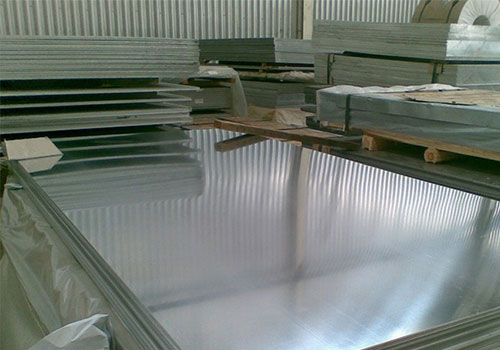

2A14 aluminum alloy plate is a high-strength, heat-treatable Al–Cu–Mg series alloy widely selected when a project needs structural reliability, fatigue resistance, and good high-temperature performance. In practice, customers often choose 2A14 for aircraft structural parts, high-load tooling, transport structures, and industrial components where weight reduction matters but strength cannot be compromised.
Compared with general-purpose aluminum plate, 2A14 is positioned as a performance-driven material: it responds well to solution heat treatment and aging, reaches high mechanical strength, and holds up well in demanding service environments. It is not intended to be a "universal" alloy for corrosion-critical outdoor exposure without protection; instead, it shines in engineered assemblies with coatings, sealants, cladding, or controlled environments.
Material Profile and Features
2A14 is recognized for a balanced set of properties that match high-duty engineering needs:
High strength after heat treatment
Designed to develop high tensile and yield strength in T4/T6-type tempers, making it suitable for load-bearing plates and machined parts.Fatigue and fracture performance suited to structures
Often used where cyclic loading is expected, such as airframes, fixtures, and dynamic assemblies.Good machinability for complex components
Commonly machined into ribs, frames, fittings, molds, and high-load brackets. Chip formation is typically manageable with proper parameters.Service capability at moderately elevated temperatures
2A14 maintains usable strength at temperatures higher than non-heat-treatable alloys, supporting parts exposed to engine-adjacent heat or industrial thermal cycles.Weldability and corrosion considerations
Like many Al–Cu alloys, fusion welding can be challenging and may reduce joint performance. Corrosion resistance is typically moderate and often benefits from surface protection (anodizing, conversion coating, paint systems) or design measures.
Typical Chemical Composition
The composition below is a commonly referenced range for 2A14-type material. Exact limits can differ slightly by standard and supplier practice; always confirm with mill test certificates for compliance.
| Element | Typical Range (wt. %) | Contribution to Performance |
|---|---|---|
| Cu | 3.9–4.8 | Primary strengthening through precipitation; boosts high-temperature strength |
| Mg | 0.4–0.8 | Supports age-hardening response; improves strength/fatigue behavior |
| Mn | 0.4–1.0 | Grain structure control; improves toughness and stress performance |
| Si | ≤ 0.9 | Controlled for casting/processing; excess may affect ductility |
| Fe | ≤ 0.7 | Impurity control; excess can reduce toughness |
| Zn | ≤ 0.3 | Minor; controlled to stabilize properties |
| Ti | ≤ 0.15 | Grain refinement; improves processing stability |
| Al | Balance | Base metal |
Plate Supply Forms and Technical Specifications
2A14 plate is typically supplied as rolled plate for machining or structural fabrication, with heat treatment performed to meet required temper and properties.
| Item | Typical Offering | Notes |
|---|---|---|
| Product form | Rolled plate | Suitable for machining, structural components, tooling |
| Thickness range | 6–200 mm (common industrial range) | Wider ranges available depending on mill capability |
| Width range | up to ~2000 mm (typical) | Custom cutting and slitting available |
| Length | cut-to-length | Often supplied saw-cut or milled edges |
| Tempers | T4, T6, T651 (common) | T651 indicates stress-relieved plate to reduce distortion |
| Surface | mill finish / machined finish | Protective film optional for machining plates |
| Certification | mill test certificate | Chemical, mechanical, and inspection results |
Typical Mechanical Properties (Reference Values)
Mechanical performance depends on thickness, temper, and processing route. The table below provides typical reference ranges used in procurement discussions; project design should rely on certified test results and relevant standards.
| Temper (typical) | Tensile Strength (MPa) | Yield Strength (MPa) | Elongation (%) | General Notes |
|---|---|---|---|---|
| T4 | 360–430 | 210–280 | 10–16 | Good formability; strength develops further after aging |
| T6 | 440–510 | 330–420 | 6–12 | High strength for structural plates and machined parts |
| T651 | 440–510 | 330–420 | 6–12 | Stress-relieved; helps control machining distortion |
Performance Characteristics Customers Care About
Strength-to-Weight Advantage
2A14 helps replace heavier steels in medium-to-high load applications where weight reduction translates into easier handling, improved fuel efficiency, faster actuation, or higher payload capacity. This is especially valuable for aerospace tooling and fixtures where stiffness and strength are required but mass must be controlled.
Dimensional Stability in Machining
For thick plates and large machined envelopes, internal stress can drive distortion. Stress-relieved tempers such as T651 are often chosen to keep flatness and symmetry during heavy milling, pocketing, and long-cycle machining.
Heat Treatment Responsiveness
2A14 is selected when customers want a predictable strengthening response through heat treatment. In production environments, this enables a consistent path from rough machining to heat treatment to final finishing-particularly for precision frames, load plates, and mechanical housings.
Corrosion and Protection Strategy
Because Al–Cu alloys can be less corrosion-resistant than Mg–Si or Mn-based alloys, many users specify:
- anodizing or conversion coating plus paint
- sealants in faying surfaces
- controlled drainage and isolation from dissimilar metals
- cladding or protective layers where applicable
This protection-first mindset allows 2A14 to deliver strength without sacrificing service life.
Application Snapshot: Where 2A14 Plate Excels
2A14 aluminum alloy plate is commonly used in applications that reward high strength, good fatigue behavior, and reliable machining.
| Industry | Typical Parts | Why 2A14 is Chosen |
|---|---|---|
| Aerospace | structural plates, frames, ribs, fittings, aircraft tooling plates | high strength, fatigue performance, weight savings |
| Transportation | high-load brackets, chassis components, reinforcement plates | strength with manageable mass; good machinability |
| Industrial equipment | machine bases, precision fixtures, press components, structural mounts | stable plate supply and strong load-bearing capability |
| Mold & tooling | forming tools, backing plates, jigs, gauges | stress-relieved options reduce distortion during machining |
| Energy & mechanical | housings, flanges (machined), structural interfaces | strength and thermal performance for demanding assemblies |
Processing Guidance (Practical, Shop-Focused)
| Process | Typical Suitability | Notes for Best Results |
|---|---|---|
| Machining | Excellent | Use sharp tools, manage heat, choose stress-relieved plate for tight tolerances |
| Forming | Moderate (temper-dependent) | T4 is more formable; higher-strength tempers reduce formability |
| Welding | Generally limited | Evaluate process carefully; properties can drop in heat-affected zones |
| Surface treatment | Highly recommended | Anodizing/painting improves durability; follow pretreatment specs |
| Fastening | Good | Design for galvanic isolation when paired with steel/copper alloys |
How to Choose the Right 2A14 Plate for Your Order
| Requirement | Recommended Choice | Reason |
|---|---|---|
| Heavy machining, large pockets | T651 plate | stress relief helps control distortion |
| Highest strength target | T6 or T651 | peak-aged strength for structural performance |
| Forming before final aging | T4 | better forming window before aging |
| Outdoor exposure | protected system | coatings and design measures improve service life |
2A14 aluminum alloy plate is a high-strength, heat-treatable choice tailored for structural and machined applications where performance matters more than general-purpose versatility. Its standout value comes from strength, fatigue capability, and machining friendliness, making it especially relevant in aerospace-adjacent structures, industrial fixtures, transport reinforcements, and tooling plates. When paired with the right temper selection and a sensible corrosion protection strategy, 2A14 delivers a robust balance of engineering confidence and weight efficiency for demanding products.