
0.2mm Aluminum Sheet in 8011 and 3105: When Thin Gauge Becomes a Performance Material
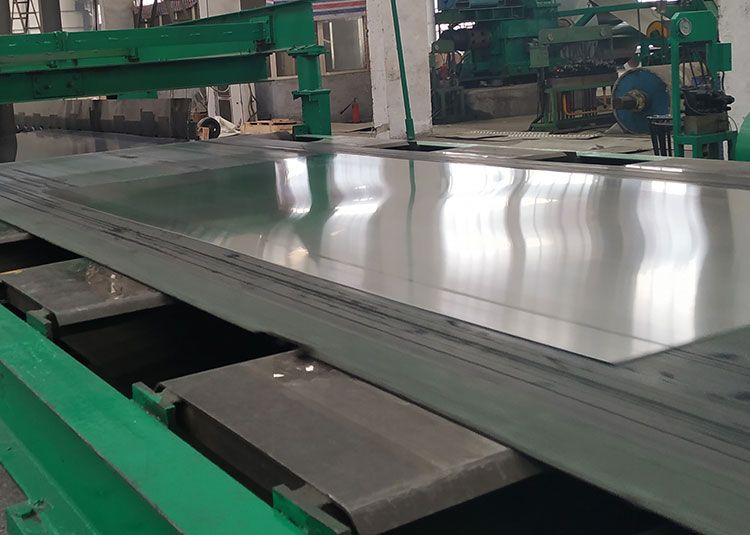
A 0.2mm aluminum sheet looks simple on paper: a bright, almost paper-like metal layer that can be wound, stamped, laminated, or painted. In reality, 0.2mm is the zone where aluminum stops behaving like "sheet" and starts acting like a functional surface-something engineered for barrier performance, forming stability, and repeatable flatness across high-speed production lines.
From this perspective, alloys 8011 and 3105 are not just material codes. They are two different answers to the same manufacturing question: Do you need a thin sheet that behaves like a barrier and processing substrate (8011), or a thin sheet that behaves like a forming-friendly, corrosion-resistant skin (3105)?
Below is a distinctive, engineering-first look at 0.2mm thickness aluminum sheet 8011 and 3105, including parameters, common standards, temper conditions, and chemical composition tables integrated into a practical selection framework.
Why 0.2mm Thickness Is a Special Category
At 0.2mm, material choices become less about "stronger vs. weaker" and more about process windows:
Flatness sensitivity increases because coil set and residual stress become more visible on thin gauges.
Surface integrity matters more because any scratch, roll mark, or oil stain can telegraph through coating, lamination, or printing.
Temper selection becomes critical because a small change in hardness can be the difference between stable feeding and edge cracking in forming.
This is exactly where 8011 and 3105 is know in different ways.
Alloy Personality: 8011 vs. 3105 in Thin Sheet
8011 aluminum sheet at 0.2mm: "The barrier-minded workhorse"
Alloy 8011 is widely used where thin gauge sheet is expected to deliver consistent processing behavior and surface quality. Its chemistry leans on Fe and Si as primary alloying elements, supporting controlled strength and manufacturability. In very thin gauges, 8011 often shines as a stable substrate for laminating, coating, and packaging-type conversion processes, and it is frequently specified where cleanliness and uniformity are emphasized.
Typical value proposition at 0.2mm:
Good balance of strength and ductility depending on temper
Reliable coil processing and coating/laminating compatibility
Commonly used in foil/sheet conversion ecosystems
3105 aluminum sheet at 0.2mm: "The forming-friendly, corrosion-resistant skin"
Alloy 3105 belongs to the Al-Mn family, with Mn as the element and a small Mg addition allowed. In thin sheet, 3105 is often chosen for applications that value corrosion resistance, paint adhesion, and formability, especially where the product is a visible or semi-visible "skin" that needs to be shaped or finished.
Typical value proposition at 0.2mm:
Excellent corrosion performance in many atmospheres
Very good paint/coating response and appearance stability
Strong forming behavior in soft to mid tempers
Typical Product Parameters for 0.2mm Aluminum Sheet Coils
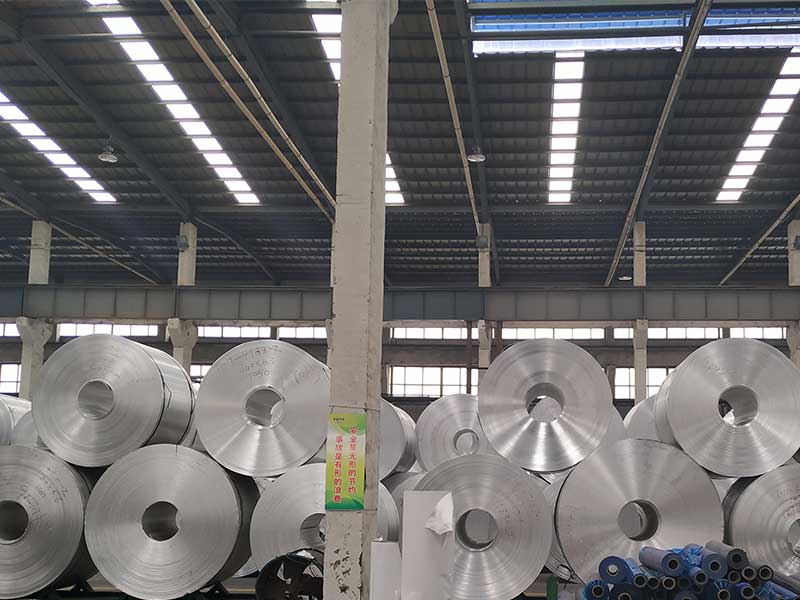
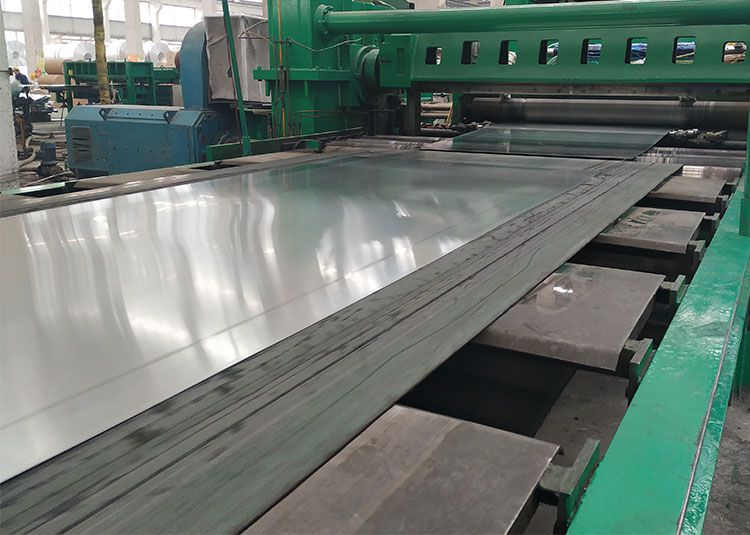
A 0.2mm aluminum sheet is commonly delivered in coil form to protect flatness and enable continuous processing. Typical parameters can include:
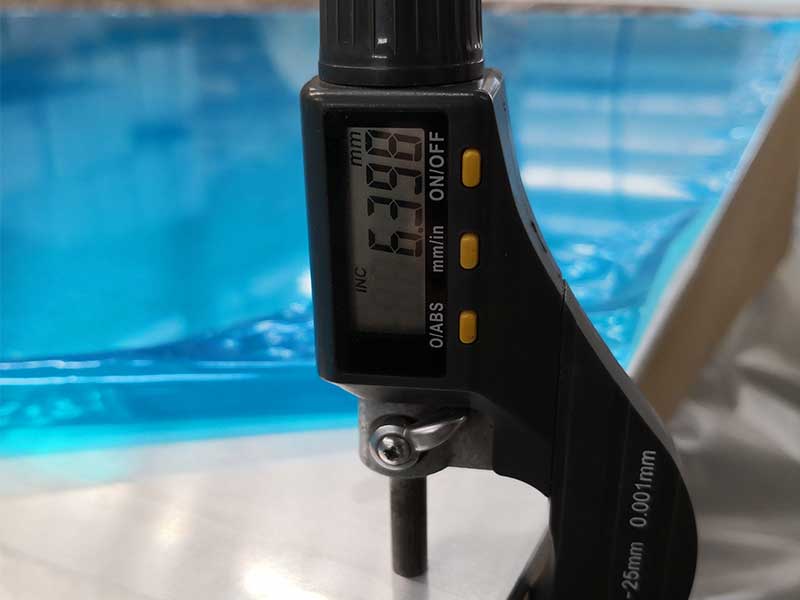
Thickness: 0.20 mm (commonly controlled with tight tolerance due to downstream converting needs)
Width: commonly slit to customer requirements (often from narrow slit coils to wide coils for stamping/laminating)
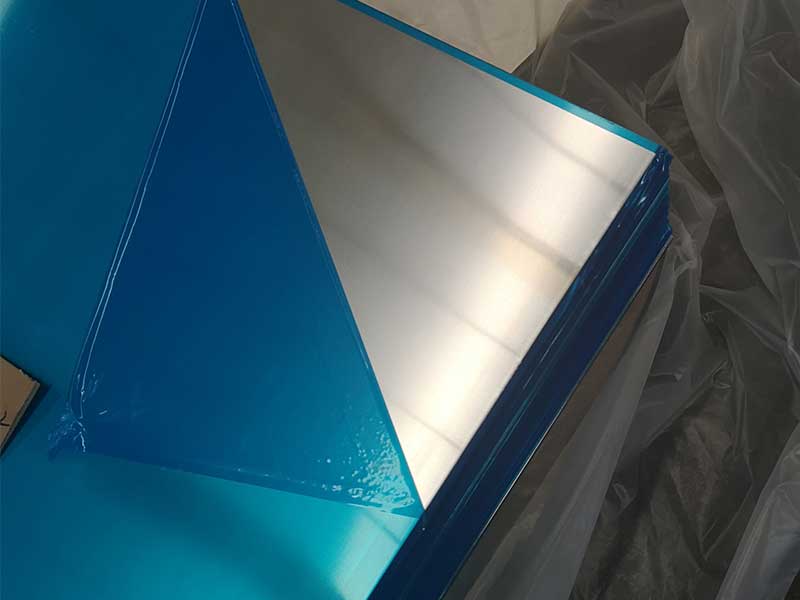
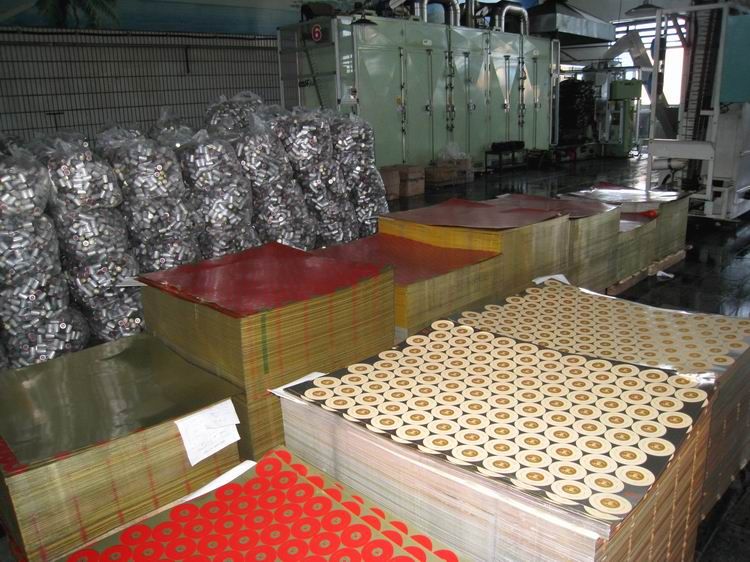
Surface: mill finish, degreased/cleaned, or coated/painted depending on end use
Core ID: typically 150 mm / 300 mm / 505 mm depending on coil handling systems
Edge: slit edge or mill edge (slit edge is common for thin gauge consistency)
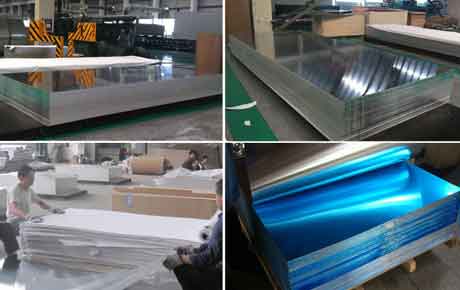
Packaging: moisture-proof export packing is strongly recommended for 0.2mm due to oxidation staining sensitivity
If your downstream process includes coating, lamination, or printing, it's worth treating "surface condition" as a functional parameter, not a cosmetic one.
Temper: Where 0.2mm Either Runs Smoothly or Fails Fast
Temper in thin gauge is best understood as "how the sheet behaves under your tooling," not just as a hardness label.
Common tempers encountered for 0.2mm aluminum sheet include:
O (Annealed): maximum ductility; best for deep forming and complex shaping; easier to scratch during handling
H14 / H24: a balanced range often used when you need formability without the softness of O temper
H18: higher hardness and strength; can improve stiffness and feeding stability in some lines, but increases cracking risk in tight forming
Alloy-specific temper tendencies:
8011 is frequently supplied in O and H-temper options depending on whether the sheet is meant to be shaped or used as a stable, thin substrate.
3105 is often selected in O, H14, or H24 when forming and surface finishing (painting/coating) are priorities.
For many 0.2mm applications, the "best" temper is the one that keeps your process stable at speed: no edge waves, no chatter marks, no intermittent cracks, no coating defects caused by inconsistent elongation.
Implementation Standards and Common Specification References
When customers source 0.2mm 8011 or 3105 aluminum sheet, requirements typically reference widely used aluminum sheet/coil standards. Depending on region and contract practice, common references include:
ASTM B209 / ASTM B209M for aluminum and aluminum-alloy sheet and plate (widely used internationally for sheet/coil specification structure)
EN 485 series for aluminum and aluminum alloy sheet/strip (Europe-focused dimensional and mechanical property framework)
GB/T standards may be used for China-based projects and supply chains
RoHS / REACH compliance documentation is frequently requested for end uses involving consumer goods, packaging systems, or electronics supply chains
Because 0.2mm is process-sensitive, purchase specifications often include additional clauses beyond the base standard, such as flatness targets, surface cleanliness limits, pinhole/scratch criteria, coating suitability, and coil joining restrictions.
Chemical Composition: The "Invisible Design" in 0.2mm Sheet
At 0.2mm, chemistry influences more than strength. It shapes grain structure behavior, surface response after coating, and how forgiving the sheet is during forming. Below are standard-style composition ranges commonly used as reference for these alloys.
Chemical composition table (typical standard limits, wt.%)
| Alloy | Si | Fe | Cu | Mn | Mg | Zn | Ti | Cr | Al |
|---|---|---|---|---|---|---|---|---|---|
| 8011 | 0.50–0.90 | 0.60–1.00 | ≤0.10 | ≤0.20 | ≤0.05 | ≤0.10 | ≤0.08 | ≤0.05 | Remainder |
| 3105 | ≤0.60 | ≤0.70 | ≤0.30 | 0.30–0.80 | 0.20–0.80 | ≤0.40 | ≤0.10 | ≤0.20 | Remainder |
Note: Exact limits can vary slightly by standard revision and customer agreement; always align chemistry to the governing standard (ASTM/EN/GB) and your application's downstream processing requirements.
How to Choose Between 0.2mm 8011 and 0.2mm 3105, Without Guessing
A practical way to decide is to ask what you want the thin sheet to be "good at" in production.
If the sheet's job is to act like a stable, uniform substrate for conversion processes, 8011 is often favored. Its chemistry and common supply ecosystem are closely tied to thin-gauge applications where consistency and controllable properties matter.
If the sheet's job is to become a shaped, coated, corrosion-resistant surface with reliable appearance, 3105 is frequently the more natural fit. The Al-Mn family is widely appreciated for finishing response and atmospheric durability.
In many real projects, the decision isn't purely material-it's also about what temper, surface cleanliness, and coil quality controls you specify alongside the alloy designation.
Quality Conditions That Matter More Than People Expect at 0.2mm
Thin-gauge aluminum sheet performance is often determined by "quiet" manufacturing factors:
Surface oil and cleanliness level: impacts coating adhesion, lamination stability, and printing defects
Residual stress control: affects flatness after slitting, stamping, or thermal exposure during coating
Edge quality: burrs and micro-cracks can become failure starters during forming
Coil handling protection: 0.2mm is prone to handling marks, pressure dents, and moisture staining if packaging is weak
For buyers, it's often more valuable to specify these conditions clearly than to over-focus on nominal thickness alone.
A 0.2mm aluminum sheet in 8011 or 3105 is best understood as a precision industrial interface: it has to feed smoothly, form predictably, accept coatings cleanly, and remain visually consistent. Alloy choice and temper are the headline, but the real success comes from matching standards, chemistry, tempering, and surface conditions to your specific manufacturing environment.