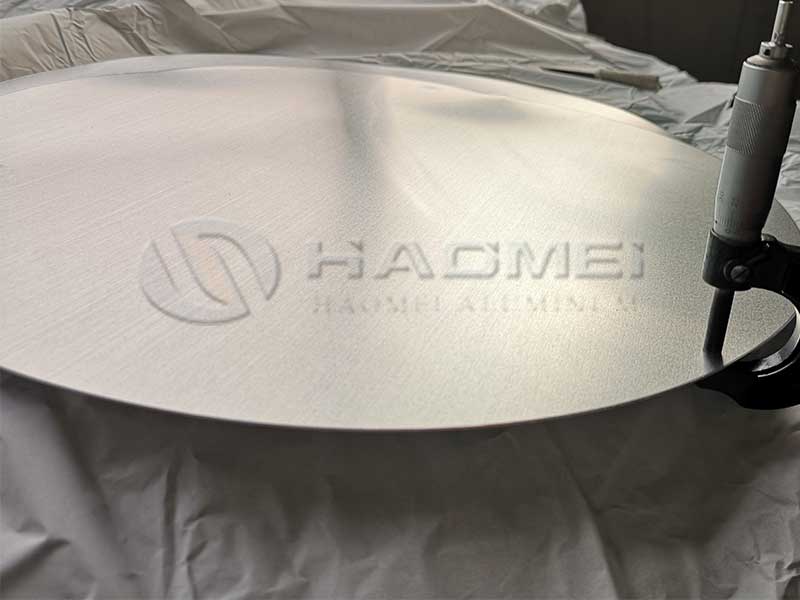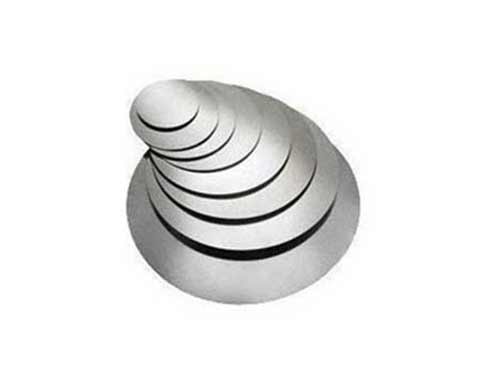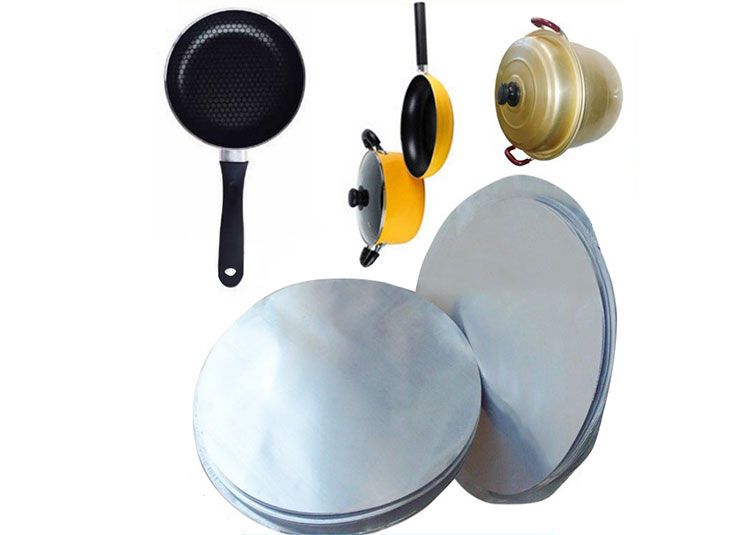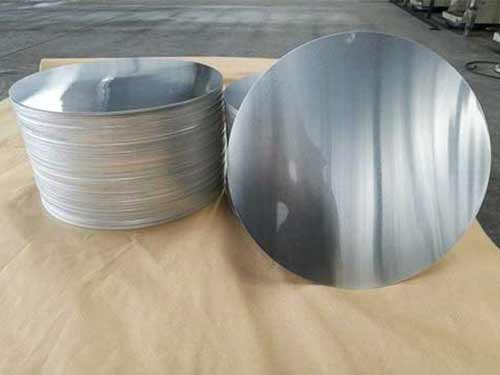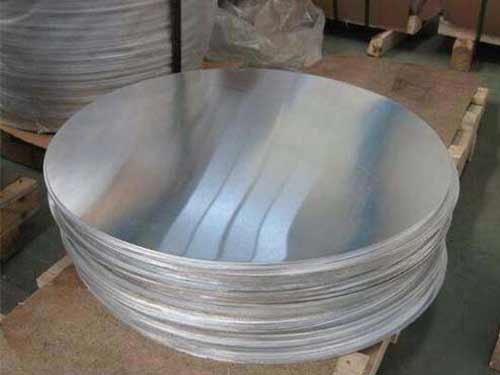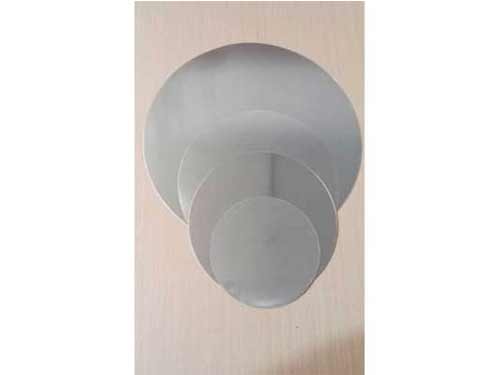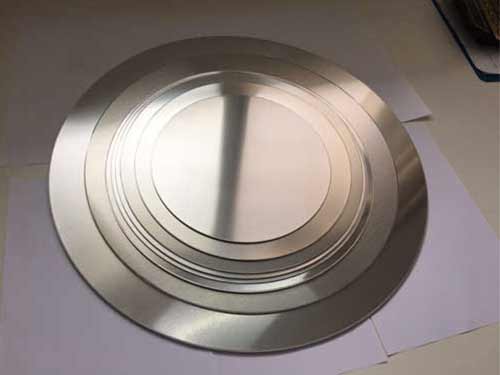

When a pizza pan comes out of a hot deck oven with a crisp bottom and evenly browned rim, most people credit the dough recipe or oven profile. In manufacturing, the more revealing story is often the metal underneath the pizza. A 3003 H14 aluminum circle plate in 500mm diameter is a deceptively simple component that behaves like a "thermal lens": it spreads heat laterally, buffers hot spots, and delivers consistent bake performance across a large surface. From this perspective, choosing the right alloy, temper, thickness window, and surface condition is less about buying a round blank and more about engineering a predictable heat path that survives repeated cycles, washing, and forming.
Why 3003 H14 is a "bake-stability" alloy for large pizza pans
A 500mm pizza pan has a big footprint. That size magnifies any non-uniformity in thickness, residual stress, or coil history. AA 3003 (an Al–Mn alloy) is widely used in cookware not because it is the strongest aluminum, but because it offers a stable balance of:
Formability that stays forgiving at scale
Deep drawing, spinning, and flanging around a 500mm blank can amplify edge defects and "earing." 3003 is known for its excellent workability, and in H14 temper it remains cooperative for common pan geometries.
Thermal uniformity for consistent browning
While aluminum in general conducts heat well, the is consistency. A stable microstructure and controlled processing help the blank behave similarly from center to rim. For pizza, this translates to fewer burnt zones and more repeatable bake time.
Corrosion resistance and kitchen chemistry tolerance
3003 has good resistance to atmospheric and many food-related environments. It is not "immune," but it performs well under typical kitchen cleaning and storage conditions, especially when paired with suitable surface finishing or coating.
The distinctive viewpoint: think of the circle as a controlled heat-and-forming map
Cookware engineers often talk about "thickness" and "temper" as checkboxes. A more useful mental model for a 500mm pizza pan blank is a map with three layers:
Geometry layer
Diameter tolerance, roundness, edge quality, and flatness determine how the blank centers in dies, spins without chatter, and seats evenly on oven decks.
Metallurgy layer
Temper and grain structure influence springback, rim stability, and how the pan holds its shape after thousands of heat cycles.
Surface layer
Finish, cleanliness, and oxide characteristics affect coating adhesion, anodizing response, and even how dough releases after baking.
A well-made 3003 H14 aluminum circle plate aligns all three layers so that production yield is high and the finished pan performs consistently.
Typical parameters for 3003 H14 aluminum circle plate, 500mm diameter
Actual specifications are agreed between buyer and supplier based on forming route, pan depth, and coating plan. The following parameter set is commonly requested for pizza pan blanks and helps purchasing teams communicate clearly:
Product: Aluminum circle / round plate blank for cookware
Alloy: AA 3003
Temper: H14 (strain-hardened, partially annealed)
Diameter: 500mm
Thickness: commonly 1.0mm–4.0mm for pizza pans, with many large-format pans using mid-range gauges depending on stiffness and thermal mass targets
Diameter tolerance: typically tight for automatic feeding and centering; negotiated per order and die requirements
Thickness tolerance: coil/plate standard dependent; cookware-grade control recommended for uniform bake and stable spinning
Flatness: controlled to support stable forming and to reduce rocking on baking surfaces
Edge condition: smooth, burr-controlled; edge cracks often start at poor shearing quality during deep drawing or spinning
Surface finish: mill finish, bright finish, or pre-treated surface depending on coating/anodizing process
Protection: interleaving paper or PE film, palletized to avoid scratches and edge dents
Because pizza pans often receive non-stick coatings or anodizing, buyers frequently specify low surface contamination and consistent roughness to support coating adhesion.
Implementation standards and quality references used in trade
For aluminum circles used in cookware and forming applications, the following standards are commonly referenced in contracts, inspection plans, and certificates of analysis. Final applicability depends on region and customer requirements.
ASTM B209 / B209M
Standard specification for aluminum and aluminum-alloy sheet and plate. Often used for base material requirements, thickness tolerances, and general quality provisions.
EN 485 series (Europe)
EN 485 covers tolerances and mechanical properties for aluminum sheet/strip. Frequently cited when sourcing from or supplying into EU-oriented manufacturing systems.
EN 573 (chemical composition)
EN 573 is often used as a reference for alloy chemistry limits.
GB/T standards (China)
Chinese supply chains commonly use GB/T equivalents for composition, tolerances, and inspection procedures.
In cookware supply, it's also common to define acceptance criteria beyond general standards, such as earing control, surface cleanliness, and edge burr height, because these directly impact forming yield.
What "H14" temper means for pizza pan manufacturing
Temper is where many "mystery defects" originate. H14 indicates the material has been strain-hardened to about half-hard and then stabilized to deliver a reliable balance between strength and workability.
From a pizza pan viewpoint, H14 delivers:
Better rigidity than fully soft temper
Large 500mm pans can feel "flimsy" if too soft. H14 improves handling stiffness and reduces permanent deformation during transport and use.
Controlled formability for flanging and light-to-moderate drawing
Many pizza pans are shallow with rolled edges. H14 typically supports rim forming without the excessive orange peel or tearing risk associated with harder tempers, assuming proper thickness and die design.
More consistent shape retention after bake cycles
Repeated heating and cooling can reveal residual stress. Controlled tempering and leveling reduce warpage tendencies.
If the pan design requires deeper draw depth, some manufacturers prefer softer tempers (such as O temper) for the forming step and then harden via work during subsequent operations. For many pizza pan geometries, H14 provides an efficient "ready-to-form" starting point.
Chemical composition of Aluminum 3003 (typical limits)
The alloy's performance is anchored by its chemistry, especially manganese, which improves strength and contributes to good forming behavior compared with commercially pure aluminum.
Below is a commonly used composition table for AA 3003. Exact limits may be referenced from ASTM/EN/GB documents depending on contract.
| Element | Composition (wt. %) |
|---|---|
| Si | ≤ 0.60 |
| Fe | ≤ 0.70 |
| Cu | 0.05 – 0.20 |
| Mn | 1.00 – 1.50 |
| Zn | ≤ 0.10 |
| Others (each) | ≤ 0.05 |
| Others (total) | ≤ 0.15 |
| Al | Remainder |
This chemistry supports the practical needs of cookware: formability, stable strength, and reliable response to finishing processes.
Mechanical and physical performance notes relevant to pizza pans
For a 500mm pizza pan, the "real-life" performance is less about peak tensile numbers and more about consistency and resistance to distortion.
Strength and ductility balance
3003 H14 is generally strong enough to hold shape during handling and loading, while still offering ductility for rim forming and spinning.
Thermal behavior and bake response
Aluminum's high thermal conductivity supports fast heat spreading. In a large pan, this can shorten bake recovery time when multiple pizzas are produced in succession.
Food contact and finishing compatibility
Many pizza pans use anodizing or non-stick coatings. 3003 is widely used as a substrate, and a controlled surface condition helps coatings bond uniformly and resist blistering.
Manufacturing considerations that reduce scrap on 500mm circles
Large diameter circles are less forgiving. Small imperfections become expensive when blanks are big.
Grain structure and earing control
Good rolling practice and annealing control reduce earing during drawing/spinning, improving yield and reducing trimming waste.
Edge quality for crack resistance
Clean shearing and deburring matter. Edge micro-cracks can propagate during rim curling or spinning.
Surface cleanliness for coating yield
Why buyers choose a 500mm 3003 H14 aluminum circle plate specifically for pizza pans
A 500mm pizza pan sits in a unique middle ground: it is large enough that stiffness and flatness matter, yet thin enough that forming and heat behavior are still strongly influenced by temper and processing history. 3003 H14 aluminum circles fit this space well, offering reliable forming, stable bake performance, and broad finishing compatibility without making the pan unnecessarily heavy.