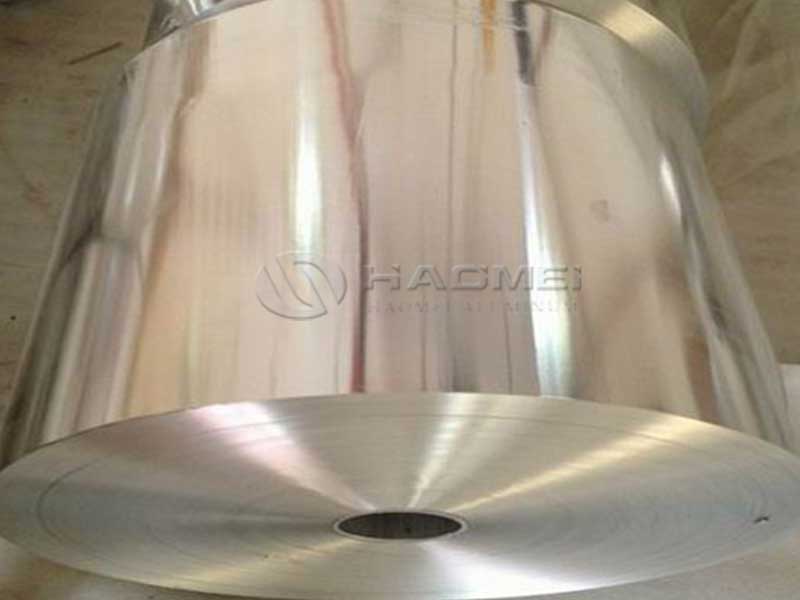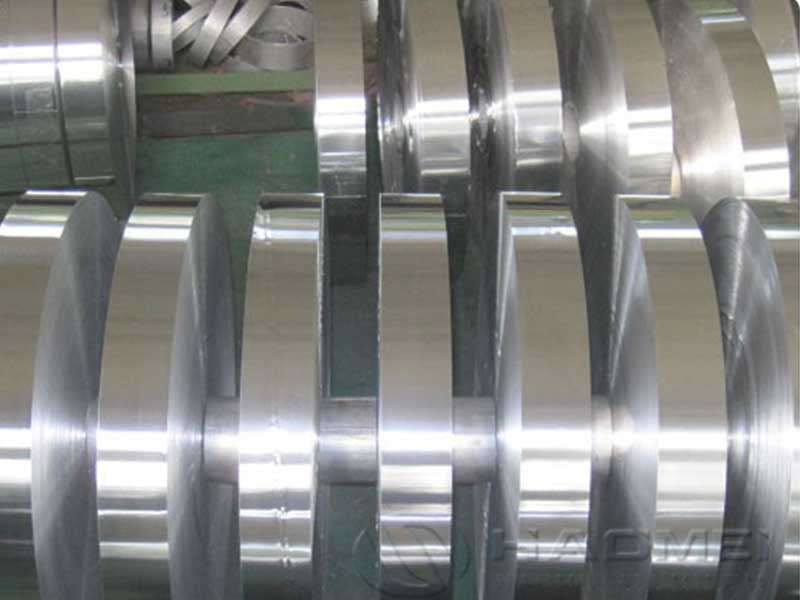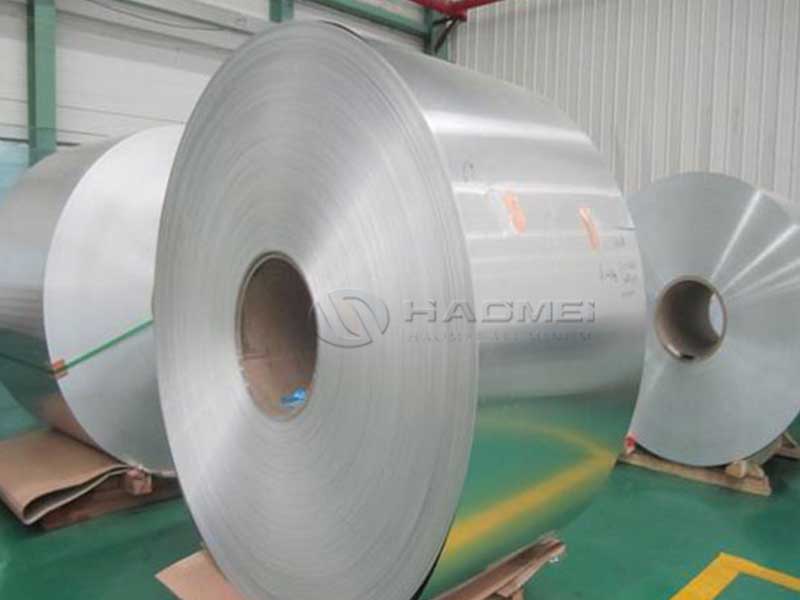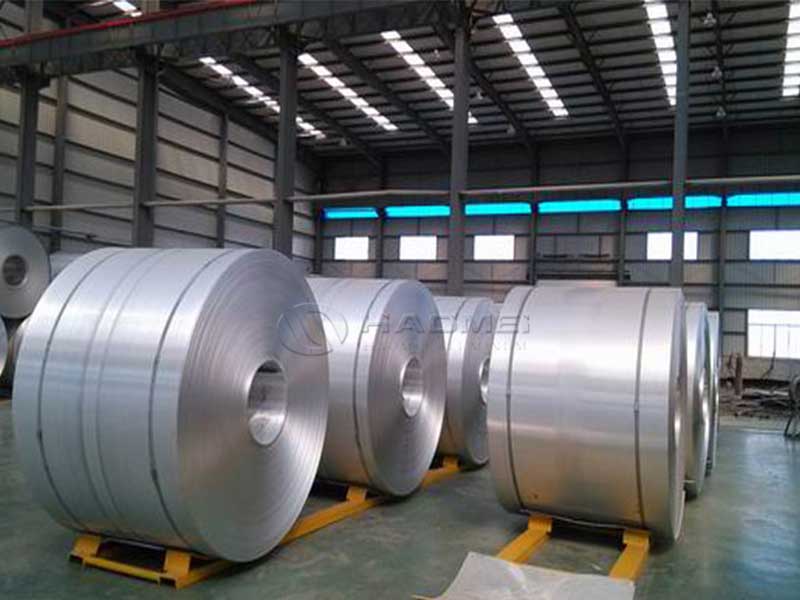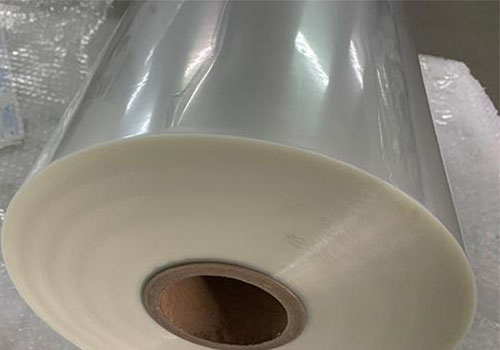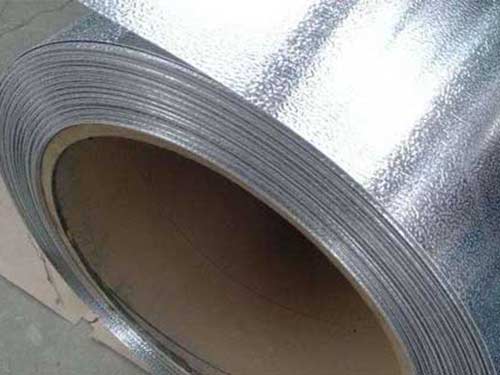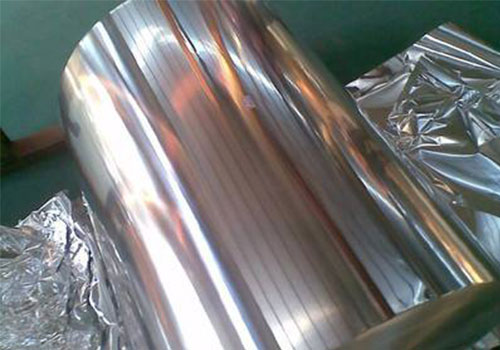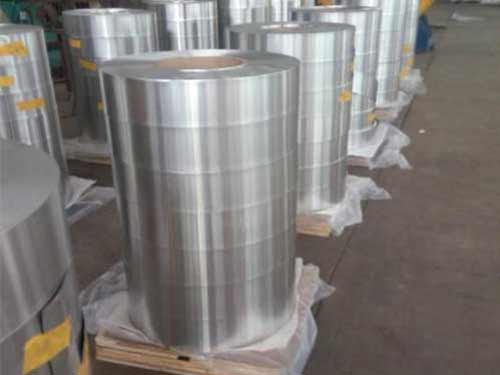

High purity aluminum foil is often discussed in terms of thickness, capacitance, and etching gain, but a more useful way to view it is as a "voltage steward" inside the capacitor. In modern electrolytic capacitors, stable voltage behavior is not just a circuit design target-it is a materials performance outcome. The foil is the foundation that carries current, supports oxide film growth, and survives decades of thermal and electrical stress without drifting into higher leakage, rising ESR, or premature dielectric breakdown. When customers ask for "reliable capacitor performance," what they are really buying is consistency in the foil's chemistry, microstructure, temper condition, and cleanliness-because those variables determine how stable the capacitor will remain at its rated voltage over time.
What "stable voltage" really means in capacitor foil
In aluminum electrolytic capacitors, the dielectric is an aluminum oxide film formed on the anode foil. Voltage stability is therefore tied to how uniformly that oxide grows and how well it resists localized defects. High purity aluminum foil improves this in three practical ways.
First, it reduces electrically active impurities that can become micro-galvanic sites. Trace levels of Fe, Si, Cu, and other elements can create local current crowding during formation, resulting in thin spots in the oxide film. Those thin spots become leakage paths under working voltage and can develop into breakdown points under ripple current.
Second, purity enables predictable etching behavior. Etched tunnels and pits create surface area that increases capacitance. If impurity distribution or grain structure is inconsistent, the etched network becomes uneven, leading to capacitance variation and higher scatter in leakage current. A stable etched morphology is a quiet kind of reliability: fewer hotspots, fewer surprises during life testing.
Third, high purity foil supports a stable temper and recrystallized grain structure, which matters for winding, slitting, and long-term stress relaxation. Mechanical stability helps maintain intimate contact with paper separators and electrolyte, keeping ESR stable through thermal cycling.
Functions that matter: more than conductivity
People sometimes treat capacitor foil as a simple conductor. In reality, it performs several simultaneous functions.
It acts as the "oxide carrier" during formation, requiring a surface that is both chemically clean and structurally consistent. It serves as the etch substrate, where controlled corrosion creates a high-area architecture without tearing through the foil or leaving weak ligament structures. It is also a thermal and electrical balancing layer, distributing ripple current so the capacitor does not develop localized heating that accelerates electrolyte decomposition.
From a manufacturing viewpoint, high purity foil is also a process stabilizer. It reduces batch-to-batch drift in etch rate, formation current, and final leakage-helping capacitor makers meet tighter QA limits with less rework.
Applications where stable voltage performance is decisive
High purity aluminum capacitor foil is essential in applications where voltage margin is slim, ripple current is high, or lifetime expectations are long.
Automotive electronics and EV power domains demand low defect rates and stable ESR across temperature swings, especially in DC-link support, onboard chargers, and auxiliary power rails. Industrial inverters and servo drives require capacitors that hold rated voltage under continuous ripple without capacitance fade. Telecom power supplies and 5G infrastructure benefit from predictable leakage and endurance at elevated ambient temperatures. Consumer fast chargers and LED drivers increasingly rely on compact electrolytics operating near their design limits, making stable oxide quality a differentiator.
Typical product parameters customers check first
High purity capacitor aluminum foil is specified by a practical set of parameters that correlate with manufacturability and electrical results.
Electrical targets vary by capacitor design, but typical customer expectations include stable forming behavior, low and consistent leakage current after formation, and controlled tensile/elongation appropriate to winding speed and foil thickness.
Alloy, tempering, and the "purity-to-structure" connection
Capacitor anode foil is commonly based on 1xxx series aluminum where purity is maximized. Grades such as 1050, 1060, 1070, 1080, and high-purity variants like 99.90%–99.99% Al are widely used depending on the capacitor class and etching/forming strategy. For cathode foil, slightly different purity and surface requirements may apply, but high purity still supports stable performance in many designs.
Temper condition is typically supplied as O (fully annealed) to achieve a recrystallized microstructure suitable for deep, uniform etching and reliable winding. In some production flows, H18 or intermediate tempers may be used for specific handling or cathode requirements, but anode etching generally benefits from a softer temper where grain structure and dislocation density are controlled to support consistent tunnel formation.
What matters is not just the label "O temper," but the controlled annealing process behind it. Proper annealing reduces residual stress, improves ductility, and stabilizes grain size. A stable grain structure encourages uniform etching, which directly supports voltage stability by promoting a uniform oxide field distribution during formation.
Implementation standards and inspection focus
Capacitor foil supply commonly aligns with general aluminum foil/strip standards and customer-specific capacitor foil specifications. In practice, acceptance is driven by measurable items such as chemical composition certification, mechanical properties, dimensional tolerances, surface quality, cleanliness, and defect limits. Many global buyers reference ASTM or EN frameworks for aluminum composition and mechanical testing, while relying heavily on supplier QC plans and capacitor-industry test methods for etching/forming performance.
Chemical properties: why trace elements matter
Below is a representative chemical composition table for high purity aluminum foil used in capacitor applications. Exact limits vary by grade and customer agreement, but the trend is consistent: aluminum content is maximized, while Fe, Si, Cu, and other impurities are kept very low to improve oxide integrity and etch uniformity.
Typical Chemical Composition (wt.%) for High Purity Capacitor Aluminum Foil
| Grade / Purity Level | Al (min) | Si (max) | Fe (max) | Cu (max) | Mn (max) | Mg (max) | Zn (max) | Ti (max) | Others (each / total) |
|---|---|---|---|---|---|---|---|---|---|
| 1060 (typical) | 99.60 | 0.25 | 0.35 | 0.05 | 0.03 | 0.03 | 0.05 | 0.03 | 0.03 / 0.10 |
| 1070 (typical) | 99.70 | 0.20 | 0.25 | 0.04 | 0.03 | 0.03 | 0.04 | 0.03 | 0.03 / 0.10 |
| 99.90% high purity | 99.90 | 0.05 | 0.05 | 0.01 | 0.01 | 0.01 | 0.01 | 0.01 | 0.01 / 0.03 |
| 99.99% ultra purity | 99.99 | 0.01 | 0.01 | 0.005 | 0.005 | 0.005 | 0.005 | 0.005 | 0.005 / 0.01 |
This chemistry discipline supports a more uniform barrier oxide and reduces the risk of localized weakness under operating voltage. In other words, it helps convert "rated voltage" from a printed promise into a stable, repeatable reality across production lots.
The takeaway: reliability begins before the capacitor is built
Capacitor reliability is often blamed on electrolyte or sealing, but the foil quietly sets the ceiling for stable voltage performance. High purity aluminum foil enables uniform etching, predictable oxide formation, lower leakage scatter, and more stable ESR across time and temperature. When specified with the right purity level, O-temper microstructure, tight gauge tolerance, and controlled surface cleanliness, it becomes a material that protects voltage stability from the inside-helping capacitors deliver consistent performance in automotive, industrial, energy, and high-density power electronics.