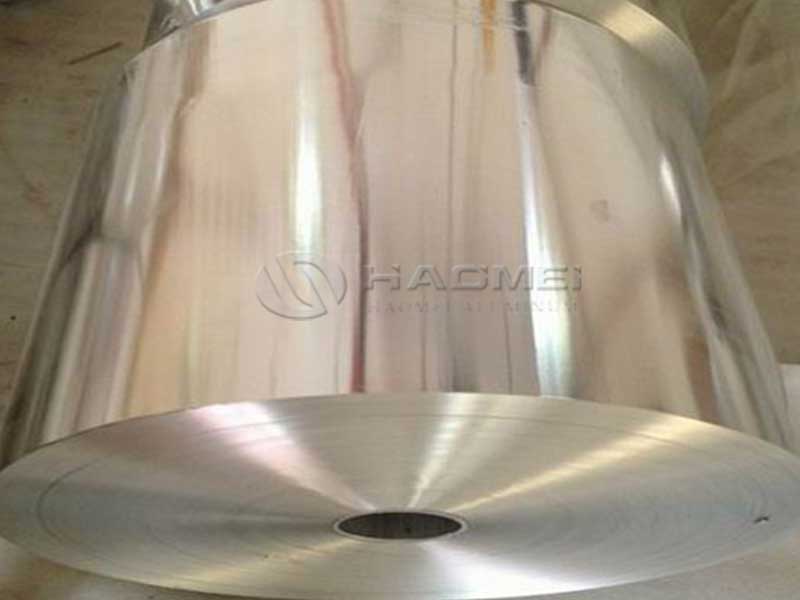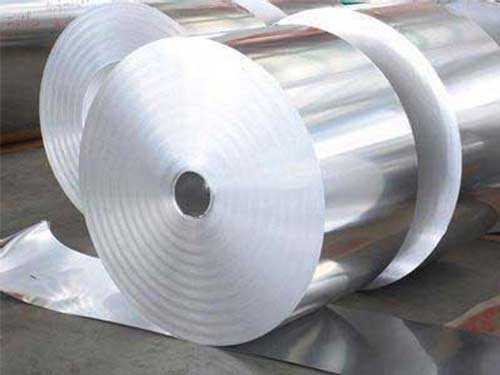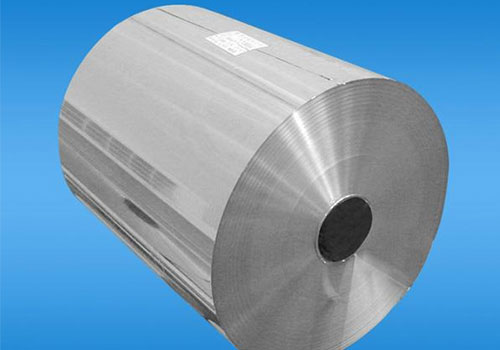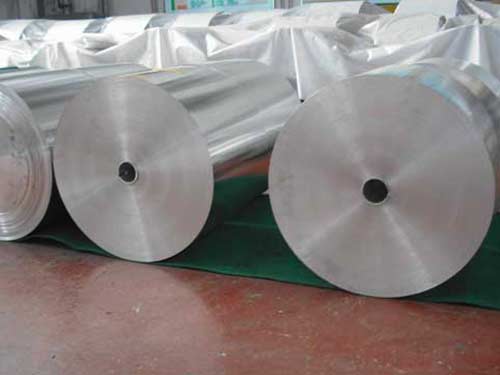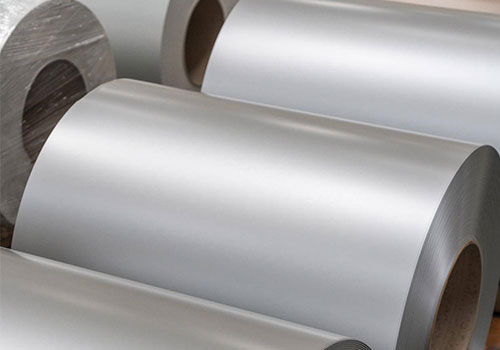

In lithium‑ion batteries, aluminum foil is often introduced as "just" the cathode current collector. That description is accurate, but incomplete. A high efficiency electronic grade aluminum foil behaves less like a passive sheet of metal and more like a carefully tuned highway system for charge, heat, coating adhesion, and long‑term chemical stability. When you view the foil from the perspective of what the battery actually needs-fast electron flow, uniform current distribution, minimal parasitics, and predictable interfaces-you start to see why electronic‑grade foil is engineered down to microns, grains, and parts per million.
Why "High Efficiency" Foil Is More Than High Conductivity
Inside a lithium‑ion cell, cathode active material does not conduct as efficiently as metal. The foil's role is to collect electrons from countless micro‑contacts across the electrode and deliver them to the tab with minimal loss. "High efficiency" therefore means the foil helps the electrode behave like a single, uniform electrical object rather than a patchwork of local resistances.
performance paths influenced by electronic grade aluminum foil include:
Lower interfacial resistance
A stable, well‑controlled surface oxide and consistent roughness help the binder and conductive carbon form reliable contact points. This improves adhesion and reduces micro‑delamination that can grow during cycling and calendering.
Better current uniformity
Uniform thickness, flatness, and grain structure reduce local hotspots in current density. That is especially valuable at high C‑rates where non‑uniformity can amplify polarization and heat.
Higher coating yield and process windows
Electronic‑grade foil is designed to run smoothly through high‑speed coating, drying, and calendering. Pinholes, waviness, and edge burrs aren't minor cosmetic issues-they translate to coating defects, breaks, and yield loss.
Thermal and mechanical stability
During winding/stacking, drying, and cycling, the foil must resist tearing while staying dimensionally stable. Temper, recrystallization state, and tensile balance matter as much as conductivity.
Where It Fits: Cathode Current Collector Across Chemistries
High efficiency electronic grade aluminum foil is widely used as the cathode current collector for:
- NCM/NCA cathodes used in EV and high‑energy cells
- LFP cathodes used in power tools, ESS, and many EV platforms
- High‑voltage and high‑loading cathodes that push adhesion and oxidation tolerance
- High‑rate designs that demand very low electrical and contact resistance
Even though cathode chemistry differs, foil requirements converge on a common target: stable surface, high purity, excellent processability, and consistent mechanical properties.
Typical Parameters for Lithium‑Ion Battery Aluminum Foil (Electronic Grade)
The exact target depends on cell format and coating design, but electronic‑grade foil is commonly specified within these practical ranges:
Thickness range (typical)
About 8 µm to 20 µm for most Li‑ion cathodes
Thinner foil supports higher energy density, while thicker foil improves mechanical robustness and reduces wrinkling at high line speeds.
Thickness tolerance and profile control
Tight gauge control is critical because coating weight is often controlled by gap and viscosity; foil variation becomes electrode variation. Electronic grade production emphasizes stable thickness across width and along length.
Surface condition (one side or both sides)
Battery foil may be supplied as bright (smooth) foil, matte foil, or treated foil designed for improved adhesion. Many cathode lines prefer a controlled surface roughness that balances adhesion with clean coating release and uniform drying.
Mechanical properties (typical expectations)
Adequate tensile strength and elongation for slitting, winding, and calendering without edge cracking. The "right" temper is often chosen to keep the foil strong enough to run fast, yet not so hard that it creates edge microcracks or poor conformability under compression.
Electrical performance
Low bulk resistivity is inherent to aluminum, but in practice the efficiency is strongly affected by surface film uniformity, cleanliness, and contact behavior under coating and calender pressure.
Alloy Selection: Why 1xxx and Selected 8xxx Alloys Dominate
Electronic grade battery aluminum foil is commonly produced using:
1xxx series high‑purity aluminum (for example 1050, 1060, 1070, 1100)
These grades prioritize electrical conductivity and predictable corrosion behavior. Higher aluminum purity generally supports lower resistivity and fewer impurity‑driven galvanic sites.
8xxx series aluminum alloys (such as 8011, 8021 in selected cases)
These alloys can provide improved strength and processing stability for ultra‑thin gauges or demanding handling, depending on the specific design goals. Alloying must be controlled carefully to keep conductivity and surface stability suitable for battery use.
From the "electron's perspective," higher purity can mean less scattering and more uniform conduction. From the "factory's perspective," a slightly alloyed foil may mean better runnability and fewer breaks. Electronic grade foil is where those priorities are balanced through alloy choice, rolling schedules, and annealing strategy.
Tempering and Microstructure: The Hidden Lever Behind Adhesion and Yield
Commonly used temper states for battery aluminum foil include:
O temper (annealed, soft)
Offers excellent ductility and conformability, beneficial for calendering and reducing crack risk. Often selected when the process requires the foil to "flow" slightly under compression and maintain a stable interface.
H18 and related hard tempers (full hard or near full hard)
Provide higher strength and improved handling during high‑speed coating and slitting, especially at very low thickness. The tradeoff can be lower elongation and potentially higher risk of edge cracking if slitting and tension control are not optimized.
Many battery manufacturers fine‑tune the temper choice based on electrode loading, coating solvent system, and calendering density. A high‑loading cathode may prefer a foil surface and temper that maximize adhesion and minimize local peel initiation; a high‑speed line may prioritize tensile stability and low waviness to protect coating uniformity.
Implementation Standards and Quality Expectations in Battery Supply Chains
Battery foil is typically manufactured and validated under quality systems and test methods used across the metals and battery industries. While customer specifications ultimately govern, the ecosystem commonly references:
- ISO 9001 quality management systems for manufacturing control
- ISO 14001 environmental management systems when required by OEM supply chains
- RoHS and REACH compliance expectations for restricted substances, depending on application region
- ASTM and EN aluminum test methods for tensile properties, chemical analysis, and dimensional verification
- Battery-industry internal standards for pinholes, cleanliness, surface energy/wettability, roughness targets, and coating adhesion
In practical procurement, "electronic grade" is often demonstrated by capability data: pinhole frequency at target gauge, consistency of surface treatment, cleanliness metrics, and mechanical uniformity across lots.
Chemical Composition: Typical Ranges for Common Battery Foil Alloys
Exact limits vary by standard and supplier melt practice. The table below provides widely used reference ranges to help interpret battery foil alloying and impurity control. Customer requirements may be tighter, especially for sodium, copper, or other trace elements that can influence corrosion or interfacial behavior.
Chemical Properties / Composition Table (Typical, wt.%)
| Alloy | Al (min) | Si (max) | Fe (max) | Cu (max) | Mn (max) | Mg (max) | Zn (max) | Ti (max) |
|---|---|---|---|---|---|---|---|---|
| 1050 | 99.50 | 0.25 | 0.40 | 0.05 | 0.05 | 0.05 | 0.05 | 0.03 |
| 1060 | 99.60 | 0.25 | 0.35 | 0.05 | 0.03 | 0.03 | 0.05 | 0.03 |
| 1070 | 99.70 | 0.20 | 0.25 | 0.04 | 0.03 | 0.03 | 0.04 | 0.03 |
| 1100 | 99.00 | 0.95 (Si+Fe) | 0.95 (Si+Fe) | 0.20 | 0.05 | - | 0.10 | - |
| 8011 | Bal. | 0.90 | 1.00 | 0.10 | 0.20 | 0.05 | 0.10 | 0.08 |
| 8021 | Bal. | 0.15 | 0.70 | 0.05 | 0.10 | 0.05 | 0.10 | 0.08 |
Notes for battery relevance:
Surface Engineering: The Interface Where Efficiency Is Won
Common surface options in lithium‑ion foil supply include:
As‑rolled (bright/matte) surfaces
Controlled rolling produces predictable roughness and texture. A slightly rougher surface can increase mechanical interlocking for the coating, while too much roughness may create non‑uniform coating thickness and local stress concentration.
Degreased and cleanliness‑controlled foil
Residual rolling oil affects wettability, slurry leveling, and adhesion. Electronic grade foil typically enforces tight cleanliness targets and stable surface energy to reduce coating defects.
Treated foil for enhanced adhesion
Some foil grades incorporate surface treatment to improve bonding strength with PVDF or water‑based binders. The goal is not simply "stickier," but stable adhesion after drying, calendering, electrolyte wetting, and cycling.
What to Look For When Specifying High Efficiency Electronic Grade Aluminum Foil
A practical specification mindset is to connect foil attributes to failure modes and production pain points:
If coating peel or powder drop is the problem
Focus on surface condition, roughness window, oxide stability, and treatment type. Consider temper that supports calendering without initiating interfacial cracks.
If pinholes, breaks, or low yield dominate
Prioritize gauge capability, pinhole control, edge quality after slitting, and tensile stability. Ultra‑thin foil often benefits from alloys/processing routes designed for strength and defect control.
If high‑rate performance and temperature rise are limiting
Look beyond "conductivity" and examine contact resistance consistency, thickness uniformity, and how the foil behaves after calendering when real contact is formed.
A Distinctive Takeaway: Battery Foil Is a Designed Interface, Not a Commodity Sheet
High efficiency electronic grade aluminum foil for lithium‑ion batteries is engineered to make countless microscopic electrical handshakes reliable over years of cycling. Alloy purity, temper, surface oxide behavior, and manufacturing standards aren't separate checkboxes-they are interconnected knobs that determine whether the cathode behaves like a stable conductor network or a gradually loosening composite.