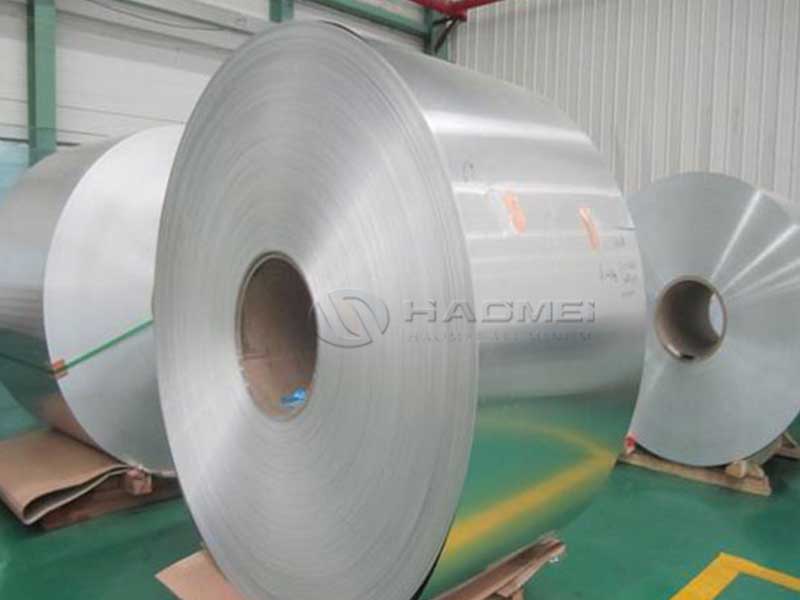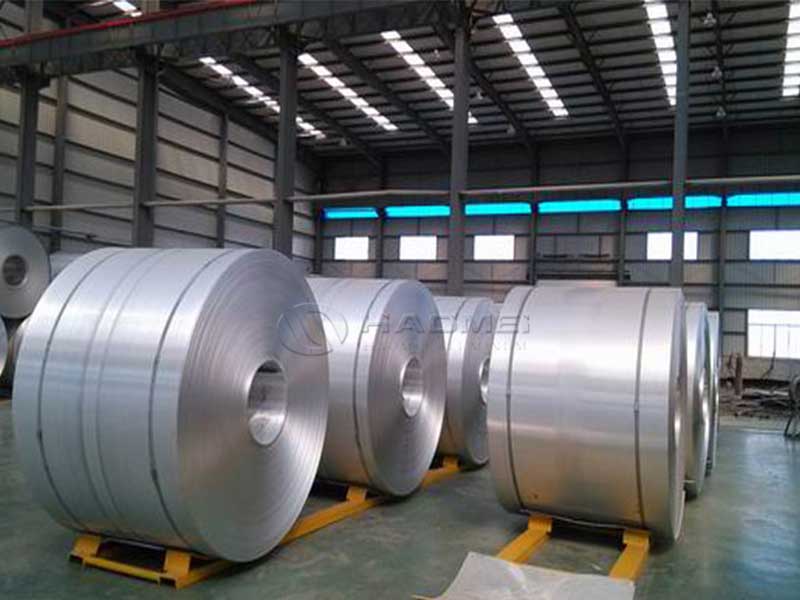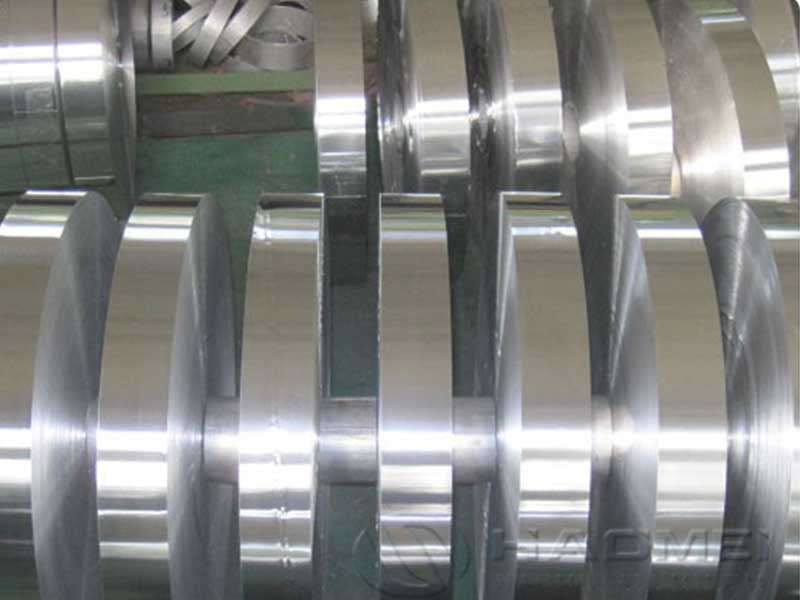

1235 aluminum foil is one of the most widely used alloys for cigarette packaging and related inner-liner structures, valued for its high purity, excellent barrier performance, stable formability, and clean surface quality. In cigarette applications, foil is not simply a "wrap"-it is a precision packaging material that must protect aroma, resist pinholes, run smoothly at high-speed converting lines, and maintain an attractive metallic appearance.
1) Why 1235 Alloy for Cigarette Foil?
1235 is a commercially pure aluminum alloy (typically ≥99.35% Al). Compared with higher-alloyed grades, it offers:
- Superior barrier properties at thin gauges: blocks moisture, oxygen, light, and odor migration.
- Excellent ductility: supports embossing, folding, wrapping, and lamination without cracking.
- Low defect sensitivity: stable rolling performance helps reduce pinholes and edge cracks.
- High surface reflectivity and clean appearance: important for premium packaging aesthetics.
In cigarette packaging, these advantages translate directly into freshness retention, consistent machine runnability, and high visual quality.
2) Typical Applications in the Cigarette Industry
1235 foil is commonly used in:
- Inner liner / inner wrap foil (plain or laminated with paper/film)
- Cigarette bundle wrap and overwrap structures (often laminated or coated)
- Embossed foil for branding texture and premium feel
- Foil-paper composite for stiffness + barrier optimization
- Specialty packaging where aroma preservation is critical
Note: final structure depends on the brand's packaging design-foil may be used alone or as part of a multilayer laminate (foil + paper, foil + PET, foil + heat-seal lacquer, etc.).
3) Features and Performance Benefits
Barrier and Freshness Protection
Aluminum foil is a near-absolute barrier when properly produced and converted. For cigarettes, this helps:
- Reduce moisture exchange that can dry tobacco or cause odor changes.
- Limit aroma loss and outside odor absorption.
- Protect against UV/light exposure affecting flavor stability.
Formability and Converting Efficiency
Cigarette packaging lines run at high speeds; foil must handle:
- Folding and dead-fold behavior (foil stays shaped after forming)
- Embossing without tearing
- Stable tension and flatness to avoid web breaks
Surface Quality and Cleanliness
High-quality 1235 foil is controlled for:
- Low oil residue (important for lamination and printing compatibility)
- Consistent surface energy for coating/adhesive anchoring
- Minimal inclusions/roll marks that affect appearance and pinhole risk
Cost-Performance Balance
1235 is typically a cost-effective choice because it:
- Rolls efficiently to thin gauges
- Provides strong barrier performance without expensive alloying additions
- Offers broad availability and mature processing windows
4) Chemical Composition (Typical)
1235 is defined as high-purity aluminum with controlled impurity limits. Customer specifications may vary slightly by standard and supplier capability.
| Element | Typical Limit / Range (wt.%) | Notes |
|---|---|---|
| Al | ≥ 99.35 | Balance |
| Si | ≤ 0.65 | Impurity control affects surface and defect sensitivity |
| Fe | ≤ 0.65 | Impurity control affects strength and appearance |
| Cu | ≤ 0.05 | Typically low; improves corrosion neutrality |
| Mn | ≤ 0.05 | Trace |
| Mg | ≤ 0.05 | Trace |
| Zn | ≤ 0.10 | Trace |
| Ti | ≤ 0.03 | Grain refiner residue; controlled for quality |
| Others (each) | ≤ 0.03 | |
| Others (total) | ≤ 0.10 |
5) Technical Specifications (Cigarette Foil Focus)
The most common foil conditions for cigarette inner wrap are soft temper (O), sometimes H18 or intermediate tempers for special converting needs.
| Item | Typical Range / Option | Practical Meaning |
|---|---|---|
| Alloy | 1235 | High purity, high barrier |
| Temper | O (soft), H18 (hard) | O: best folding/embossing; H18: higher stiffness |
| Thickness (mm) | 0.006 – 0.020 | Cigarette inner wrap often 6–12 µm depending on structure |
| Width (mm) | 100 – 1600 (custom) | Slitting to match converting lines |
| ID / Core | 76 mm / 152 mm (common) | As required by customer equipment |
| Surface finish | Bright / one-side bright (OSB) | Aesthetic and functional |
| Joint | No joint or limited joints | Improves high-speed continuity |
| Rolling oil residue | Controlled low | Better printing/lamination; reduced odor risk |
| Pinhole level | Controlled by gauge & QC | Critical for barrier reliability |
| Flatness | Tight tolerance | Minimizes wrinkles and web breaks |
6) Mechanical Properties (Typical Guidance)
Mechanical properties depend strongly on thickness, temper, and processing (cold reduction, annealing). For cigarette foil, "process performance" is often more important than absolute strength numbers.
| Property | 1235-O (Soft) Typical | 1235-H18 (Hard) Typical | Relevance |
|---|---|---|---|
| Tensile Strength (MPa) | ~45–80 | ~130–180 | Hard temper improves stiffness; soft improves forming |
| Elongation (%) | Higher (often ≥ 6–15)* | Lower (often ≤ 2–5)* | Soft foil resists cracking during folding/embossing |
| Yield Strength | Not always specified for thin foil | Not always specified for thin foil | Foil testing can vary by method |
*Elongation values depend on test method and thickness; suppliers typically provide certificate values based on standardized foil tensile tests.
7) Performance Metrics That Matter in Cigarette Packaging
For cigarette foil customers, these numerical/functional metrics often drive acceptance:
| Metric | Target / Typical Expectation | Why It Matters |
|---|---|---|
| Pinhole control | Very low at target gauge | Pinholes reduce barrier and freshness retention |
| Dead-fold | Excellent in O temper | Keeps folds crisp; improves pack appearance |
| Surface cleanliness | Low residue, low odor | Avoids tainting tobacco aroma; improves lamination |
| Coating/adhesion compatibility | Stable wetting and anchoring | Needed for lacquer, heat-seal, or adhesive lamination |
| Dimensional stability | Tight thickness tolerance | Stable web tension and consistent converting |
| Print/emboss response | Uniform | Brand aesthetics and premium differentiation |
8) Recommended Use Cases (How Customers Gain Value)
A) Premium Inner Liner with Embossing
- Recommended: 1235-O, 6–10 µm
- Value: clean emboss detail, strong metallic look, excellent dead-fold for neat corners.
B) Foil-Paper Composite Inner Wrap
- Recommended: 1235-O with controlled oil residue
- Value: paper provides stiffness and tactile feel; foil provides aroma barrier and light protection.
C) High-Speed Automated Wrapping Lines
- Recommended: stable flatness, consistent thickness, minimized joints
- Value: fewer web breaks, reduced waste, predictable sealing/lamination behavior.
D) Export or Long-Shelf-Life Cigarettes
- Recommended: structures emphasizing barrier integrity (low pinhole + robust laminate design)
- Value: better aroma retention across extended logistics cycles and variable climates.
9) Quality Control and Supply Considerations
When specifying 1235 aluminum foil for cigarette, it's best to confirm:
- Gauge tolerance and pinhole criteria at the exact thickness
- Surface requirements (bright/OSB), allowable roll marks, and cleanliness
- Oil type and residue limits (odor-sensitive application)
- Annealing/temper stability for consistent dead-fold
- Packaging and handling: moisture protection, edge protection, traceability
A reliable supplier should provide mill test certificates, coil traceability, and (when requested) application-oriented data such as pinhole inspection results or residue measurements.