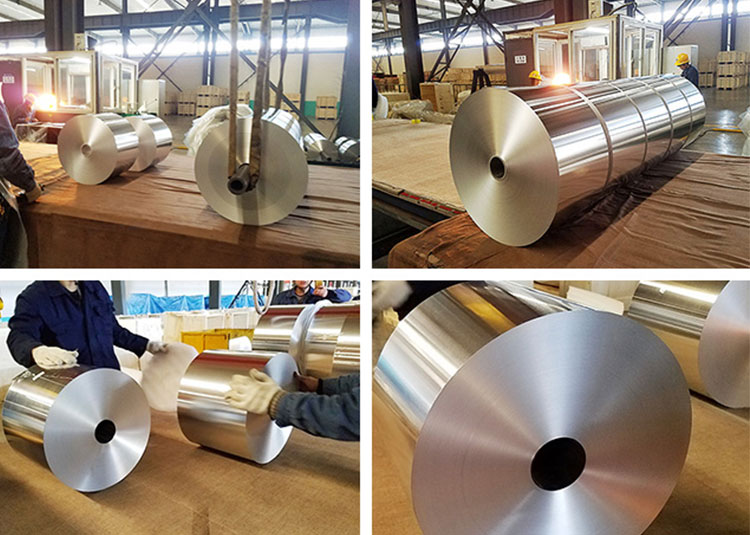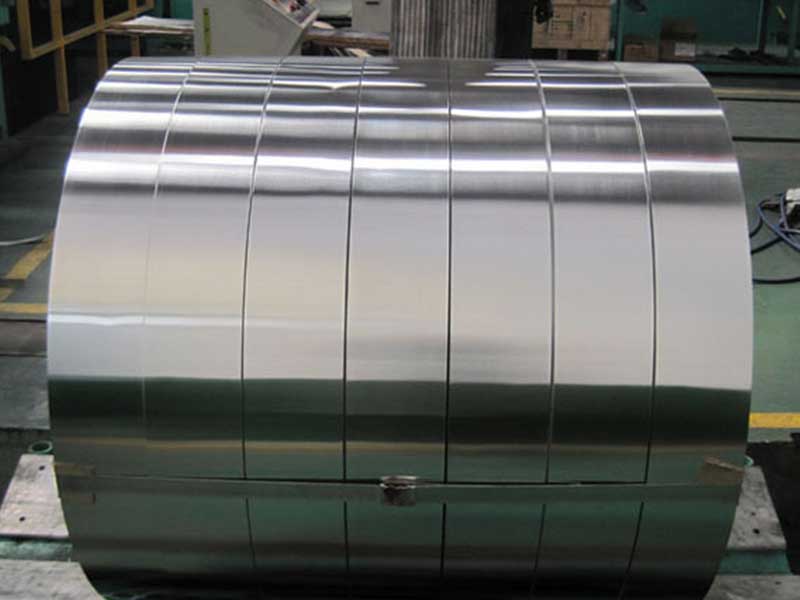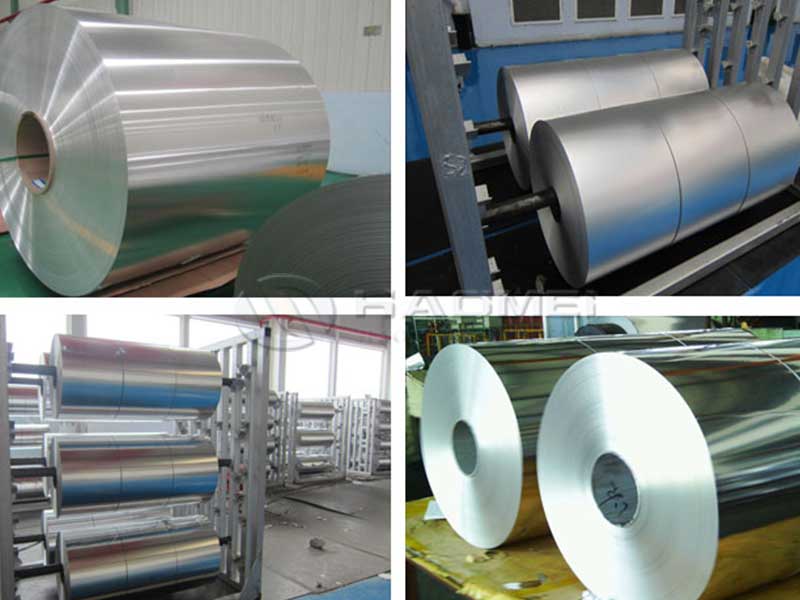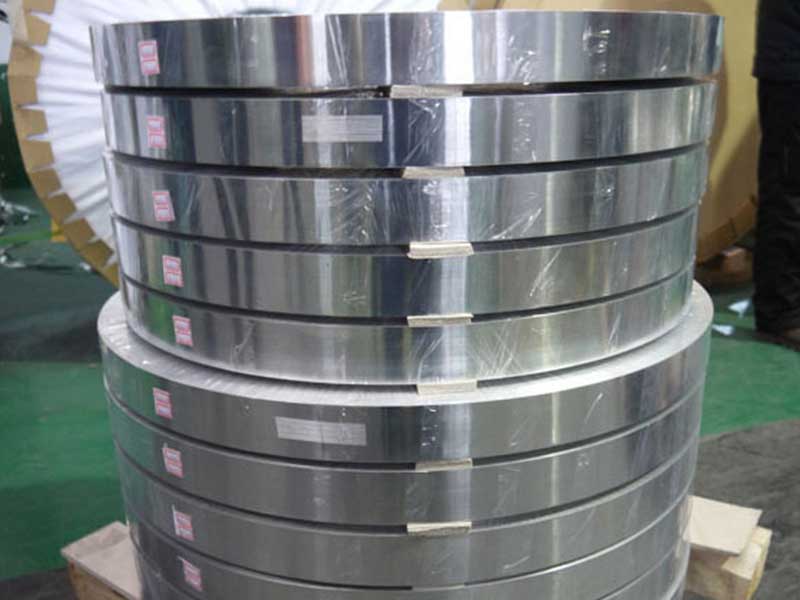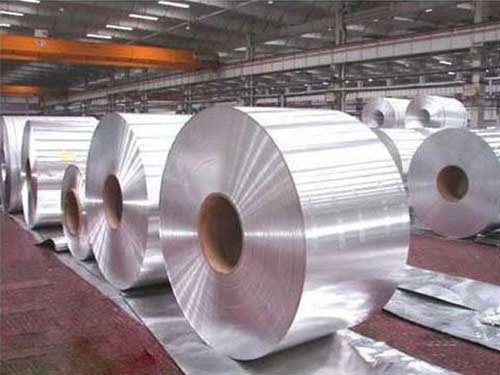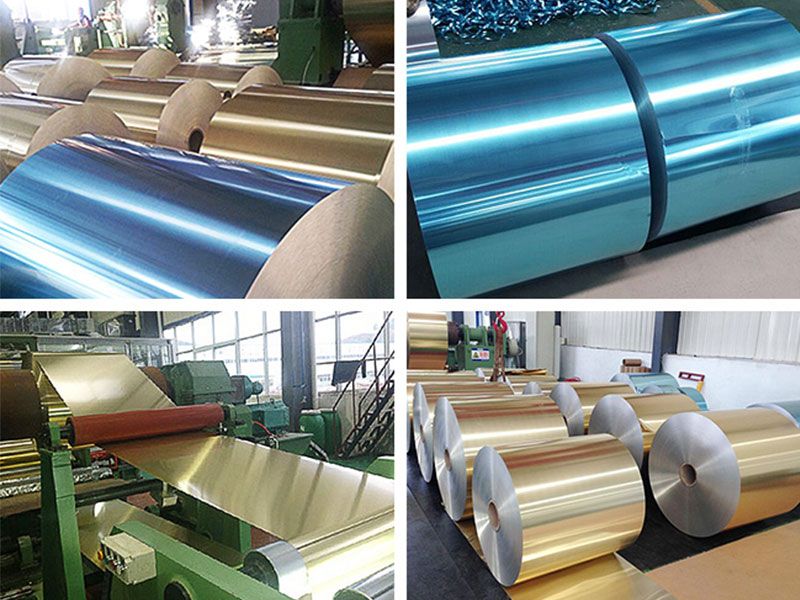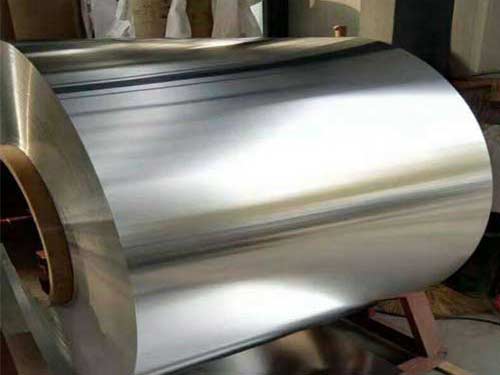

High efficiency aluminum foil is a critical shielding material for instrumentation, control, and power cables in nuclear power plants.
This high efficiency aluminum foil is a precision-rolled, annealed, and surface-treated product designed to provide stable electromagnetic shielding and mechanical protection for cables running through containment areas, control rooms, and auxiliary systems in nuclear power stations.
design objectives:
- Stable shielding performance over decades of operation
- Resistance to radiation, heat, and humidity
- Excellent adhesion to cable jackets and tapes
- Compatibility with halogen-free, low-smoke insulation systems
Typical Chemical Composition
The foil is generally based on high-purity aluminum with controlled additions to balance conductivity, strength, and processability. A typical composition range is shown below (representative values; can be customized to project specs).
| Element | Symbol | Typical Range (wt%) | Function / Note |
|---|---|---|---|
| Aluminum | Al | Balance (≥ 98.5) | High conductivity, low density |
| Silicon | Si | 0.05 – 0.25 | Improves strength, rolling performance |
| Iron | Fe | 0.20 – 0.70 | Strength, enhances mechanical stability |
| Copper | Cu | ≤ 0.10 | Controls conductivity vs. strength |
| Manganese | Mn | ≤ 0.10 | Grain refinement, improves toughness |
| Magnesium | Mg | ≤ 0.05 | Slight strengthening, retains ductility |
| Zinc | Zn | ≤ 0.10 | Corrosion behavior control |
| Titanium | Ti | ≤ 0.05 | Grain control during casting and rolling |
| Others (each) | - | ≤ 0.05 | Impurities under strict quality control |
| Others (total) | - | ≤ 0.15 |
High aluminum content ensures good electrical conductivity, which supports efficient electromagnetic shielding at low and high frequencies.
Technical Specifications
The product is available in several thickness ranges, temper conditions, and surface finishes optimized for cable taping lines and continuous sheathing equipment.
Dimensional & Mechanical Properties
| Parameter | Typical Range / Option | Notes |
|---|---|---|
| Thickness | 0.020 – 0.150 mm | Custom thicknesses available on request |
| Thickness tolerance | ± 5–8% (depends on gauge) | Fine tolerance for uniform shielding |
| Width | 200 – 1,500 mm | Slit to cable-line requirements |
| Width tolerance | ± 0.15 – 0.50 mm | Depends on width and slitting setup |
| Temper | O, H12, H14 | Annealed or lightly strain-hardened |
| Tensile strength | 60 – 130 MPa | Tailored to handling and forming needs |
| Yield strength (0.2% proof) | 25 – 90 MPa | Soft temper helps avoid cracking over bends |
| Elongation (A50) | ≥ 8 – 20 % | Ensures flexibility during taping and coiling |
| Density | ~2.70 g/cm³ | Lightweight in comparison with copper foils |
Physical & Electrical Properties
| Property | Value / Range | Relevance |
|---|---|---|
| Electrical conductivity | ≥ 58% IACS (typical 60–62% IACS) | Effective EMI / RFI shielding |
| Thermal conductivity | ~ 200 – 230 W/m·K | Aids heat dissipation along cable routes |
| Melting point | ~ 660 °C | Far above expected cable operating temperatures |
| Service temperature (foil) | −40 °C to +120 °C (standard design) | Higher limits available with special alloys |
| Coefficient of expansion | ~ 23 × 10⁻⁶ /K | Compatible with polymer jackets in cable designs |
| Surface resistivity | Very low (metallic) | Ensures continuous conductive path |
Surface & Coil Characteristics
| Item | Options / Specs | Description |
|---|---|---|
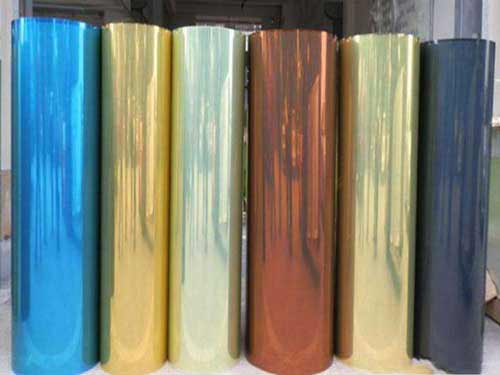
| Surface finish | Bright, matte, or asymmetric | Supports different taping and adhesion needs |
| Lubricant / residual oil | Controlled micro-film or degreased | Compatible with halogen-free insulation systems |
| Surface treatment | Chromate-free chemical conversion, primer-ready, or clean mill finish | Enhances bonding to tapes and jackets |
| Edge type | Slit, deburred, or smooth edge | Reduced risk of insulation damage |
| Coil inner diameter | 150 / 300 / 400 / 500 mm | Compatible with standard cable-taping lines |
| Coil outer diameter | Up to 1,200 mm | Flexible for high-speed production |
| Coil weight | 50 – 1,200 kg | Customized to pay-off and handling requirements |
Features for Nuclear Power Cable Shielding
High Shielding Efficiency and Stability
- Excellent electrical conductivity along the length and through the thickness
- Uniform thickness ensures predictable shielding effectiveness over a wide frequency spectrum
- Low pinhole density reduces leakage paths for electromagnetic interference
| Shielding-Related Parameter | Typical Value / Target |
|---|---|
| Pinhole count (≥ 0.5 mm, per m²) | ≤ 2 – 5 (typical production target) |
| Surface continuity | 100% visually continuous, no breaks |
| Mechanical defects | Strict control of wrinkles and laminations |
Radiation and Temperature Resistance
The foil itself is metallic and non-organic, so it is inherently resistant to radiation-induced degradation. In practice, it is used together with polymeric jackets and binding tapes selected for nuclear-grade service.
| Environmental Factor | Typical Requirement for Nuclear Use |
|---|---|
| Gamma radiation | Compatible with cable designs exceeding 200 kGy (when paired with suitable polymers) |
| Operating temperature | −40 °C to +90/105/125 °C cable classes |
| Emergency temperature | Short-term excursions per IEEE / IEC standards |
Mechanical Flexibility and Processability
- Soft temper grades enable tight bending radii without cracking
- Stable mechanical properties over the full coil minimize tape breaks at high line speed
| Processability Metric | Typical Performance |
|---|---|
| Minimum bending radius | Small, compatible with tight cable designs |
| Taping line speed capability | Up to ≥ 1,000 rpm (equipment dependent) |
| Spliceability | Suitable for ultrasonic, cold-weld, or mechanical splicing |
Corrosion Resistance and Long-Term Reliability
- Naturally self-passivating aluminum oxide layer
- Optional conversion coatings improve resistance to moisture and industrial atmospheres
- Suitable for use with halogen-free, fire-retardant, and low-smoke cable compounds
| Durability Factor | Performance Target |
|---|---|
| Moisture exposure | Stable in high humidity environments |
| Galvanic compatibility | Designed to work with standard cable metals when separated by tapes or jackets |
| Shelf life | Extended, with proper packing and storage |
Applications in Nuclear Power Plants
The foil is suitable for a wide range of nuclear-grade cable constructions, including safety-related and non-safety-related systems, depending on cable design and certification.
Typical Cable Types
| Cable Type | Role in Plant | Shielding Function of Foil |
|---|---|---|
| Instrumentation & control cables | Reactor monitoring, sensor signals | EMI shielding for low-level signals |
| Communication and data cables | Network and control communication lines | Minimize crosstalk and external interference |
| Low-voltage power cables | Control power distribution | Reduce radiated emissions and induced noise |
| Coaxial and RF cables | Special diagnostic and measurement lines | Stable impedance and shielding effectiveness |
| Fire-survivable / safety cables | Safety shutdown, emergency systems | Retain shielding performance under stress |
Functional Roles in Nuclear Environments
- Electromagnetic shielding to maintain signal integrity in areas crowded with high-power bus ducts, transformers, and inverters
- Additional mechanical protection to underlying insulation during installation and maintenance
- Thermal spreading: assists in redistributing localized heat along the cable route
- Grounding path when connected appropriately at one or both ends of the cable, depending on system design
Integration with Cable Designs
The aluminum foil is usually combined with other components to form composite shielding systems.
| Composite Construction | Description | Benefit |
|---|---|---|
| Al foil + polyester film (Al/PET) | Laminated foil bonded to PET film | Enhanced tear resistance, easy taping |
| Al foil + copper drain wire | Foil wrapped around core with drain wire | Reliable low-impedance grounding path |
| Multi-layer foil wraps | Overlapping or counter-wound layers | Higher shielding effectiveness, redundancy |
| Al foil with braided shield | Foil as base with copper braid outside | High coverage plus mechanical robustness |
The foil is suitable for longitudinal or helical application, with overlap ratios tuned to meet required shielding effectiveness and flexibility.
Quality Assurance and Standards Support
This foil is produced under strict process control regimes and traceability frameworks appropriate for nuclear-related supply chains.
| Quality Aspect | Typical Practice / Capability |
|---|---|
| Standards reference | IEC, IEEE, ASTM, and EN for foil and cable materials (project-specific) |
| Certification support | Mill test certificates, chemical and mechanical property reports |
| Surface inspection | 100% visual plus statistical sampling for defects |
| Traceability | Heat, coil, and slit roll identification |
| Packaging | Moisture-protected, impact-resistant packing for long-distance transport |
| Benefit Area | Advantages |
|---|---|
| Shielding performance | High conductivity, uniform thickness, low pinholes |
| Reliability | Stable under radiation, temperature, and humidity |
| Process efficiency | Excellent taping behavior, low breakage rates |
| Design flexibility | Wide range of thickness, width, and surface treatments |
| Safety compatibility | Suitable for halogen-free, low-smoke nuclear cables |
This high efficiency aluminum foil provides a robust, customizable shielding solution for cable manufacturers and EPC contractors serving nuclear power projects, helping ensure long-term signal integrity, operational reliability, and compliance with demanding safety requirements.