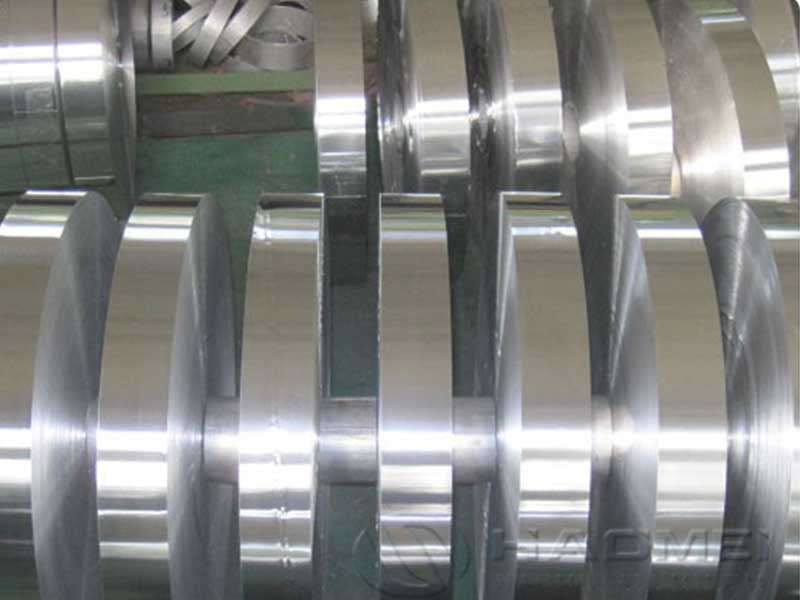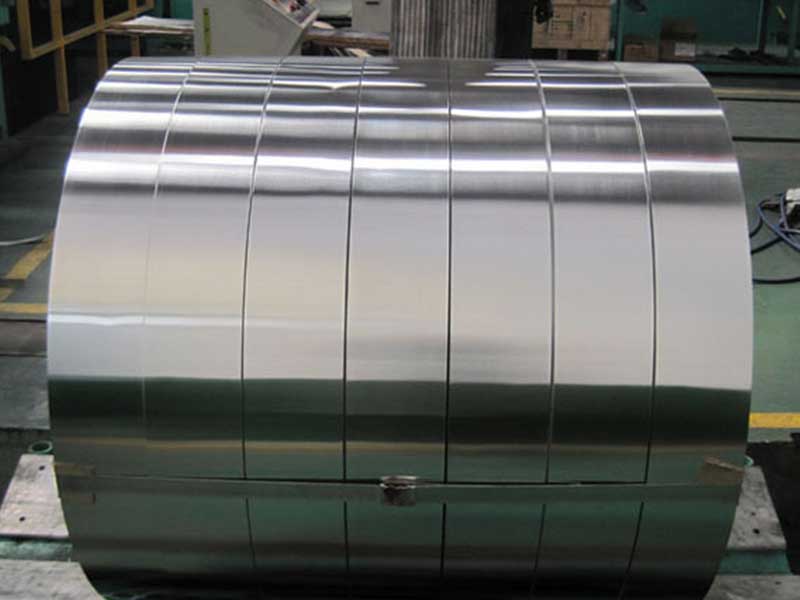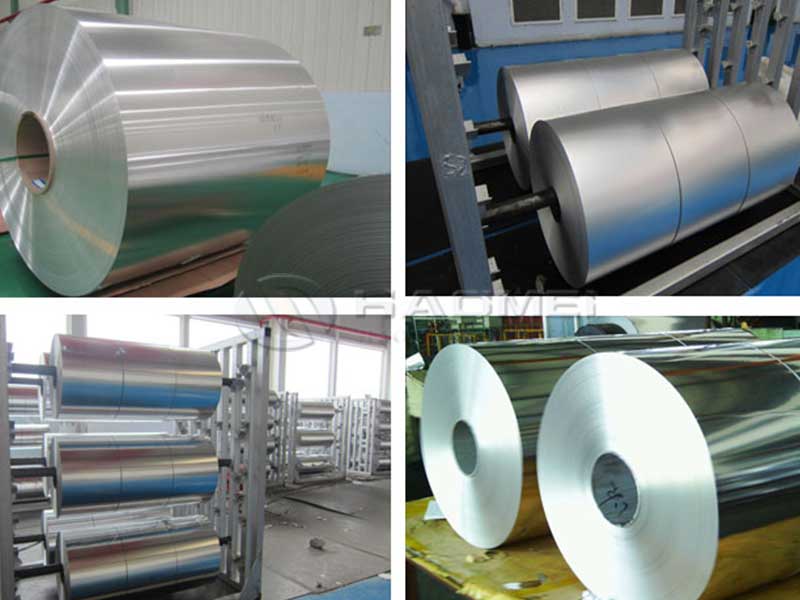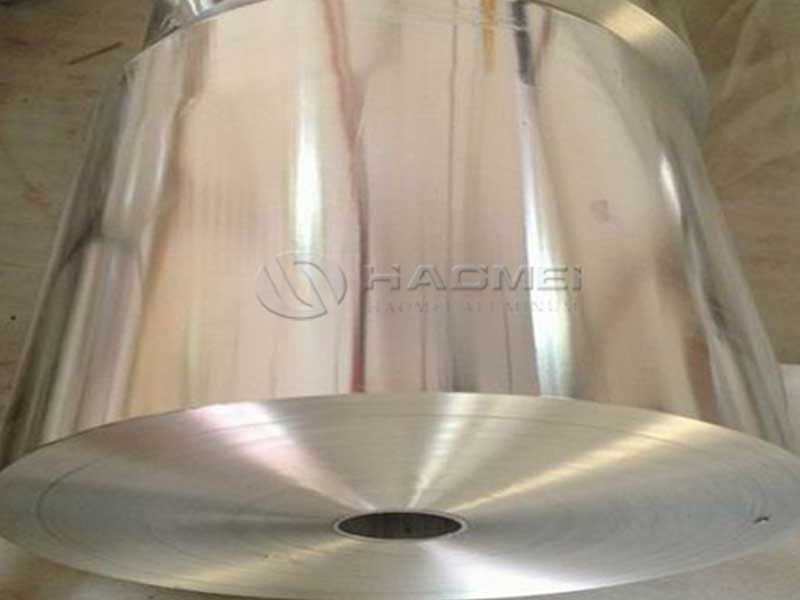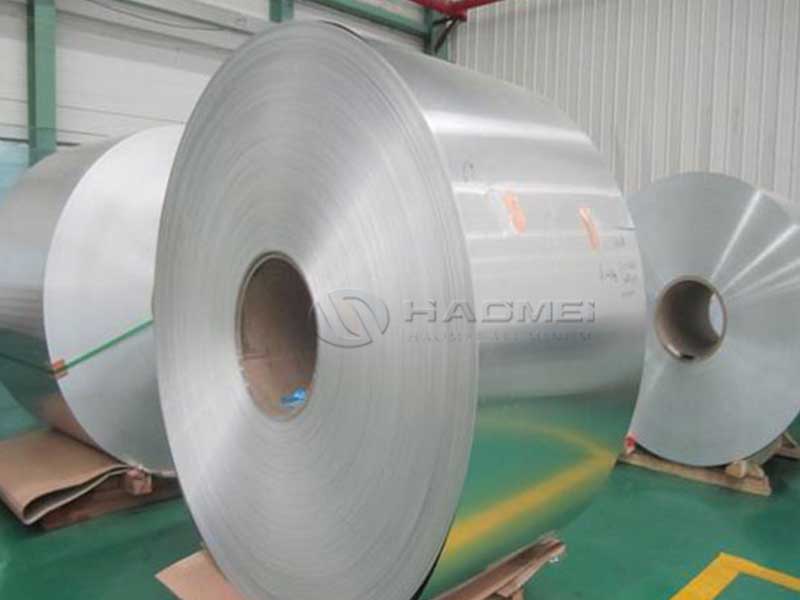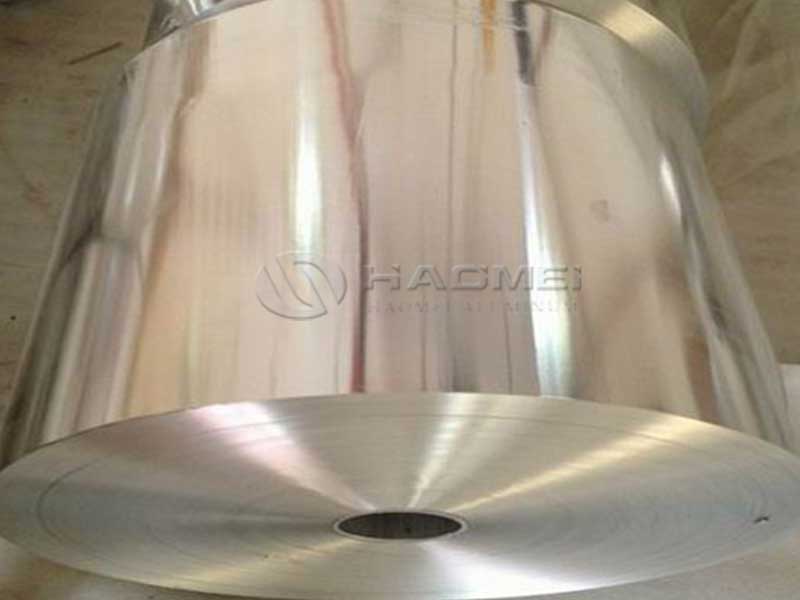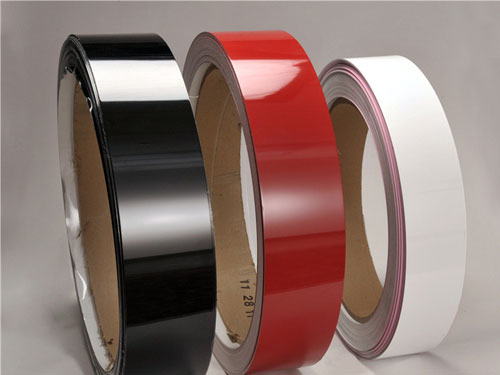

Coastal HVAC equipment lives in a harsh reality: chloride-rich salt spray, constant humidity, wet/dry cycling, and airborne pollutants accelerate corrosion and gradually destroy heat-transfer surfaces. Coated Aluminum Fin Strip is engineered specifically to protect finned coils (evaporators, condensers, and heat exchangers) while preserving thermal performance and long-term reliability. This product combines a high-conductivity aluminum alloy strip with a corrosion-resistant conversion layer + organic coating system, purpose-built for coastal installations such as seaside hotels, marine terminals, offshore modules, and coastal industrial plants.
Why Coastal Areas Need Specialized Fin Stock
Standard bare aluminum fins perform well in mild environments but can degrade quickly near the sea due to:
- Pitting and underfilm corrosion driven by chlorides
- Filiform corrosion under thin coatings when humidity is high
- Galvanic effects when dissimilar metals and electrolytes are present
- Biofouling and debris retention, reducing airflow and heat transfer
- Premature fin thinning and fin breakage, increasing coil pressure drop and energy use
A robust coated fin strip targets these failure modes by reducing surface reactivity and limiting electrolyte access-without sacrificing manufacturability during fin stamping and tube expansion.
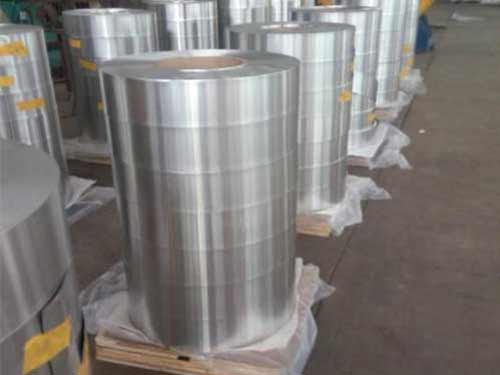
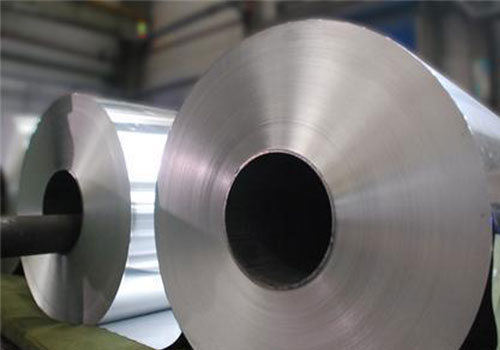
Coated Aluminum Fin Strip is supplied as precision slit coils for fin press lines. It is designed to run at high speed with stable lubrication behavior, excellent coating adhesion, and controlled mechanical properties for consistent fin geometry.
Features (What makes it "coastal-grade")
- Multi-layer corrosion defense: conversion coating + high-integrity organic topcoat
- Superior edge protection strategy: coating and pretreatment engineered to reduce edge creep
- Humidity and salt-spray resistance: coating resists blistering and filiform growth
- High formability: supports louvering, collar drawing, and complex fin patterns
- Thermal efficiency retention: thin, uniform coating minimizes heat-transfer penalty
- Clean processing: coating designed for reduced powdering and stable press performance
Typical Applications
- Outdoor condenser coils for split AC, VRF systems, packaged units
- Evaporator coils in humid coastal buildings and shipboard HVAC
- Heat recovery and ventilation coils exposed to salty air streams
- Corrosion-critical equipment: telecom shelters, data center perimeter units, rooftop units near oceanfront
Alloy Options and Chemical Composition (Typical)
Common fin-stock alloys for HVAC include AA3003 (Mn-bearing, excellent formability) and AA3102/AA3103 (optimized for fin applications). Final selection depends on fin design, press speed, and coil manufacturing method.
Note: Exact chemistry can be tailored to customer specifications and regional standards.
Chemical Composition (wt.%, typical)
| Alloy | Si | Fe | Cu | Mn | Mg | Zn | Ti | Al |
|---|---|---|---|---|---|---|---|---|
| AA3003 | 0.10–0.60 | 0.30–0.70 | 0.05–0.20 | 1.0–1.5 | ≤0.05 | ≤0.10 | ≤0.10 | Balance |
| AA3102/3103 (fin stock family) | 0.05–0.50 | 0.20–0.70 | ≤0.10 | 0.8–1.5 | ≤0.10 | ≤0.20 | ≤0.10 | Balance |
Mechanical Properties (Typical for Fin Stock Temper)
Fin strip is commonly supplied in H14/H24/H26-type tempers depending on fin geometry, louver density, and required stiffness.
Typical Mechanical Properties
| Temper (typical) | Tensile Strength (MPa) | Yield Strength (MPa) | Elongation A50 (%) | Forming Notes |
|---|---|---|---|---|
| H14 | 130–170 | 110–150 | 3–8 | Balanced strength/formability for standard fins |
| H24 | 140–190 | 120–160 | 4–10 | Improved ductility vs harder tempers |
| H26 | 160–210 | 140–180 | 2–6 | Higher stiffness; suited to dense louver patterns with careful tooling |
Coating System: Structure and Performance Logic
A coastal coating must do two things simultaneously: block chlorides and stay bonded during aggressive forming.
Typical Coating Stack
| Layer | Typical Type | Purpose | Benefit |
|---|---|---|---|
| Pretreatment / Conversion | Chrome-free conversion (Zr/Ti-based) or equivalent | Creates chemically bonded interface | Strong adhesion, reduced underfilm corrosion |
| Primer (optional) | Thin functional primer | Enhances barrier + flexibility | Better edge creep resistance |
| Topcoat | Corrosion-resistant polymer (epoxy, modified polyester, acrylic blends) | Primary barrier to salt and humidity | Salt spray durability, reduced filiform corrosion |
| Lubricity additive (optional) | Integrated slip package | Controls friction in fin press | Reduced galling, stable fin geometry |
Coating Characteristics (Typical Targets)
| Parameter | Typical Range | Why it Matters in Coastal Use |
|---|---|---|
| Total coating thickness (dry) | 3–8 μm | Balances corrosion barrier vs heat-transfer impact |
| Gloss / appearance | Matte to semi-gloss | Hides handling marks; stable look |
| Pencil hardness (indicative) | HB–2H | Resists abrasion during assembly/cleaning |
| Adhesion | 0–1 (cross-hatch) | Prevents peeling during fin forming and coil expansion |
| Flexibility | Pass T-bend 0T–2T (system-dependent) | Avoids microcracks that become corrosion sites |
Technical Specifications (Supply Range)
Specifications can be tuned for fin press capability and coil design. Below is a typical offering envelope for coated fin strip.
Product Technical Specification Table
| Item | Typical Specification |
|---|---|
| Base material | Aluminum alloy fin stock (AA3003 / AA3102 family or equivalent) |
| Temper | H14 / H24 / H26 (as required) |
| Thickness | 0.08–0.20 mm (common: 0.09–0.12 mm) |
| Width | 16–1250 mm (slit to customer fin press requirement) |
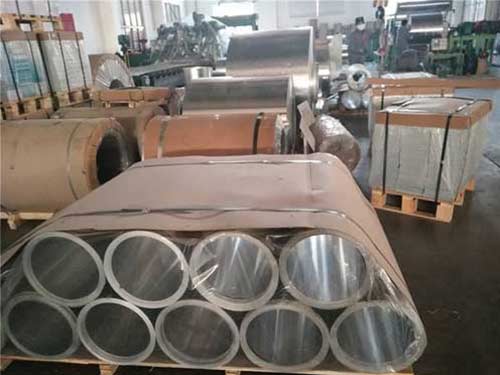
| Coil ID | 150 / 300 / 405 / 508 mm (per line compatibility) |
| Coil OD | Up to ~1400 mm (depending on thickness and logistics limits) |
| Surface finish | Coated on one side or both sides; protective film optional |
| Edge condition | Slit edge; burr control per agreement |
| Packing | Export seaworthy packing; desiccant + VCI optional |
Corrosion-Resistance and Environmental Performance
For coastal HVAC, corrosion performance is not just a lab number-it translates to coil life, sustained airflow, and stable energy use.
Typical Performance Metrics (Project-Dependent)
| Test / Metric | Typical Target Level | Customer Value |
|---|---|---|
| Neutral Salt Spray (NSS, ASTM B117) | 500–1500 h (system-dependent) | Delays pitting, blistering, and coating breakdown |
| Filiform resistance (humidity-driven) | Pass/limited creep | Reduces underfilm "worming" that lifts coating |
| Humidity resistance | 500–1000 h | Prevents swelling/blistering in wet conditions |
| Edge creep control | Low creep from scribe | Protects slit edges and cut features |
| Thermal impact | Minimal due to thin film | Preserves heat-transfer efficiency |
Practical note: Final results depend on coil design (tube material, fin spacing, condensate behavior), installation distance from shoreline, and maintenance practices.
Benefits for OEMs, Contractors, and End Users
1) Longer Coil Service Life in Chloride Environments
The coating system reduces direct electrolyte contact with aluminum, slowing pitting and corrosion propagation-especially under wet/dry salt cycling.
2) More Stable HVAC Efficiency Over Time
As fins corrode, airflow resistance increases and heat transfer drops. A protected fin surface helps maintain coil geometry and cleanliness, keeping COP/EER performance more consistent.
3) Better Appearance and Reduced Customer Complaints
Coastal units often show early visual degradation. Coated fins maintain a cleaner, more uniform appearance, supporting premium product positioning.
4) Manufacturing-Friendly for High-Speed Fin Pressing
The coating is designed for forming: controlled friction, strong adhesion, and reduced powdering help avoid press contamination and tool wear.
5) Lower Total Cost of Ownership (TCO)
Even if coated fin stock carries a modest material premium, it can reduce:
- premature coil replacement
- downtime for coastal facilities
- corrosion-related warranty returns
- energy penalties from degraded coils
Recommended Use Cases (Where This Product Shines)
| Scenario | Why Coated Fin Strip Helps |
|---|---|
| Hotels/resorts within 0–5 km of shoreline | Constant salt aerosol + humidity accelerates pitting on bare fins |
| Port buildings, shipyards, marine logistics | Salt spray + industrial pollutants create aggressive corrosion cocktail |
| Coastal petrochemical or power facilities | High humidity + contaminants drive underfilm corrosion |
| Rooftop units facing sea winds | Direct chloride deposition and wet/dry cycling are severe |
| Offshore modules and platform HVAC | Extreme exposure demands maximum corrosion margin |
Ordering Guidance (How to Specify Efficiently)
To ensure a fast and correct match, specify:
- Alloy and temper (e.g., AA3003-H24)
- Thickness × width, coil ID/OD limits
- Coating type and side (one-side or two-side coating)
- Target corrosion performance (e.g., NSS hours, edge creep requirement)
- Fin press requirements (louver pattern severity, lubrication approach)
- Packing and shipping (seaworthy pack, desiccant, film protection)
Coated Aluminum Fin Strip for HVAC Systems with Corrosion Resistant Coating for Use in Coastal Areas is a purpose-engineered fin stock that combines formable aluminum alloys with a thin, high-performance coating system to combat chloride-driven corrosion. It supports high-speed fin production, maintains heat-transfer performance, and meaningfully extends coil life in coastal and marine climates-delivering a clear value advantage for OEMs, installers, and end users focused on reliability and lifecycle cost.